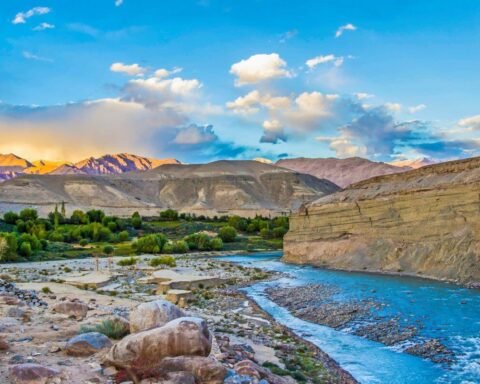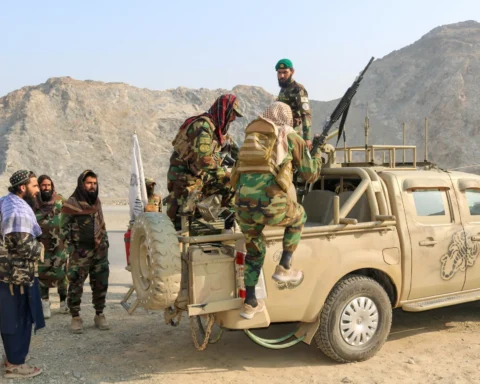
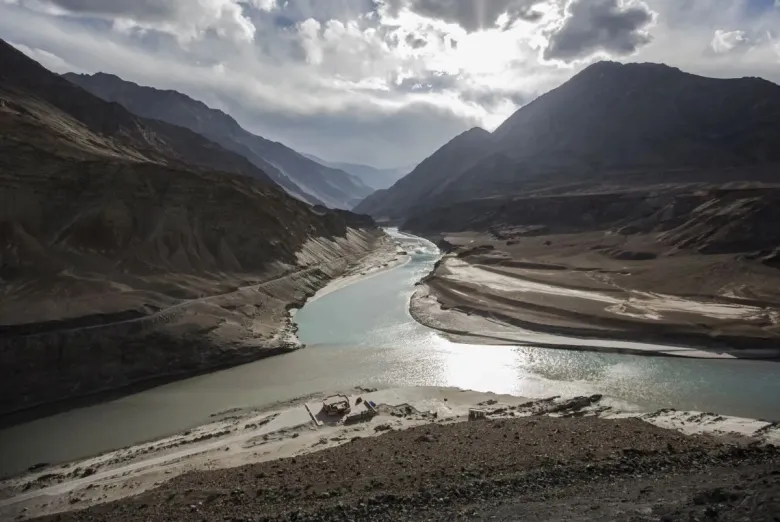

Eurasia Group’s Top Risks of 2026 report puts a blunt label on a shift many people in South Asia have feared for years. It says India has effectively weaponized water in the Indus Basin by keeping the Indus Waters Treaty in abeyance and by withholding hydrological data from Pakistan. Some will argue this is only politics, that real water cuts have not happened at scale. That misses the point. In a river system that runs on timing and trust, the threat is often as damaging as the act.
Water security is not only about how much water exists. It is about who can predict it, who can store it, and who can control the valves upstream. When data stops flowing, the downstream side loses more than numbers on a page. It loses the ability to plan. Farmers plan sowing dates and crop mixes based on expected canal rotations. Irrigation officials schedule releases to match demand. Disaster agencies track flood risk. Without shared hydrological data, all of that becomes guesswork.
In a country where the Indus system underpins most agriculture, guesswork is not a minor inconvenience. It is a direct hit to livelihoods
Eurasia Group highlights that Pakistan’s dependence is extreme. Over 80 percent of its agriculture draws on Indus Basin waters. That figure is not an abstract statistic; it is a map of who gets hurt first. Small farmers who cannot afford deep tube wells. Tenant farmers whose income depends on one harvest. Farm laborers are paid by the day. Transporters, millers, and market workers are tied to farm output. When irrigation water arrives late or in smaller volumes, the whole chain feels it. Reduced output means higher prices, weaker exports, and more pressure on the state to subsidize food and energy.
The treaty’s survival through past wars is often cited as proof that water can be kept separate from conflict. Eurasia Group’s argument is that this separation has cracked. The treaty held for decades because both sides treated it as a managed system with rules, channels, and data. If the treaty can be paused after a terror attack and kept paused even after a ceasefire, it becomes a lever.
A lever can be pulled during any future crisis, especially when leaders want a tool that hurts but stays below the threshold of open war
This is why the phrase “strategic water coercion” matters. Coercion works best when it is hard to measure and easy to deny. A downstream shortfall can be blamed on rainfall, silt, or routine maintenance. A delay can be described as technical. A lack of data can be framed as a policy choice. Meanwhile, the downstream side bears the cost. That is the logic Eurasia Group is flagging. Water becomes a way to impose risk on Pakistan without firing a shot.
The data angle may be the most dangerous part. Even if physical flows remain within expected seasonal ranges, information control still creates leverage. It forces Pakistan to operate with less certainty while India keeps full visibility upstream. In crisis management, this is asymmetric power. It can drive panic decisions, like over-releasing stored water too early, or under-irrigating at key crop stages. It can also make floods more deadly if warning time shrinks. Lives can be lost not because a dam was opened aggressively, but because notice was not shared.
There is also a wider norm problem. When a major water treaty is treated as optional, it signals that international water rules are fragile. South Asia is full of shared rivers and unresolved borders. If one basin moves toward unilateral control, others may follow. That pushes the region toward a race of dams, canals, and diversions built for bargaining, not for efficiency. Investors notice this, too.
Water uncertainty can disrupt power generation, industrial water supply, and urban growth, all of which feed back into political stability
Pakistan’s response cannot rely only on appeals to fairness. It needs an internal resilience plan that assumes the risk will continue. Start with agriculture, because that is where the shock lands fastest. Crop choices must change over time toward less water-intensive varieties where possible, especially in stressed regions. Irrigation efficiency needs practical upgrades, not slogans. Canal losses can be reduced through targeted lining and better maintenance. On the farm, laser leveling and improved scheduling can save water and raise yields. Pricing and subsidies also need reform, but carefully, because sudden changes can crush small farmers. A gradual approach that rewards conservation while protecting basic needs is hard, but it is possible.
At the same time, Pakistan needs a serious national conversation about storage and governance. More storage can smooth seasonal swings, but it is not a magic fix. Storage takes years, costs money, and triggers political fights. Still, better storage management, better forecasting, and stronger institutions can reduce vulnerability. The goal is not to match upstream control.
The goal is to reduce the damage when upstream behavior changes
For India, Eurasia Group’s warning should also raise a caution. Using water as pressure may bring short-term political gains, but it carries long-term costs. It increases mistrust, hardens Pakistani threat perceptions, and raises the risk that future crises escalate faster. It also makes technical cooperation harder, just when climate stress makes cooperation more necessary. Rivers will be more variable, with sharper floods and deeper dry spells. In that reality, data sharing and predictable rules are not favors. They are safety measures.
Eurasia Group is not writing as a charity. It is written as a risk analyst for policy and markets. That is why its conclusion deserves attention. The Indus Basin is turning into a new front line, not through soldiers, but through uncertainty. If water becomes a standing threat, both societies will pay, and the most vulnerable will pay first. The simplest step toward lowering the temperature is also the most practical: restore hydrological data sharing and revive a rules-based channel for water management. Without that, every political shock will carry a new kind of fear, the fear that the tap can be tightened when people can least afford it.