
For more than two years, the Taliban leadership in Kandahar projected an image of absolute control. Mullah Haibatullah Akhundzada, the self-styled supreme leader, appeared untouchable, shielded by religious authority, insulated by reclusiveness, and protected by a loyal inner circle. But the reality beneath the surface has now erupted. The Taliban’s internal dynamics are shifting rapidly, and Haibatullah’s authority is facing its most serious challenge since the fall of Kabul. What once looked like quiet policy disputes has hardened into a structural crisis: a deep, organized effort to replace the emir.
At the heart of the crisis is Haibatullah’s governing style. His isolation has become symbolic of the Kandahar faction’s disconnect from the movement’s rank and file. Within Taliban circles, leadership legitimacy traditionally derives from battlefield presence, tribal consensus, and religious stature. Haibatullah meets none of these criteria convincingly. His absence from the public, coupled with reliance on four close advisers, has fed the perception that he is aloof and fearful.
That perception is now weaponized by his opponents, who argue that an emir who refuses engagement cannot guide a country in turmoil
The conflict burst into public view when Sirajuddin Haqqani, Afghanistan’s influential interior minister and heir to the Haqqani legacy, openly criticized the Kandahar leadership. His remark that a government built on fear cannot endure was more than a complaint; it was a calculated challenge. In Taliban political culture, public criticism of the emir is tantamount to political rebellion. For Haqqani to take such a step means he believed the moment had come to rally support and test the boundaries of Haibatullah’s authority.
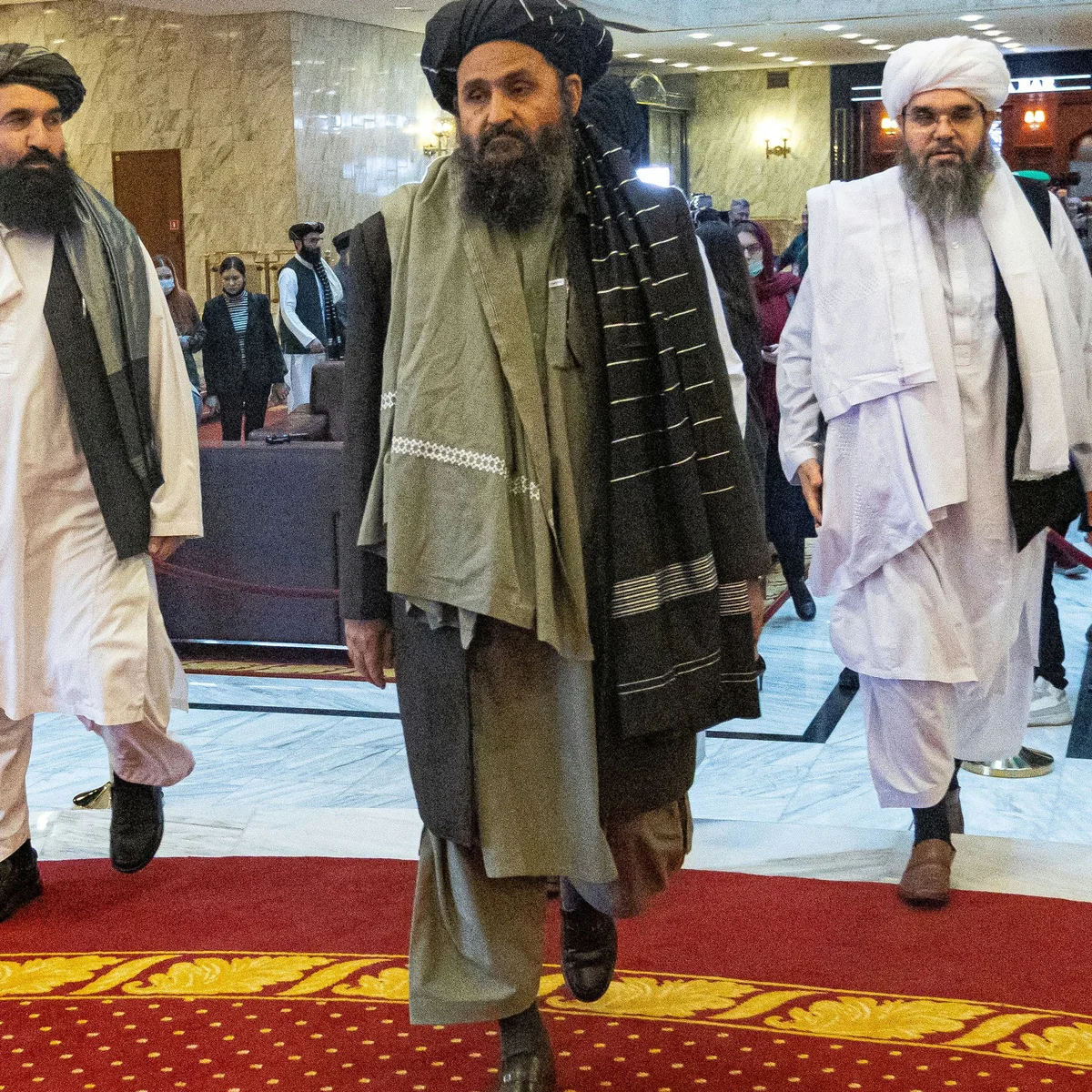
Kandahar’s reaction exposed the depth of the crisis. Leading figures rushed to reaffirm their allegiance, from Mullah Baradar to Defense Minister Mohammad Yaqoob. Haibatullah’s son-in-law, Mullah Nadeem, issued stern warnings against even contemplating alternative leadership. These pronouncements, rather than projecting confidence, signaled panic. When a regime is strong, it does not need to remind the world of its unity. When leaders start issuing decrees about loyalty, instability is already advanced.
As the leadership struggled to control the narrative, Haibatullah himself broke his long-standing silence. His appearance at a seminar in Kandahar, an event crafted to display his authority, revealed more insecurity than strength. His warning that others must “know their limits” underscored that his limits are being tested.
The subsequent publicity push, designed to reassert control, failed to conceal the real story: internal opposition has shifted from discontent to mobilization
The roots of this confrontation lie in two contrasting visions of Taliban governance. The Kandahar faction, steeped in ideological rigidity, believes in strict social controls, centralization of power, and minimal engagement with the public or international community. The Haqqani network, though equally hardline in its origins, operates pragmatically. It understands Afghanistan’s tribal politics, security complexities, and the necessity of broader engagement, a lesson shaped by decades of battlefield management and dealings with foreign actors.
This ideological tension has now given way to political maneuvering. Throughout 2023 and 2024, the Kandahar authorities worked systematically to sideline the Haqqanis: restricting appointments, disbanding networks, and even demolishing the historic Jalaluddin Haqqani madrassa. These actions were not administrative decisions but direct provocations, designed to weaken an expanding rival center of power. Siraj Haqqani’s initial silence was misinterpreted as weakness; in truth, he was preparing.
Today, Haqqani’s preparations are visible across the country. He has mobilized sidelined commanders, Tajik, Uzbek, and Pashtun alike, who suffered under Kandahar’s narrow style of rule. His envoys have reached northern provinces to build alliances with commanders such as Qari Fasihuddin Fitrat, Qari Wakeel, and Qari Salahuddin Ayyubi, all of whom were marginalized by the Kandahari leadership. In the west and southwest, Haqqani figures are conducting quiet diplomacy.
Meanwhile, lobbying within the Taliban’s 32-member shura is underway, though few expect the council to resolve such a crisis peacefully
The Taliban’s internal system was never designed for power-sharing. It was built around battlefield cohesion and religious symbolism, not institutional governance. Once battlefield unity disappears and factions begin forming independent alliances, the system becomes exposed. Haibatullah’s weakening grip is symptomatic of a broader institutional failing: the Taliban attempted to transform from an insurgency into a government without establishing structures that can mediate internal conflict. Today’s crisis is the inevitable consequence.
The regional implications are profound. A Taliban split could reignite civil conflict, drawing in ethnic militias, rival commanders, and perhaps foreign actors seeking influence in Afghanistan’s power vacuum. Pakistan and Iran, states already strained by border tensions, economic pressures, and the burden of past refugee waves, could face new humanitarian and security challenges. Neither country is positioned to absorb another influx of displaced Afghans or a spillover of Taliban factional violence.
The question now is no longer whether Haibatullah’s rule is under threat; that is already clear. The question is whether the Taliban can navigate this crisis without descending into open warfare. Afghan history suggests otherwise. Leadership transitions within militant or tribal networks rarely happen through orderly deliberation. They happen through force.
A political volcano is rumbling beneath Kandahar. Whether it erupts depends on how far Siraj Haqqani and his allies are willing to go, and how long Haibatullah can hold a throne built increasingly on fear rather than consensus.