
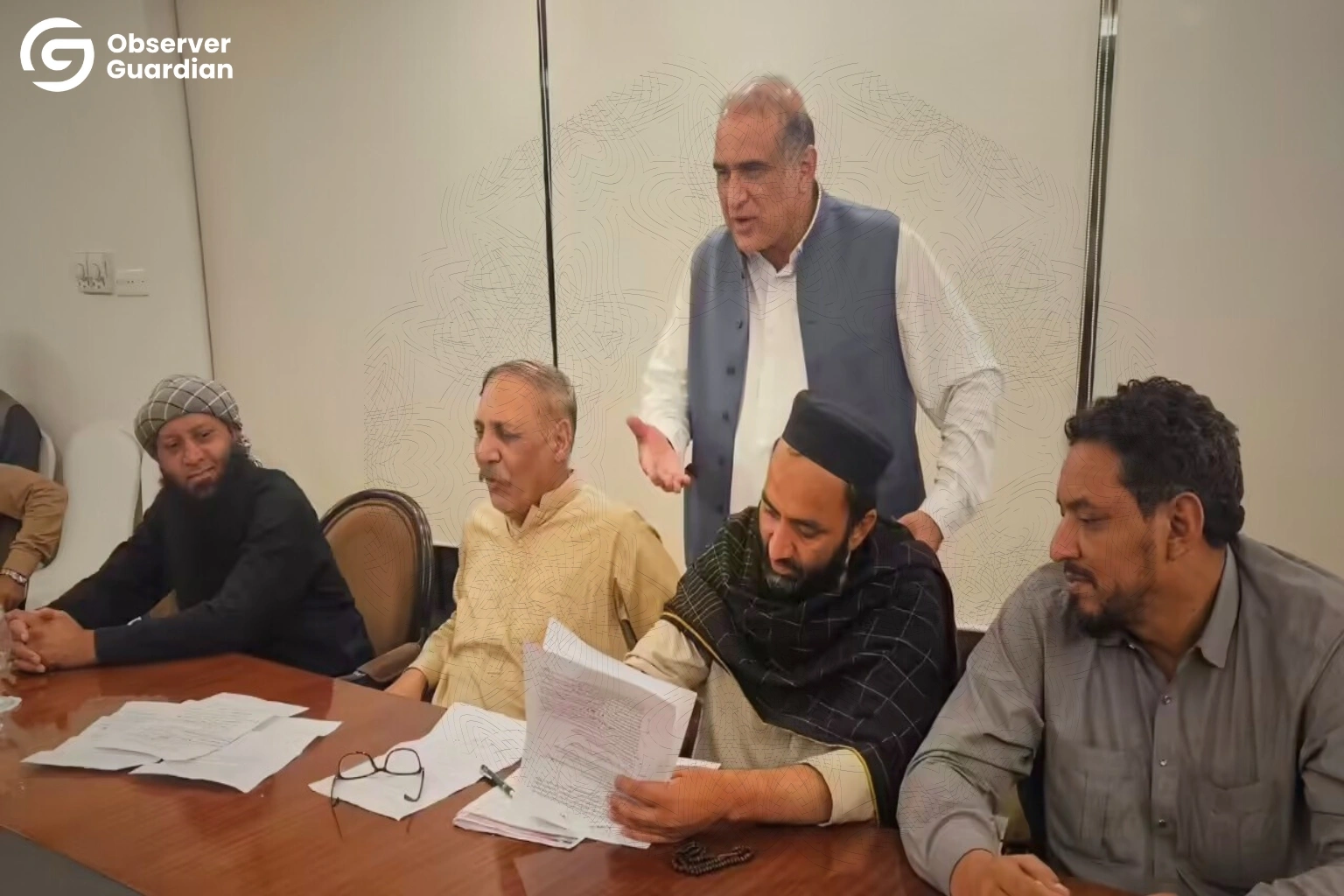

A charter was recently released by the Joint Action Awami Committee (JAAC) in Azad Jammu and Kashmir (AJK) containing 38 points that have caused a debate regarding the governance, reform and accountability. Although it brings up social and economic issues, its scope and aspiration are subject to question. It is not merely a list of complaints but a political agenda that might possibly define the future of AJK.
The Situation is Reforming into a Delicate Environment
Reform is a complicated matter at AJK due to its semi-autonomous status. The region exists in the larger constitutional framework of Pakistan, with local autonomy and federal control. It is against that background that the demands of JAAC are both a manifestation of frustration and an attempt to solve the economic stagnation, the problems of the public services and administrative inefficiencies.
However, the most important question is how much of these 38 demands can be implemented under the legal and financial constraints of AJK? Analysts demand that every point should be considered based on practicality, legality as well as economic viability, before it is implemented.
Law and Institutional Review
The first is the legal compatibility test. The proposals can involve interpretation or amendment of the constitution depending on whether they involve taxation, allocation of resources, or administrative authority. Any reforms enforced without this consciousness will create a clash with existing laws.
This move by the administration to undertake a technical and legal assessment is thus a prudent one. Due process must not be overcome by emotional or populist appeal. An institutional and legal-based reform agenda has a higher possibility of success in the long term.

Economic Implications
The most sensitive aspect of the charter can be the economic one. The economy of AJK relies on remittances, the state sector, and small scale trade. A household and business ripple effect would occur due to any sudden alteration of taxation or subsidies. Possible instability and increased operational costs have already been of concern to the local business community.
Nonetheless, there are good ideas presented in the charter such as transparency in expenditure, encouraging entrepreneurship, and creation of employment. When planned attentively and accompanied by adequate budgeting, such proposals have the potential to diversify the weak economy of AJK as opposed to destabilizing it.
Trust and Public Consultation
A very powerful part of the charter is the focus on open consultations with the population. Implementation of reform in AJK cannot be achieved without any real citizen involvement. Frustration can be turned into cooperation through public hearings, expert panels, and available reporting.
To achieve this both parties would have to engage in that the government must make consultations meaningful and not symbolic, and JAAC must remain peaceful and factual in its advocacy efforts.
True conversation develops trust, hostile politics suppresses it.
Striking the Balance between Reform and Stability
It is impossible to reform at the expense of peace or day to day life. The fact that the administration cautions on policies that are likely to undermine the economy or cause unrest is a legitimate concern. The recent history of AJK explains how rapid protests may turn into widespread disruption. It should be about negotiation and not confrontation and activism must be positive.
The authors of the charter should also understand that reform is a condition to stability. A crippled economy or precarious security would be nothing but a postponement of the improvements that the citizens need.

Institutional Strengthening
To translate the slogans into policy, the government has come up with subcommittees that are technical, legal, and financial in nature. Such an organization might be useful in prioritizing action objectives and those that need to be studied in the long term. Division of the 38-point document into narrow sections helps to avoid the accountability paralysis of the bureaucracy.
This way of doing things legitimizes the fears of JAAC and puts them in the context of formal governance. It is a paradigm which turns the pressure of the civic into a step of institutional development.
Transparency and Implementation
The success of reform processes is achieved when the process is transparent and traceable. Frequent communication on the progress of the review or implementation of every proposal would overcome rumors and create confidence. By keeping its word of open reporting, had the administration done so, it would help to build in the mind of the populace that it is not just a mere political game.
Transparency makes the government and activists alike to be accountable. It maintains a focus on evidence, data and results as opposed to rhetoric.
A Shared Responsibility
But after all the 38-point charter is not merely a protest document but a demand of responsive government. It puts the anger of people into a systematic demand for change. The next phase, which is discussion, prioritization, and implementation, is the responsibility of both sides, and whether it is done irresponsibly or responsibly will determine its success.
The principles should be peace, stability and the welfare of the people. It will take time and discussion to bring positive changes, not rushing and fighting. When managed appropriately, this was a point that could be the start of new realization among the citizens of AJK and their institutions, based on openness, respect as well as common development.
The charter challenges the government, and it is an opportunity also to demonstrate that accountability and governance can co-exist. Should that lesson be heeded, then it may not only transform local politics, but it could also transform the way of reform movements in the region seek to bring change.
⚠ Disclaimer
The views and opinions expressed in this article are exclusively those of the author and do not reflect the official stance, policies, or perspectives of the Platform.