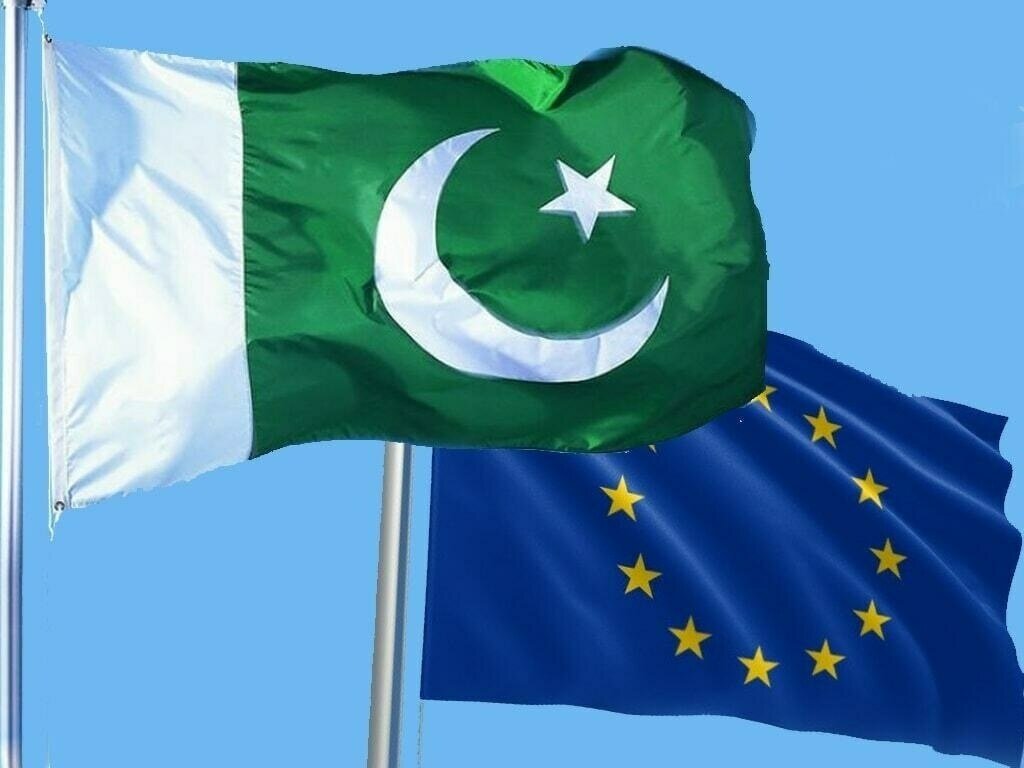

With the European Union’s upcoming review of Pakistan’s GSP+ status, Ambassador Raimundas Karoblis’ recent remarks that Pakistan must “do more” have sparked renewed debate about whether the narrative surrounding the country’s human rights record is being assessed fairly or through a politically filtered lens. While constructive criticism is essential for progress, it is equally important that Pakistan’s considerable reform trajectory be acknowledged as part of a genuine, long-term commitment rather than dismissed by selective interpretations or politically charged advocacy. The GSP+ framework, after all, is not a tool of coercion, it is a mechanism intended to support developing economies in strengthening rights protections and governance. Pakistan has, over the years, approached this responsibility seriously.
Since first receiving GSP+ status in 2014, Pakistan has enacted wide-ranging reforms to enhance rights protections, update legal frameworks, and improve institutional mechanisms. Among these efforts are landmark legislative measures that directly respond to concerns raised in previous review cycles. The Protection of Journalists and Media Professionals Act of 2021 established a dedicated system for investigating threats and violence against media workers, an unprecedented move in the region. Similarly, the Anti-Rape (Investigation and Trial) Act of 2021 introduced specialized courts, strengthened investigation procedures, and addressed long-standing deficiencies in the prosecution of gender-based crimes. Domestic violence legislation passed between 2020 and 2022 at both federal and provincial levels created legal protections, shelter services, and complaint mechanisms that did not exist a decade ago. Pakistan’s rights framework has also expanded in progressive directions, including with the Transgender Persons (Protection of Rights) Act of 2018, which stands among the most inclusive pieces of gender legislation in South Asia. Child protection has been elevated through the Zainab Alert Act of 2020, establishing a national rapid-response system for missing children.
Meanwhile, the National Commission on Human Rights continues to function as an independent watchdog aligned with international human rights conventions mandated under GSP+
Despite these advances, the global human rights conversation has increasingly drifted toward politicization, where concerns are amplified or muted depending on strategic interests rather than objective realities. This selective advocacy undermines genuine rights work and allows political actors to weaponize human rights as leverage. Pakistan has witnessed how dissidents operating from abroad, some of whom have asylum in Europe or North America, utilize the language of human rights to mask separatist or anarchist agendas. In many cases, these narratives provide cover for extremist networks seeking to delegitimize the state’s counterterrorism efforts and widen their operational space. These groups often function through NGO-like fronts, presenting themselves as defenders of rights while acting as soft proxies for militant outfits. The aim is not reform, but the erosion of Pakistan’s internal cohesion.
Figures such as Mahrang Baloch exemplify this pattern of selective advocacy. While quick to condemn Pakistani state institutions, they remain conspicuously silent about atrocities committed by internationally designated terrorist groups such as the BLA and BLF, groups responsible for killing civilians, targeting development workers, and attacking state infrastructure. Platforms like MEMRI, which regularly feature dissidents such as Mir Yar Baloch, have become conduits for narratives aligned with the agendas of hostile intelligence agencies rather than impartial human rights concerns.
The sudden surge in alarmist stories on Balochistan published by outlets like The Diplomat, over 25 stories within a three-month span in 2025, signals coordinated lobbying rather than objective journalism
This politicized scrutiny stands in stark contrast to the silence or muted reactions regarding systemic human rights abuses within Western nations and India, countries that frequently position themselves as global custodians of human rights norms. Reports published by Amnesty International, Human Rights Watch, and the United Nations throughout 2019–2023 document widespread Islamophobia, racial profiling, suppression of dissent, and police brutality in the United States, United Kingdom, France, and Germany. In India, the situation is even more alarming. From draconian restrictions on civil society to custodial killings and widespread censorship, India’s democratic backsliding has accelerated dramatically. According to India’s own Human Rights Commission, more than a thousand custodial deaths occurred in just the first eight months of 2024. Reporters Without Borders continues to rank India among the world’s most dangerous countries for journalists, where intimidation, arrests, and retaliation against the press are commonplace.
Despite this, Western voices that demand Pakistan be held accountable rarely apply the same standards to India. Even the vehicular killing of a Sikh protester in 2021, the recurring mob violence against Muslims and Christians, and explicit calls for genocide by extremist Indian groups have failed to trigger the level of condemnation or economic consequences that Pakistan routinely faces.
If human rights are truly a universal principle, then Western democracies and India should be subject to the same scrutiny that Pakistan is under GSP+
The reality is that human rights have become a strategic instrument in international politics, selectively deployed to maintain structural inequalities and advance geopolitical goals under the guise of moral responsibility. Pakistan’s progress, while ongoing and imperfect, must be evaluated on its merit, not overshadowed by politicized campaigns orchestrated by actors who hold the country to standards they do not apply to themselves or their allies.
As the EU reviews Pakistan’s GSP+ status, it must consider not only Islamabad’s tangible reforms but also the broader geopolitical environment in which narratives about Pakistan are shaped. A fair, balanced assessment would recognize Pakistan’s commitments, acknowledge its progress, and avoid allowing politically motivated groups to distort the human rights discourse. The credibility of the GSP+ framework depends on its impartiality, and Pakistan’s case offers an opportunity for the EU to reinforce that principle.