
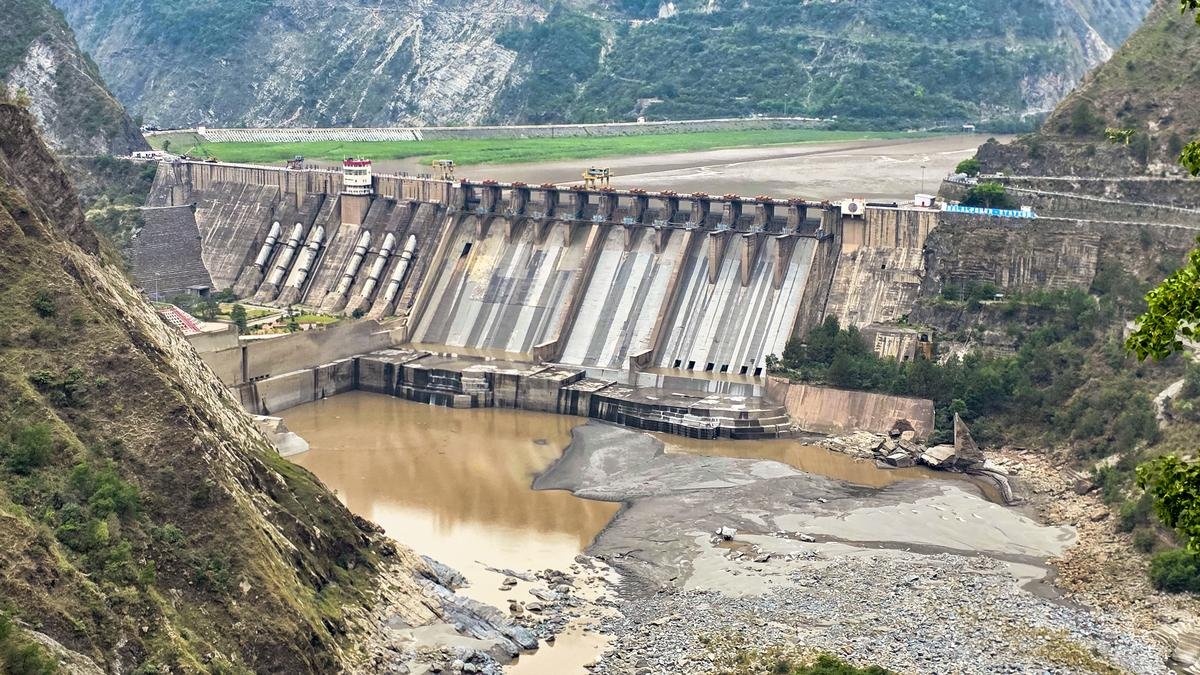

Holding the Indus Waters Treaty in abeyance is not a routine bilateral quarrel dressed up as procedure. It is a direct strike at the idea that shared rivers are governed by law, not by mood, pressure, or power. When India announced in April 2025 that it would keep the Treaty in abeyance, it framed the move as conditional and political. That posture matters because the Indus Basin is not an optional resource for Pakistan. It is the spine of irrigation, the backbone of rural incomes, and a key input to domestic water supply systems. Remove predictability, and you do not just create diplomatic heat. You manufacture household-level risk in crops, prices, nutrition, and public health.
SDG 6 is often treated as a development slogan, yet it is really a daily test of whether people can count on safe water and sanitation. That test collapses quickly when upstream actions inject uncertainty into timing and volume, even before any physical diversion occurs. Farmers plan around canal rotations, sowing windows, and irrigation schedules. Cities plan around treatment capacity and seasonal demand. Public health systems assume a minimum reliability in water quality and quantity. If the governing treaty is treated as a switch that can be turned off, every downstream plan becomes a gamble.
In a climate-stressed basin, where flood and drought cycles already punish weak planning, deliberate uncertainty is not neutral. It is harmful by design
There is also a basic legal point that cannot be waved away. Treaties are not polite suggestions. The core rule of treaty law is performance in good faith, the principle commonly expressed as pacta sunt servanda. If a state can unilaterally declare a long-standing water sharing treaty dormant, without a mechanism in the text and without following lawful procedures for suspension, it normalizes selective compliance. That precedent does not stay confined to South Asia. It travels, and it tells every upstream state that pressure tactics are available whenever politics demand it. For the global rules-based order, that is corrosive. It weakens confidence that binding commitments survive crises, which is exactly when they are needed most.
The human security stakes in Pakistan are not abstract. Pakistan’s agriculture depends heavily on Indus irrigation, and even small disruptions in coordination can translate into yield loss and wasted inputs. A delayed release can mean a missed watering at a sensitive crop stage. A surprise surge can destroy field preparation and damage local infrastructure. Either way, risk moves from ministries to markets and then to kitchens. Food prices respond quickly to expectations of scarcity. Rural households respond by cutting protein and diet diversity.
Water stress also raises public health risks, especially when low flows concentrate pollutants and increase the burden on treatment systems. That is how a legal dispute becomes a nutrition outcome, and why SDG 6 is directly implicated
International water law is clear about the direction of travel. It prioritizes cooperation, equitable utilization, and prevention of significant harm. That does not mean every project is forbidden, or that disputes never occur. It means disputes must be managed through agreed institutions, transparency, and lawful settlement routes. The Indus Waters Treaty was built precisely for that purpose: a standing framework that outlives political cycles and channels conflict into procedure. The World Bank’s long-described role underscores this design, and the existence of dispute processes shows the parties already have tools to handle contestation without destabilizing the entire regime. Declaring abeyance bypasses that architecture and invites escalation through uncertainty.
The economic consequences also run deeper than farms. Water is the quiet input behind energy planning, industrial supply, and urban growth. Investors do not price projects purely on today’s flows; they price them on governance. When treaty mechanisms are undermined, confidence drops in water availability assumptions, dispute settlement timelines, and cross-border data sharing. That reduces incentives to invest in efficiency, storage modernization, and climate resilience.
Ironically, it can lock both sides into a lower trust equilibrium where each new project is interpreted as a threat, and every season becomes an argument
Pakistan’s most defensible posture, and the one that aligns with SDG 6, is to insist on rules, science, and institutions. That means data transparency on flows, good faith engagement through the Treaty’s mechanisms, and dispute settlement that follows lawful steps rather than political ultimatums. It also means consistently framing water not as a bargaining chip but as a human security obligation. Water and sanitation are not privileges granted by neighbors. They are conditions for life, health, and dignity. When shared rivers are governed by coercion, lower riparian communities pay first and pay most.
The Indus Waters Treaty has survived wars and prolonged hostility because it created predictability where politics could not. Treating it as optional jeopardizes that stabilizing function at the worst possible time, when climate volatility is already multiplying the cost of miscalculation. If South Asia is serious about sustainable development, then SDG 6 cannot coexist with treaty disruption. The path forward is not to suspend cooperation, but to deepen it, through lawful compliance, transparent science, and credible dispute resolution. Anything less turns water into a weapon, and that is a price the basin and the rules that protect it cannot afford.