
The Balochistan Liberation Army remains a designated Foreign Terrorist Organization, and the perpetrators should be held accountable. This was the blunt message issued by the State Department’s Bureau of South and Central Asian Affairs on February 5, 2026, in response to militant attacks in Balochistan. The United States “stands steadfast with Pakistan.” On paper, Pakistan desires moral clarity and the identification of the threat from a significant partner. However, Pakistan’s genuine inquiry is not whether Washington condemns an attack. The question is whether Washington comprehends the factors that are contributing to the militants’ increasing firepower and whether it will assist in the closure of that conduit.
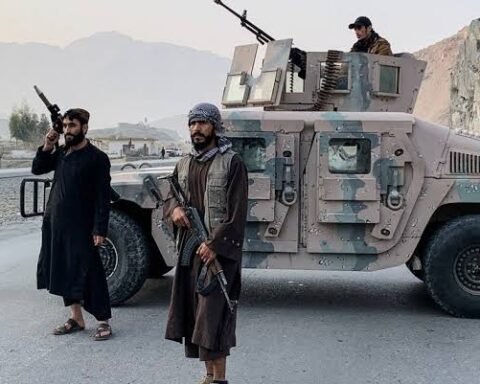
According to recent investigative reporting, that pipeline traverses Afghanistan’s post-2021 arms disarray. An increasing body of reporting indicates that American-supplied weapons, which were intended for the former Afghan forces, have been transferred from Afghanistan to militant groups that operate in Pakistan. The most recent reporting, which has been echoed by numerous outlets and is attributed to CNN, depicts militants employing modern rifles, including M4 and M16 variants, as well as equipment such as night vision devices.
Despite the fact that certain aspects of the narrative are still being debated in detail, the general direction is difficult to refute: weapons do not evaporate; they are transported, and the region is teeming with networks that are designed to transport anything that can be sold
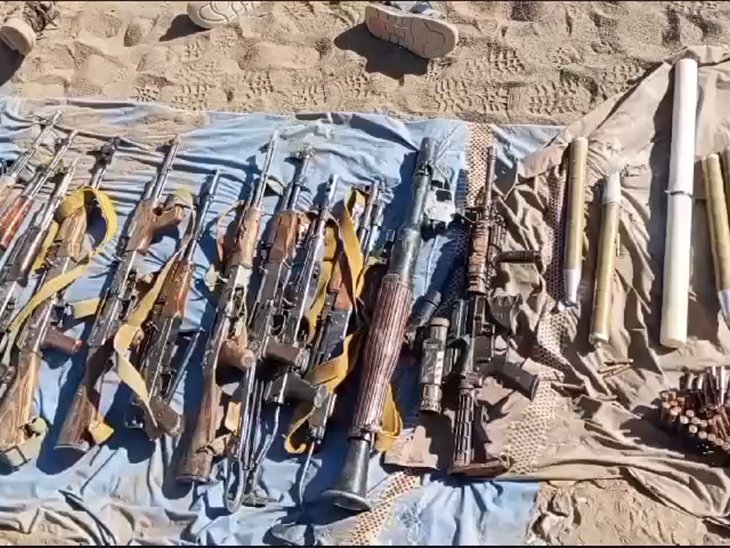
Pakistan’s security forces are not discussing this as a theoretical concept. Reporters have been informed by officials that weapons with U.S. markings were discovered during operations in Waziristan and Balochistan. This is significant because it connects the issue to physical evidence, rather than solely political responsibility. The Washington Post reported that it examined dozens of seized weapons and that U.S. defense officials verified that many of them had been provided by the U.S. government to Afghan forces during the war. This is the type of substantiation that alters the discourse. The focus shifts from the claims of one party to the evidence that serial numbers and markings can provide.
Another aspect that is consistently overlooked is scale. Public reporting on U.S. government assessments has indicated that Afghan forces received hundreds of thousands of small arms over time, with record-keeping issues that exacerbated during the collapse. A 2022 Defense Department report, which was reported in major U.S. media outlets, indicated that over 300,000 weapons, as well as other equipment, had been abandoned.
The potential for multiple groups to be supplied for years is present when even a small portion of a stockpile, such as that is released into commercial routes. This shipment cannot be halted by intercepting a single vehicle. It is a marketplace
The tactical shift is genuine and perilous. The supplies that have been reported include light machine guns of the M249 class, sniper rifles that are described as Remington models, and night vision devices. These instruments broaden the scope of militant endeavors. Night vision has the potential to redirect attacks to hours when defenses are at their most vulnerable. Ambushes can be transformed into standoff murders through the use of longer-range weapons and improved optics. Responders can be immobilized, and firefights can be prolonged by the use of light machine weapons. In other words, the armaments do not merely increase the number of casualties; they also alter the manner in which militants strategize, how security forces respond, and how civilians are entangled.
Look at the violence surge itself to understand why this is relevant today. Reuters reported on a series of coordinated attacks that occurred throughout Balochistan, as well as the subsequent large-scale military operations that resulted in substantial casualties on both parties. Equipment is not the sole factor, but it is a critical enabler when an insurgency is capable of striking numerous sites in a brief period and maintaining contact with security forces. It enhances leadership, planning, and training.
It also exacerbates the impact of mishaps, as more intense firefights are more likely to occur in public areas rather than vacant fields
Therefore, what actions should the United States take to ensure that the term “steadfast” is more than just a tweet? Initially, it is imperative to address weapons diversion as a collective counterterrorism issue, rather than a public relations controversy. Tracing is the initial step. Pakistan has already recovered weapons during operations; however, tracing necessitates a structured pipeline that includes the documentation of markings, the preservation of the chain of custody, the sharing of data, and the development of a shared understanding of the most active routes. Washington can expedite the process of verifying the provenance of weapons in a formal partnership if it can do so in a newspaper investigation.
Secondly, pursue the financial underpinnings of the movement. Weapons are transported by smuggling networks in exchange for payment. This entails the implementation of financial intelligence, sanctions when necessary, and the application of pressure on brokers, transporters, and front merchants who operate in border markets.
The market will supplant the gunmen if the focus remains exclusively on them. It consistently occurs
Third, even if it is politically difficult, engage Afghanistan in inventory control. This is the most uncomfortable aspect, as it compels the region to confront the fact that stockpiles within Afghanistan are a contributing factor to the ongoing leakage. The Taliban’s security apparatus now includes a significant amount of American-supplied equipment, as evidenced by reporting from a U.S. watchdog that was published in Pakistan’s press. The extent to which Kabul is willing or capable of preventing onward movement is a separate issue; however, disregarding it ensures that seepage will persist.
Fourth, refrain from assuming that this is solely a Pakistani issue. A regional risk is posed by the consistent influx of advanced weapons out of Afghanistan, which will continue to elevate the temperature in border regions for years. Analysts have cautioned that unaccounted stockpiles can incite militancy across borders, rather than just one frontier. States respond with greater force when modern weapons become prevalent in the hands of nonstate actors. This frequently results in the development of new grievances that militant recruiters subsequently exploit. The final outcome is a spiral.
The expectation of Pakistan from the United States is not a reversal of history, nor is it perfection. It is practical assistance that is commensurate with the magnitude of the aftershock. American politics concluded in 2021 with the conclusion of the Afghan conflict. The armaments did not cease. They continued to relocate, and they are currently manifesting in Pakistan’s most exploited regions. Washington should align itself with Pakistan by addressing the issue at its source: in tracing, interdiction, financial pressure, and regional coordination. If not, the tweet will be reminiscent of numerous previous statements: sympathetic, accurate, and soon forgotten by those who must awaken to the next attack.