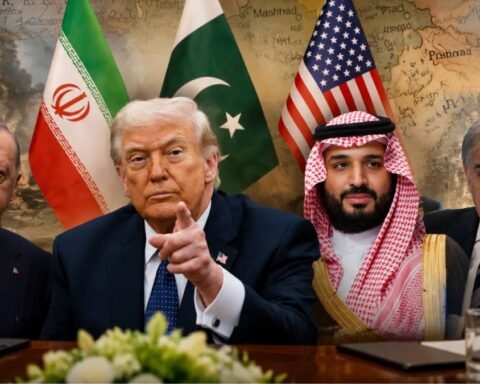

Diplomacy is often celebrated at the moment of breakthrough, when cameras capture handshakes, communiqués are released, and the world is told that dialogue has prevailed over confrontation. Yet the real test of statecraft begins after the applause fades. Agreements do not implement themselves. Trust does not build automatically. Commitments made across a negotiating table must survive bureaucracy, political pressure, suspicion and attempts by spoilers to derail progress. This is why the reported travel of Iranian Foreign Minister Abbas Araghchi to Switzerland, accompanied by Pakistan’s Interior Minister for follow-up on the implementation of the Islamabad Memorandum of Understanding, carries importance beyond protocol. It signals that Pakistan’s diplomatic role has moved from mediation to implementation.
The Islamabad MoU was the political breakthrough. Switzerland now represents the technical phase. That distinction matters. In conflict diplomacy, the move from broad agreement to practical sequencing is always fragile. Parties may accept principles in Islamabad, but compliance requires mechanisms, timelines, verification, communication channels and confidence-building steps. It is here that many promising agreements weaken. Pakistan’s continued presence shows that Islamabad is not treating mediation as a one-day achievement.
It is accepting the harder responsibility of helping ensure that commitments are translated into durable stability
Pakistan’s value lies in the trust it has built across difficult diplomatic terrain. Islamabad has managed to remain close enough to the parties to be heard, yet restrained enough to be considered impartial. That balance is rare in a polarized region where almost every actor is seen through the lens of bloc politics. The presence of Pakistan’s Interior Minister with the Iranian delegation underscores this credibility. It demonstrates that Pakistan is not imposing itself as a power broker, nor acting as a partisan advocate. It is serving as a responsible facilitator whose role is to keep channels open, reduce misunderstanding and support implementation.
This is also a moment of institutional maturity for Pakistani diplomacy. Too often, Pakistan’s foreign policy is discussed only through the prism of crises, security compulsions or great-power pressure. The Islamabad process offers a different picture: a country using its geography, relationships and diplomatic experience to help manage regional tension. The evolution from Islamabad Talks to Islamabad MoU gives structure to that role. It moves Pakistan’s contribution from informal shuttle diplomacy to a recognized framework.
That framework, if sustained, can enhance Pakistan’s standing as a credible regional peacemaker
The implementation stage will require patience and discipline. Political declarations can be dramatic; technical diplomacy is usually slow and painstaking. Officials must reconcile legal language, security concerns, monitoring arrangements, and domestic political constraints. Each party will seek assurances. Each will want proof that the other side is moving in good faith. Pakistan’s task is not to replace the parties’ responsibility, but to help maintain the diplomatic rhythm necessary for the MoU to survive this transition. In practical terms, that means encouraging compliance, supporting verification, clarifying misunderstandings and keeping communication insulated from sudden political shocks.
There is also a broader strategic message. Pakistan is showing that regional stability cannot be outsourced entirely to distant capitals. Outside powers can host, support or pressure, but regional actors must carry part of the burden for peace. Islamabad’s involvement demonstrates a belief that Pakistan’s security is tied to the stability of its wider neighborhood. A confrontation involving Iran, the Gulf, the West or regional flashpoints does not remain geographically contained. It affects energy markets, border security, trade routes, refugee flows and domestic sentiment. For Pakistan, therefore, diplomacy is a strategic necessity.
Critics may ask whether Pakistan has the capacity to remain engaged in a complex implementation process while managing its own economic and security challenges. That concern is understandable, but it misses a key point. Responsible diplomacy is not a luxury reserved for perfectly stable states. It is one of the tools by which states protect their interests and expand their relevance.
By facilitating implementation of the Islamabad MoU, Pakistan is investing in a diplomatic environment less vulnerable to escalation. That serves Pakistan as much as it serves the wider region
The lesson from this moment is straightforward: successful mediation is measured by implementation, not ceremonies. A signed document is only the beginning. The real achievement will be visible if tensions reduce, communication improves, commitments are honored, and confidence gradually replaces suspicion. Pakistan should remain engaged with quiet consistency rather than rhetorical self-congratulation. Its credibility will grow not from claiming victory, but from helping the process endure.
The journey from Islamabad to Switzerland is the journey from promise to practice. The political breakthrough has been secured under the Islamabad MoU; now the focus has shifted to implementation, compliance and confidence-building. Pakistan’s diplomacy did not end with agreement. It continues through sustained engagement, responsible facilitation and a clear recognition that peace requires follow-through. If the Islamabad MoU delivers durable regional stability, Pakistan’s role will be remembered not merely as that of a mediator at the table, but as an implementer of peace when it mattered most.