
The debate generated by Adil Dawar’s appearance on BBC Pashto reflects a wider problem in discussions about Pakistan’s border regions: complex security conditions are often reduced to a contest between the state and local communities. Such framing may attract international attention, but it obscures the reality that the merged districts of Khyber Pakhtunkhwa have endured terrorism, cross-border infiltration, displacement, improvised explosive devices and the consequences of military operations. A credible human-rights discussion must acknowledge civilian suffering while distinguishing between lawful state security measures, explosive remnants of conflict and devices deliberately planted by terrorist organizations.
Pakistan’s position on anti-personnel mines must be examined within its legal and strategic context. Pakistan is not a party to the Ottawa Convention, which prohibits the use, production, transfer and stockpiling of anti-personnel mines. It is, however, a party to Amended Protocol II of the Convention on Certain Conventional Weapons. That protocol regulates rather than completely prohibits landmines, bans non-detectable anti-personnel mines and requires precautions such as marking, monitoring and protecting mined areas.
Pakistan’s argument is therefore not that mines should be used without restraint, but that a regulated defensive capability remains necessary in a difficult regional security environment
This distinction matters because the term “landmine” is frequently applied to different explosive threats. Terrorist groups, including the Tehreek-e-Taliban Pakistan and Islamic State-linked networks, have used improvised explosive devices, roadside bombs and victim-activated explosives against civilians and security personnel. Such devices are concealed, unrecorded and often placed on roads or near populated areas. Equating these indiscriminate terrorist weapons with regulated defensive systems creates a false equivalence and shifts attention from those who use explosives to terrorize communities and obstruct normal governance. United Nations assessments continue to identify TTP and ISIL-K as major sources of terrorism in the region and have documented their reliance on improvised explosive methods.
The state nevertheless carries a continuing responsibility to identify, mark and clear hazardous areas after hostilities. Counter-terrorism success cannot be measured only by territory recovered or militants eliminated; it must also be measured by whether residents can safely return to homes, schools, farms and markets. Mine clearance, explosive-ordnance disposal, reporting mechanisms, victim assistance and risk education should remain integral to post-conflict stabilization. Clearance work is inherently dangerous, but greater public disclosure of surveyed land, cleared territory, casualties and pending hazards would strengthen public confidence.
For residents, the source of an explosive device matters legally, but the immediate priorities remain prevention, clearance, medical support and accountability for every avoidable casualty
The response to Amnesty International and similar organizations should likewise be evidence-based rather than dismissive. Amnesty’s internal reviews have documented serious workplace problems involving bullying, blame, discrimination and organizational culture. These findings weaken any claim to unquestionable moral authority. Yet institutional shortcomings do not invalidate every external report. Pakistan’s stronger answer is to demand transparent methodology, corroborated testimony, engagement with official evidence and a clear distinction between allegations, verified incidents and political advocacy. A state confident in its legal position should challenge weak reporting through facts and independent scrutiny.
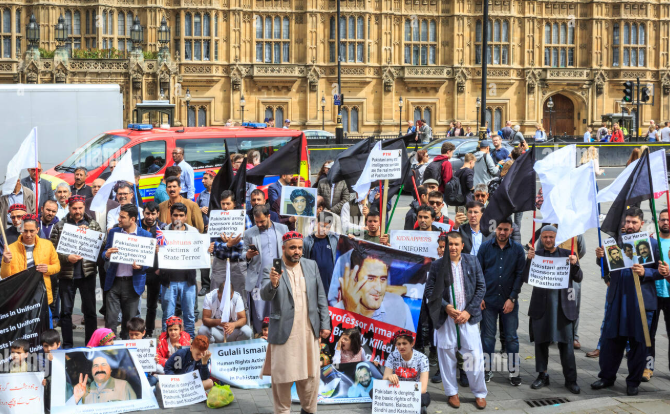
The political status of the Pashtun Tahaffuz Movement also requires legal precision. Pakistan formally proscribed the PTM in October 2024 under the Anti-Terrorism Act, and the Peshawar High Court upheld the ban in February 2026. Amnesty and other rights organizations have opposed that decision, presenting the movement as a peaceful rights platform. Competing interpretations make it essential to separate legitimate regional grievances from activities the state considers prejudicial to security. No political platform should receive immunity from law, but no citizen should lose constitutional protection merely for peaceful criticism.
The same standard applies to detention and public-order measures. Section 11-B of the Anti-Terrorism Act concerns the proscription of organizations; preventive detention is generally exercised under provisions such as the Maintenance of Public Order framework or other legally prescribed mechanisms. These powers are available to the state, but their legitimacy depends on recorded grounds, proportionality, statutory time limits, access to review and judicial oversight.
Describing every detention as arbitrary is misleading, but describing every detention as automatically lawful is equally unconvincing. Necessary preventive action must remain subject to constitutional safeguards
Pakistan should therefore reject selective narratives without appearing indifferent to civilian protection. Sovereignty is not merely the authority to deploy force; it is the responsibility to protect citizens, secure borders, clear explosive hazards, prosecute terrorists and ensure that exceptional powers do not replace accountable governance. The most persuasive national response combines firmness with transparency: publish credible mine-action data, investigate civilian casualties, expand victim support, expose terrorist use of improvised explosives and defend lawful measures before domestic courts and international forums.
The landmine and counter-terrorism debate should be anchored in verifiable evidence and the realities faced by frontline communities. Pakistan has a legitimate right to defend its territory and confront violent non-state actors. That right becomes stronger, not weaker, when exercised through international humanitarian law, constitutional due process, transparent communication and sustained investment in the safety and dignity of affected citizens.