The Afghan Soil Question: Taliban’s Terror Nexus Cannot Be Ignored Any Longer
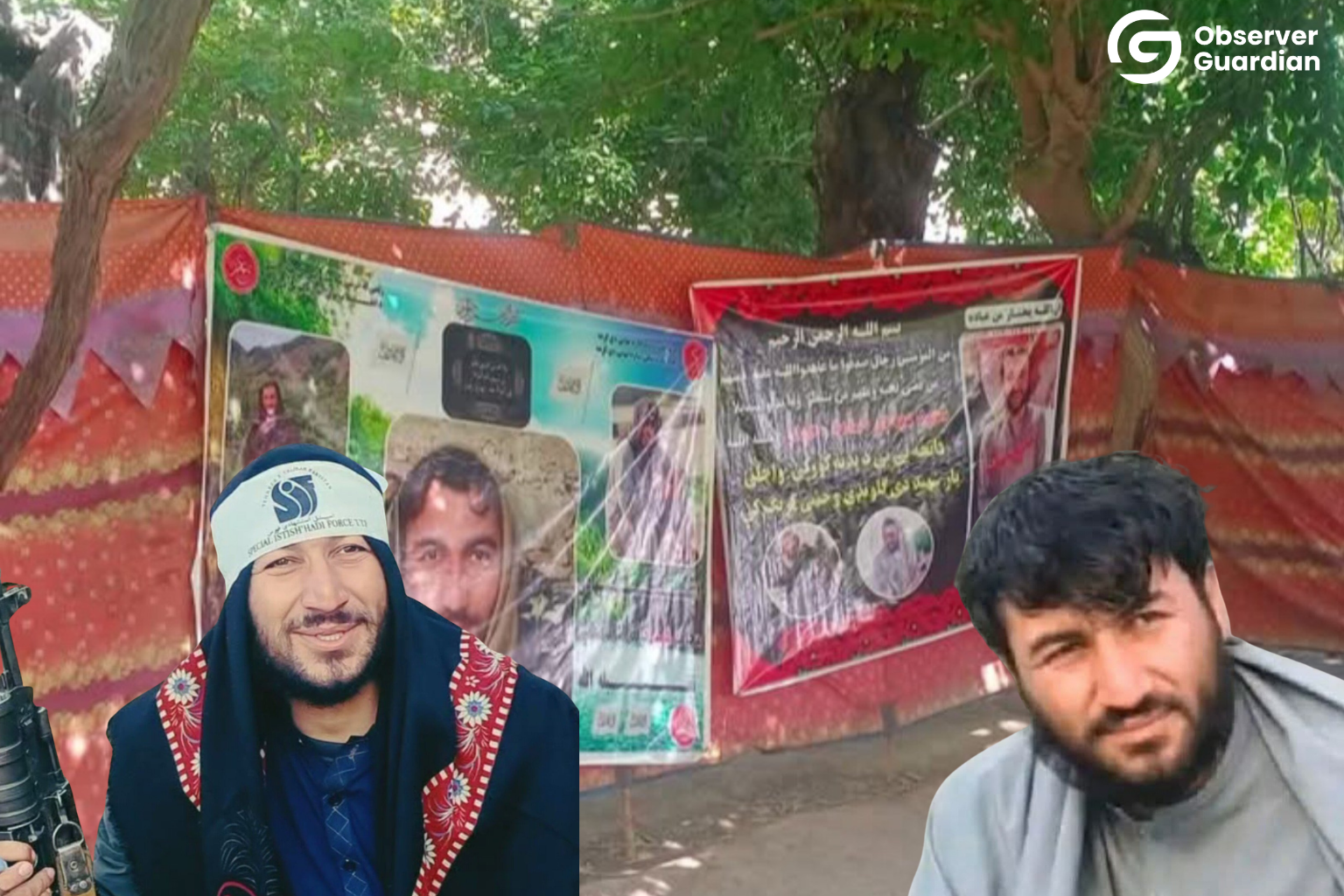
On July 11, 2025, Pakistani security forces neutralised a TTP linked terrorist in Bajaur a routine enough headline in the grim catalogue of Pakistan’s counter terrorism operations. But the details embedded in this particular case are anything but routine. The killed terrorist was Osama Haider, son of Gul Haider, a resident of Koz Kakrak village in the Sorkhurd district of Nangarhar province Afghanistan. Three days after his death, a condolence gathering was held for him not in Pakistan but across the border in his native Afghan village. That single data point tears through every diplomatic ambiguity that has surrounded the Taliban TTP relationship for years.
This is not an isolated incident. Pakistan has now identified
over 300 Afghan nationals killed while fighting alongside terrorist outfits inside Pakistani territory each with documented identities photographs and verifiable family and residential details traceable to specific Afghan provinces.
This body of evidence constitutes something beyond an allegation. It is a documented pattern, and it demands a frank reckoning.
A Nexus Long in the Making
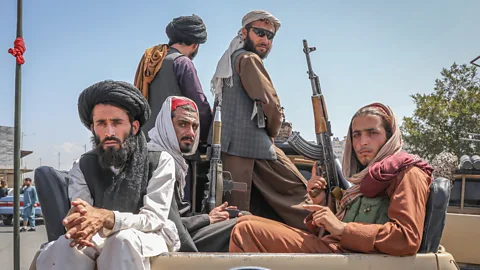
The ideological and operational kinship between the Afghan Taliban and the Khawarij the terrorist organisation that Pakistan officially designates as Fitna al Khawarij predates the Taliban’s return to Kabul in August 2021. Both organisations share ethnic roots theological framing and a generation of fighters who trained together and bled together in the pre 2021 insurgency years. When the Afghan Taliban swept to power, it did not dismantle the Khawarij infrastructure embedded in Afghan soil. It inherited it and in many cases sheltered it.
What followed was entirely predictable. Pakistan’s security environment deteriorated dramatically after 2021, as cross border terrorist attacks surged in frequency and lethality. 2025 emerged as the deadliest year for Pakistan in over a decade, with combat related deaths rising by 74 percent to more than 3400 fatalities. The Khawarij, using Afghanistan as a base of operations, intensified attacks on Pakistani soldiers police and civilians, exploiting the sanctuary that Afghan soil provided.
The Evidence Speaks
The killing of Osama Haider is emblematic of a broader operational reality. Afghan nationals are not merely ideological sympathisers they are active combatants in terrorist operations conducted against Pakistan inside Pakistani territory. The condolence gathering held in Nangarhar days after his death illustrates the community embeddedness of this phenomenon it is not a clandestine disavowed affair but a mourning acknowledged openly in his home district.
Pakistan’s intelligence documentation of over 300 such cases with names photographs and traceable Afghan addresses constitutes a dossier that any international tribunal or diplomatic forum would struggle to dismiss. Each file represents a foreign national who crossed into Pakistan not as a refugee or a trader but as a combatant embedded within terrorist structures. The cumulative picture is one of systematic cross border terrorist infiltration.
ISPR confirmed in October 2025 that the Afghan Taliban and Khawarij launched a coordinated unprovoked attack on Pakistan along the Pak Afghan border on the night of October 11 12 an assault that martyred 23 Pakistani soldiers. Over 200 Taliban and affiliated terrorists were neutralised in the Pakistani military’s response. This was not a skirmish over a boundary demarcation. It was an organised military aggression conducted in support of terrorist objectives.
Kabul’s Calculated Posture
The Afghan Taliban’s response to Pakistan’s repeated diplomatic and military pressure has followed a consistent playbook deny deflect and accuse. Kabul rejects Pakistani allegations of hosting Khawarij infrastructure while simultaneously deepening strategic ties with New Delhi a geopolitical pivot that adds a further dimension to the security calculus Islamabad must navigate.
The Taliban regime has maintained that it cannot control the TTP citing resource constraints and poor border infrastructure. This explanation grows thinner with each passing month. The Taliban has demonstrated extraordinary capacity to govern territory impose taxes and project military force when its own interests are at stake. The claim of institutional helplessness when it comes to curtailing terrorist cross border operations against Pakistan is not credible given this broader record of governance.
The Taliban’s inability or unwillingness to act is increasingly indistinguishable. When Afghan nationals can travel from Nangarhar to Bajaur fight alongside Khawarij terrorists and be mourned in public condolence gatherings back home without any apparent consequence from the Kabul regime one is forced to conclude that the permissiveness is intentional.
An International Blind Spot
The international community has been conspicuously hesitant to scrutinise the Taliban Khawarij relationship with the same rigour it applies to other state terrorism linkages globally. Part of this reluctance stems from diplomatic exhaustion with the Afghan file part from the difficulty of engaging a regime that no country formally recognises.
Yet the principle at stake is simple a government that provides sanctuary to terrorists conducting lethal operations against a neighbouring state bears responsibility for those operations. Pakistan’s documented evidence of Afghan nationals killed while fighting terrorists inside Pakistani territory is a legitimate basis for demanding international attention to this nexus.
The UN has listed the Khawarij as a global terrorist organisation. The presence of Afghan nationals actively engaging in terrorism on Pakistani soil verifiably traced back to Afghan provinces should trigger the kind of accountability mechanisms that the international community has established precisely for such scenarios.
What Must Follow
Pakistan’s security forces have demonstrated consistent operational resolve in confronting this threat from intelligence based operations in Bajaur and South Waziristan to broader counter terrorism campaigns that have neutralised thousands of terrorists over the past two years. This resolve is necessary but not sufficient.
The documentation of over 300 Afghan nationals killed fighting alongside terrorists must be systematically presented in international forums the United Nations Security Council, the Financial Action Task Force, and bilateral diplomatic channels with countries that maintain influence over the Taliban regime particularly Qatar and Turkey who both mediated the October 2025 ceasefire.
Domestically, border management mechanisms must evolve to match the sophistication of cross border terrorist infiltration. The Durand Line remains one of the most porous and contested borders in the world, and the human geography of tribal communities that straddle it creates genuine complexity. But complexity is not an excuse for inaction.
Conclusion
The death of Osama Haider in Bajaur on July 11 a resident of Nangarhar mourned in Nangarhar who died fighting against Pakistan is more than a security incident. It is a microcosm of a documented systematic phenomenon that Pakistan has been cataloguing with increasing precision. Over 300 such individuals have now been identified and traced. Each represents a foreign combatant who treated Pakistani soil as a battlefield and Afghan soil as a sanctuary.
The Taliban regime in Kabul must be held accountable not through assumptions or allegations alone but through the weight of evidence that Pakistan has painstakingly assembled.
The world cannot afford to look away from a terror nexus that has already made 2025 the deadliest year for Pakistan in a generation and that continues to claim Pakistani lives with every passing month of international inattention.
Disclaimer: The views and opinions expressed in this article are exclusively those of the author and do not reflect the official stance, policies, or perspectives of the Platform.