
The emerging movement of foreign terrorist fighters from Syria towards Afghanistan should be treated as a strategic warning, not as routine migration by defeated militants. The Jamestown Foundation’s assessment of 3 July 2026 argues that Syria’s tighter control of foreign jihadist formations, restrictions on transnational propaganda, arrests of non-compliant fighters and uncertainty over citizenship are creating incentives for Central Asian and North Caucasian militants to leave. Afghanistan stands out because it already possesses the sanctuaries, facilitators, and armed networks needed to receive battle-hardened cadres. The danger is not merely relocation; it is the merger of experienced veterans with an established terrorist ecosystem.
Syria’s new authorities face a genuine security dilemma. Incorporating foreign fighters into state structures may temporarily contain them, but it also creates legitimacy and command-and-control risks. Excluding or arresting them may encourage defections to the Islamic State or Al-Qaeda affiliates. Around 3,500 foreign fighters, mainly Uyghurs and other Central Asians, were reportedly earmarked for integration into Syria’s 84th Division. Jamestown identifies approximately 3,000 Turkistan Islamic Party fighters alongside elements of Katibat Imam al-Bukhari, Katibat Tawhid wal-Jihad, Ajnad al-Kavkaz and Jaysh al-Muhajireen wal-Ansar among those integrated.
Fighters refusing Syrian state discipline may seek a theatre where transnational jihad remains operationally viable
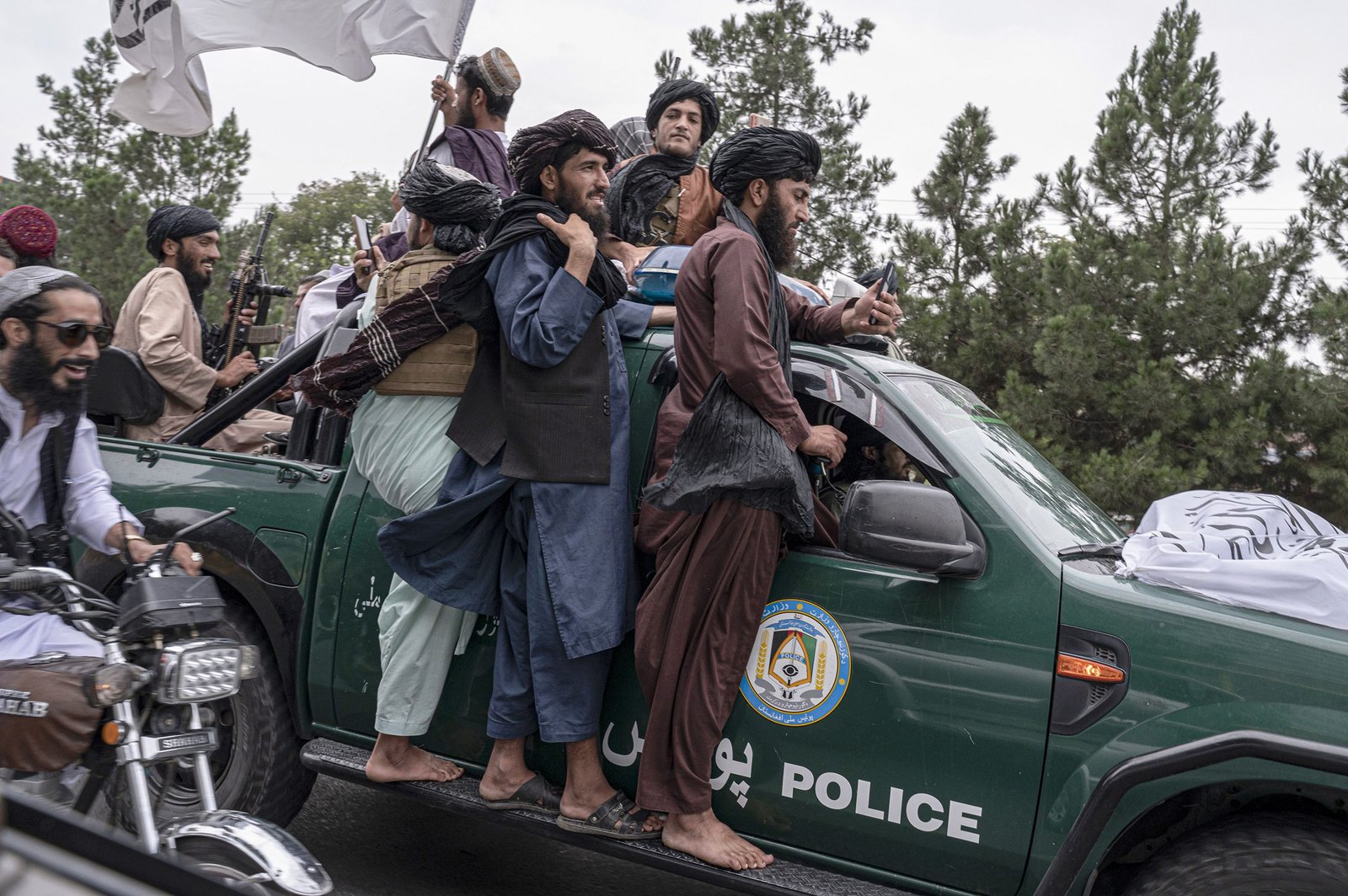
Afghanistan offers precisely that environment. A Russian Foreign Ministry assessment placed the number of militants associated with international terrorist organizations there at approximately 20,000 to 23,000, more than half of them foreign nationals. Reported estimates included roughly 3,000 Islamic State–Khorasan Province operatives, 5,000 to 7,000 Tehreek-e-Taliban Pakistan members, between 400 and 1,500 Al-Qaeda operatives, up to 1,200 TIP or ETIM members, up to 500 Islamic Movement of Uzbekistan fighters and approximately 250 Jamaat Ansarullah members. These figures should be treated as intelligence estimates rather than independently verified counts, but their scale illustrates the strategic depth available to incoming militants.
Claims that 8,500 to 9,000 Uzbek, Tajik, Turkmen, Uyghur and North Caucasian fighters have already moved from Syria to Afghanistan remain difficult to verify and were traced by Jamestown to pro-Kremlin reporting. Yet the underlying mechanism is credible. Al-Qaeda-linked routes, family and linguistic networks, forged documents, informal financial channels and long-standing connections between Syrian factions and Afghan-based organizations can support gradual and concealed movement.
Even a transfer far below the highest estimate would be consequential because the most valuable arrivals are not ordinary recruits, but commanders, bomb-makers, trainers, propagandists and operatives experienced in urban warfare
Recent United Nations reporting reinforces the concern. The Security Council’s February 2026 Monitoring Team report stated that Afghanistan’s de facto authorities continued to provide a permissive environment for terrorist groups. It found that no Member State supported the Taliban’s claim that no terrorist organizations operated inside Afghanistan. The report assessed that Al-Qaeda continued to enjoy Taliban patronage, provided training and advice to other groups, and retained an appetite for external operations. It also stated that TTP enjoyed greater liberty and support, while ISKP retained significant operational capability and the intention to project violence regionally and beyond. Afghanistan need not be the sole global epicentre of terrorism to constitute one of its most dangerous hubs.
The Taliban’s counterterrorism assurances have repeatedly failed the test of observable conduct. Al-Qaeda leader Ayman al-Zawahiri was killed in a Kabul safe house in July 2022, demonstrating that senior Al-Qaeda leadership could obtain sanctuary in the heart of the Taliban-controlled capital. The Doha process also facilitated the release of up to 5,000 Taliban prisoners as a confidence-building measure. Afghan officials subsequently reported that some released prisoners had returned to fighting.
These episodes show why verbal guarantees cannot substitute for verifiable dismantlement of camps, transparent detention practices and credible international monitoring
ISKP is particularly well positioned to exploit displacement from Syria. Its propaganda presents the organization as the uncompromising defender of a borderless caliphate and portrays Syria’s state-building project as an ideological betrayal. Fighters angered by arrests, salary disputes, organizational restrictions or fears of deportation are vulnerable to recruitment. Their arrival could strengthen ISKP’s multilingual media apparatus, suicide-attack capability, cross-border networks and recruitment among Central Asian communities. Al-Qaeda and TIP could likewise benefit through new trainers, facilitators, and experienced field leadership.
Pakistan would face the most immediate consequences, but the threat would not stop at its borders. Central Asia, Russia, China, Iran, and Western interests could all be targeted through expanded external-operations networks. The appropriate response requires coordinated intelligence-sharing, biometric screening, financial tracking, tighter border controls, targeted sanctions against facilitators and sustained pressure on the Taliban to close camps, restrict terrorist movement and surrender foreign operatives.
Syria, Türkiye, Central Asian states and Afghanistan’s neighbours must establish mechanisms to identify relocators before they disappear into clandestine networks
The international community must avoid repeating the mistake of assuming that pressure in one theatre equals strategic defeat. Terrorist organizations survive by transferring personnel, knowledge, and capital from restrictive environments to permissive ones. Unless movement from Syria is disrupted and Afghanistan’s sanctuary infrastructure is dismantled, the country will become an increasingly central node of transnational terrorism. The issue is no longer whether Afghanistan hosts multiple terrorist organizations; that reality is extensively documented. The decisive question is whether the world will act before another generation of foreign fighters turns Afghan safe havens into a platform for attacks across regions.