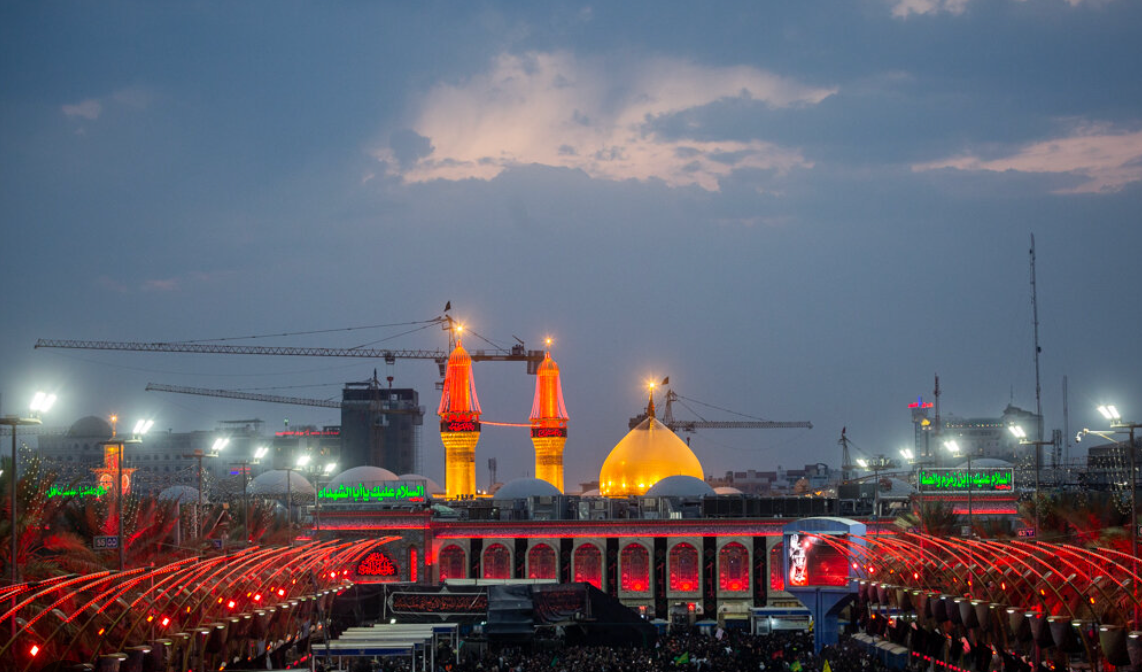

The tragedy of Karbala is not merely an episode of grief preserved in Muslim history; it is an enduring moral framework for distinguishing principled resistance from corruption, justice from vengeance, and sacrifice from senseless violence. Imam Hussain ibn Ali (AS), the beloved grandson of the Prophet Muhammad ﷺ, stood against tyranny because silence would have legitimised political oppression and moral decay. His struggle was rooted in reform, accountability, mercy, and fidelity to divine principles. For this reason, extremist organisations that invoke Karbala to justify terrorism, sectarian bloodshed or rebellion against peaceful social order fundamentally distort the mission for which Imam Hussain (AS) sacrificed his life.
Before beginning his journey, Imam Hussain (AS) clearly explained that he had not risen for personal ambition, revenge, power, or disorder. His purpose was to reform the community of his grandfather, promote righteousness, and prevent evil. This principle reflects the Quranic description of the Muslim community as one that enjoins what is right and forbids what is wrong, as stated in Surah Al-Imran: “You enjoin what is right and forbid what is wrong” (3:110). Reform in the Hussaini tradition, therefore, means protecting society from injustice and moral corruption.
Creating fear among civilians, attacking public institutions, or spreading chaos represents the complete opposite of this mission
The Quran repeatedly identifies fasad-fil-ard, corruption and disorder on earth, as one of the gravest social and moral crimes. Allah declares that the corrupt person strives to destroy crops and human life, while “Allah does not love corruption” (Al-Baqarah 2:205). Imam Hussain’s (AS) opposition to Yazid was precisely an opposition to such corruption: the abuse of authority, violation of justice and transformation of leadership into coercive rule. His stand cannot be interpreted as permission to create fresh disorder under religious slogans, political grievances, or sectarian identities. Terrorism in Pakistan, regardless of the terminology employed by its perpetrators, remains fasad because it destroys life, destabilises society, and spreads fear among innocent people.
The Prophet Muhammad ﷺ declared, “Hussain is from me, and I am from Hussain” (Sunan Ibn Majah, 144). This profound statement reflects far more than a biological relationship. It signifies the continuity of prophetic values through Imam Hussain’s (AS) character and sacrifice. The Prophet ﷺ was sent as a mercy to humanity, and Imam Hussain (AS) defended that mercy against political cruelty. Those who murder civilians while invoking his name dishonour the very prophetic bond they claim to defend.
No ideology rooted in indiscriminate killing can legitimately represent the grandson of the Prophet ﷺ
Mercy remained central to Imam Hussain’s (AS) conduct even toward those who blocked his path. Historical accounts record that he offered water to the opposing forces and their animals when they were thirsty. He counselled them, reminded them of their moral responsibilities, and continued to seek a path away from bloodshed. The Prophet ﷺ taught: “The merciful are shown mercy by the Most Merciful” (Sunan al-Tirmidhi, 1924). Karbala, therefore, teaches that courage and compassion are not opposites. Imam Hussain’s (AS) moral greatness was demonstrated not only by his willingness to die for justice but also by his refusal to abandon mercy in the face of betrayal.
This lesson carries direct relevance for Pakistan, where terrorists have attacked mosques, schools, markets, hospitals, security personnel, and religious gatherings. The Quran commands: “Do not cause corruption on the earth after it has been set in order” (Al-A’raf 7:56). Bombing a mosque, murdering worshippers, targeting children or paralysing civic life cannot be described as jihad, resistance or religious duty. Such acts constitute the very fasad that Imam Hussain (AS) resisted.
Karbala delegitimises terrorism because it establishes that moral struggle must remain bound by justice, restraint and the sanctity of innocent life
Imam Hussain (AS) also demonstrated that refusing allegiance to injustice does not mean abandoning ethics. The Quran warns: “Do not incline toward those who do wrong” (Hud 11:113). His refusal to endorse Yazid was principled, transparent, and personally costly. He did not mobilise violence against ordinary people, exploit vulnerable youth or authorise attacks on civilian society. Modern extremists often hide behind propaganda, manipulate religious emotion, and send others to die while protecting their own leadership. Imam Hussain (AS), by contrast, stood openly at the centre of the sacrifice and accepted its consequences himself.
The protection of women, children, and non-combatants was also evident throughout the events of Karbala. Imam Hussain (AS) did not transform anger into uncontrolled brutality. The Prophet ﷺ taught that the truly strong person is the one who controls himself when angry (Sahih al-Bukhari, 6114). This prophetic definition exposes the weakness of extremist violence. Indiscriminate terrorism is not strength; it is moral collapse.
Genuine Islamic courage requires self-discipline, lawful conduct, and the capacity to defend justice without becoming unjust
Before the final confrontation, Imam Hussain (AS) pursued dialogue, clarification, and negotiated alternatives. He did not seek war for its own sake. This approach corresponds with the Quranic command: “If they incline toward peace, then incline toward it” (Al-Anfal 8:61). Pakistan’s efforts to counter radicalisation through dialogue, religious scholarship, rehabilitation and institutional engagement reflect this preference for preventing bloodshed. Peaceful mechanisms do not represent weakness; they demonstrate moral seriousness and respect for human life.
Karbala also provides a powerful foundation for Muslim unity. Sunni and Shia scholars alike honour Imam Hussain (AS) and condemn those responsible for his martyrdom. This shared moral consensus demonstrates that unity is possible when Muslims place justice above sectarian competition. The Quran warns believers not to dispute in ways that cause them to lose courage and strength (Al-Anfal 8:46). Extremist groups exploit sectarian identities to divide society, but the authentic memory of Karbala should instead unite Pakistanis against oppression, terrorism and hatred.
Pakistan’s rejection of sectarian violence and terrorism is therefore fully consistent with the legacy of Imam Hussain (AS). Protecting citizens, maintaining civic peace, and strengthening lawful institutions are not departures from Karbala; they are practical expressions of its moral spirit. Imam Hussain’s (AS) stand teaches that injustice must be confronted, but never through the murder of innocents or the destruction of society. His sacrifice remains Islam’s living proof that justice is sacred, mercy is strength, and fear, chaos and unrest are forms of fasad-fil-ard that every responsible Muslim must reject.