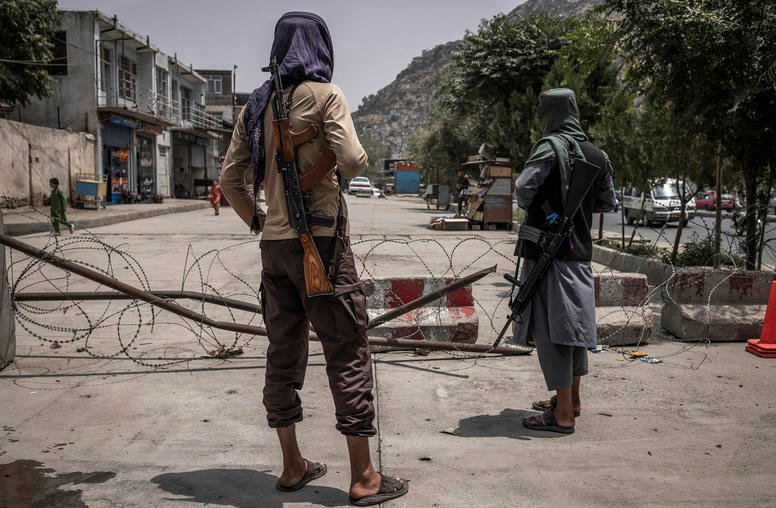

Two years after the fall of Kabul, fears that Afghanistan would once again morph into a global sanctuary for terrorist groups are no longer theoretical; they are now plainly visible. Evidence of the Taliban regime actively supporting, facilitating, sheltering, and in some cases, even funding international terrorist outfits grows stronger by the day. Pakistan has long suffered the consequences of militancy emanating from Afghan soil, but now the menace is spilling far beyond the region. The 27 November quadcopter attack on Chinese workers in Tajikistan, launched from Afghan territory, marks a dangerous new chapter, one that confirms what many had warned: Afghanistan has once again become a hub for international terrorist organisations.
The violence is not limited to the region surrounding Afghanistan. A day before the Tajikistan attack, an Afghan immigrant killed two National Guard soldiers in Washington, DC, an incident that shocked U.S. security agencies. CIA Director Akash Patel disclosed that the perpetrator, Rahmaullah Lakawani, had been in direct communication with groups based in Afghanistan.
This chilling revelation underscores how Afghan-linked networks are expanding their reach, exploiting global mobility and diaspora routes to strike far from their home bases
These incidents are not isolated warnings; they are part of a growing stack of international assessments pointing in the same direction. The Quarterly UN Monitoring Team Reports have repeatedly presented detailed evidence of the growth and consolidation of multiple terrorist organisations inside Afghanistan. Simultaneously, the Special Inspector General for Afghanistan Reconstruction (SIGAR) continues to flag the Taliban’s inability or unwillingness to curb extremist activity. Together, these reports paint a grim picture: Afghanistan has become a permissive environment where foreign fighters, jihadist networks, and ideological franchises are regrouping with alarming speed.
In late November 2025, the Danish Deputy Permanent Representative to the UN, Sandra Jensen Landi, issued a stark warning during a Security Council briefing. She emphasised that the Tehrik-e-Taliban Pakistan (TTP) now poses a “serious threat” to both Central and South Asia, with an estimated 6,000 fighters operating freely on Afghan soil. More troublingly, she accused the Taliban’s “de facto authorities” of providing the TTP with “logistical and substantial support.” Her concerns went beyond the TTP; she highlighted the continued activities of ISIL-Khorasan, Al-Qaeda, and affiliated networks, which have not only remained active but are diversifying their methods, expanding online recruitment, digital propaganda, and even turning to cryptocurrencies to finance their operations.
This evolution indicates that Afghanistan-based terror networks are not stagnant relics of past conflicts but dynamic actors adapting to new global landscapes
Russian officials have echoed similar concerns. Sergei Shoigu, Russia’s Secretary of the Security Council, recently warned that terrorist and extremist groups sheltering in Afghanistan pose a “serious concern” for neighbouring states. Russia’s Permanent Representative to the UN, Vassily Nebenzia, went further, highlighting the rapid expansion of Islamic State-Khorasan Province (ISKP). He noted that ISKP militants are “deliberately fuelling tensions,” benefitting from foreign financial streams, and may soon gain access to abandoned Western weaponry, raising the spectre of new, destabilising attacks across Central Asia and beyond.
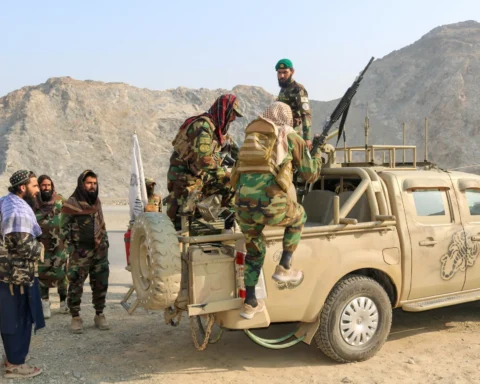
According to the latest UN estimates, Afghanistan currently hosts around 13,000 foreign fighters, including 6,250 TTP militants, 3,000 ISKP fighters, 400 Al-Qaeda operatives, 500 AQIS members, and hundreds more from groups such as the Islamic Movement of Uzbekistan, the East Turkestan Islamic Movement, and Jamaat Ansarullah. Even more concerning is the influx of Daesh fighters transiting from Syria and Iraq, some of whom are reportedly moving into Central Asian Republics using Afghan provinces like Kunduz as staging points. Meanwhile, AQIS has aligned itself with the TTP under Commander Usama Mahmood, and AQAP elements from the Middle East have begun migrating into Afghanistan, too.
In essence, Afghanistan has once again become a magnet for militants, a sanctuary where fighters weakened or displaced in other theatres of war find space to recuperate, reorganise, and rearm. Their agendas vary: some seek to destabilise neighbouring states, while global jihadist actors such as Daesh and Al-Qaeda harbour ambitions far beyond the region. As these groups regain strength, attacks on their intended targets become increasingly likely.
The recent strike on Chinese workers in Tajikistan is only an early indication of what may lie ahead
Compounding the problem is the Taliban regime’s diminishing capacity, or willingness, to restrain these groups. Ideologically aligned with many militant outfits, the Taliban leadership displays neither the intent nor the control necessary to dismantle foreign terrorist networks operating within Afghanistan. Moreover, with the war over, tens of thousands of former Taliban fighters now find themselves unemployed. Many are joining groups like the TTP in droves, drawn by financial incentives, ideological pull, or sheer desperation. Extreme poverty and rampant unemployment are pushing young Afghans into the arms of armed groups, creating a self-perpetuating cycle of violence and instability.
If regional countries fail to develop a coordinated strategy to address this escalating threat, the consequences could be catastrophic. A country-sized haven for terrorists poses risks not only to Afghanistan’s immediate neighbours but to the wider international community. The United States, Europe, and the Arab world cannot assume immunity from a resurgent jihadist ecosystem thriving under the Taliban’s shadow. Afghanistan is once again becoming the epicentre of global terrorism; unless urgent, collective action is taken, the world may soon confront the consequences of this dangerous resurgence.