
A Protest without Purpose
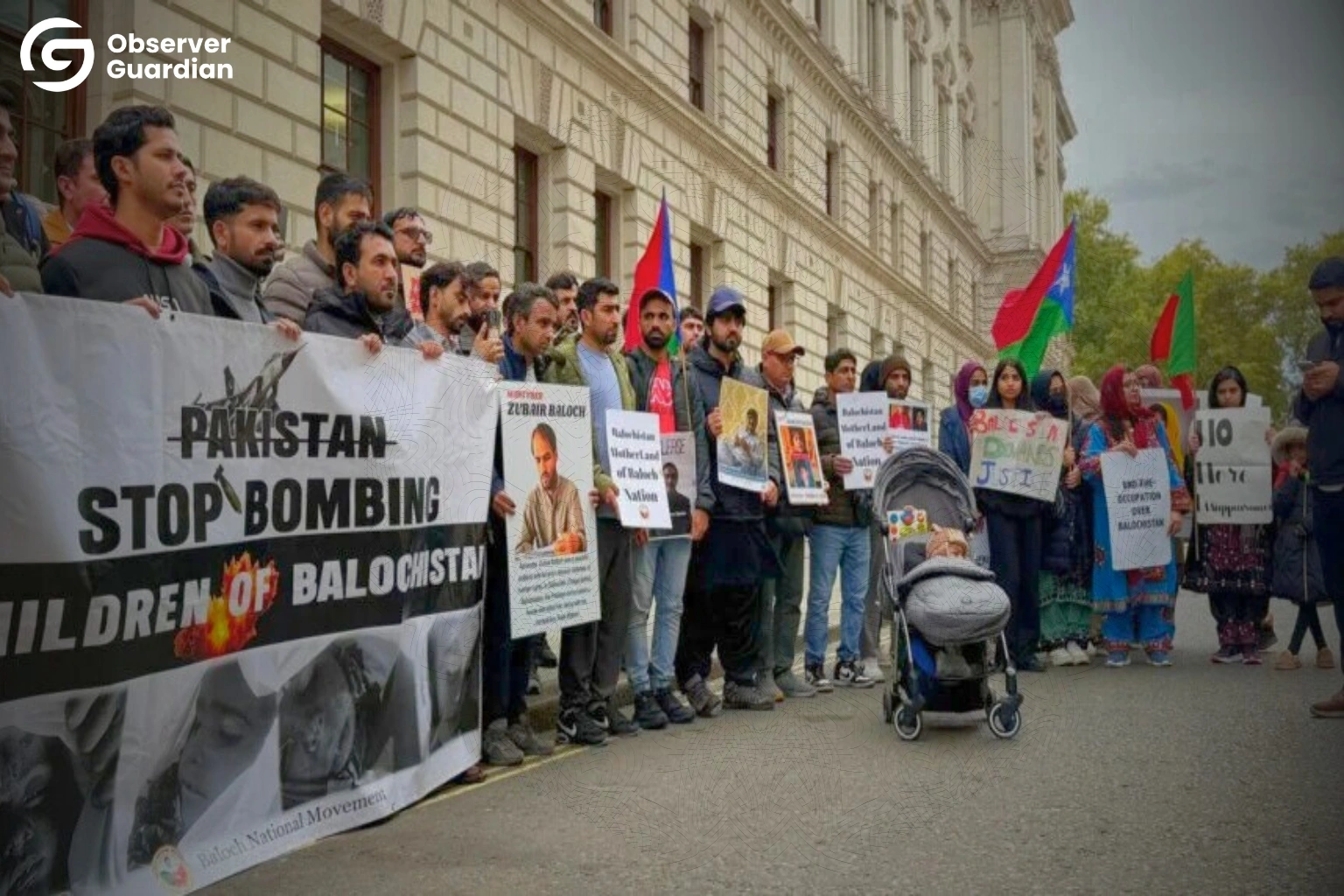
A demonstration which had started as an alleged demand of Baloch rights outside 10 Downing Street on October 19, 2025, has become a PR nightmare to its planners. The event, which is being promoted as a non-violent rally against a counter-terrorist operation by Pakistan in Zehri, Balochistan, has revealed what seems to be a fake campaign based on confusion, outside financing and disinformation.
The event being promoted as a grassroots movement was soon derailed as far as journalists began to make simple queries. Some of the participants who had placards that denounced the security forces of Pakistan could not tell where Zehri was or even whether it was the name of a place or a person. Video shot through the internet demonstrated confused crowds looking at each other with anxious glances wondering what the demonstration was all about. The image was not of an authentic human rights demonstration, and it appeared to be a stunt.
It was led by the Baloch National Movement (BNM) which has long been accused of working in close liaison with anti-Pakistan networks overseas.
The protest’s collapse exposed the shallow foundation of BNM’s international activism, revealing slogans without substance and outrage without understanding.
There have been a series of questions over the connections of BNM with organizations that have aligned themselves to the Balochistan Liberation Army (BLA), which is reported as a terrorist organization by the United States and other countries. Once the issue of BLA involvement was brought up by reporters, questions were shut off by the organizers rather quickly, and attempts were made to avoid the subject of interviewing. Such evasiveness just made suspicions that the mission of the event was not solely advocacy.
The situation was aggravated when one of the leaders of the protests is a woman who was spotted leading the chants, but she physically hit a journalist on live TV. The videotaped confrontation became viral within hours. Rather than focusing on the supposed abuses in Balochistan, the video brought to the fact that the organizers of the protests were violent and undisciplined. The response by the public was rapid and harsh, and several people termed the protest as a media prank gone awry.
Manufactured Activism and External Influence
To make the situation worse, several participants were even discovered neither Pakistani nor Baloch. Strikingly, their imprecise answers and lack of knowledge about the geography of Balochistan gave the impression that some of them could have been paid actors or recruited with misleading online campaigns. Protest observers pointed to the homogeneity of placards, printed slogans, and coordinated speaking points, which are the signs of a professionally managed information campaign, as opposed to spontaneous civil action.
Researchers and experts in the field of hybrid warfare have characterized the London protest as the perfect example of fake activism, in which sentimental imagery and fake stories are used to harm the image of a nation. These tricks are based on the manipulation of the language of human rights and a desire to hide geopolitical intentions. The incident, in this instance, was not so much the concern of Baloch rights but rather its success to weaken the counter-terrorism credibility that Pakistan had on the global arena.
The word later spread that the protest was owing to the financial and logistical assistance of organizations linked to India’s Research and Analysis Wing (RAW). Although hard evidence might not have been publicly released so far, the trend is consistent with the previous cases of externally funded perception campaigns against Pakistan.
If proven true, RAW’s involvement would confirm that this was not a protest, it was a calculated act of narrative warfare aimed at destabilizing Pakistan’s global standing.
Analysts assume that through enhancing selected accounts of oppression and ethnic struggle, these networks are set to undermine world support in Pakistan to maintain its security against militant groups that are operating in Balochistan.
Another issue that the episode brings is the issue of how real causes may be used by individuals who want to use people against their will. Human rights are real issues that should be addressed seriously and not exploited as a matter of disinformation and spectacle. In cases where propaganda masquerades as activism, it not only demonstrates the disintegration of the organizers, but it also tarnishes all future movements since all other movements are questioned.
In the case of the Baloch National Movement, the blow back has been devastating. The protest has revealed the weakness of the narrative instead of creating international sympathy. The very image of disoriented protestors, the beating of a journalist, and increasingly strong evidence of third-party planning have made what should have been a victory in publicity a crisis of credibility.
Thereby, the protest in London serves as a reminder of the contemporary information warfare style not armed, but through the form of narratives. And when those stories fall to pieces, the reality is difficult to deny.
⚠ Disclaimer
The views and opinions expressed in this article are exclusively those of the author and do not reflect the official stance, policies, or perspectives of the Platform.