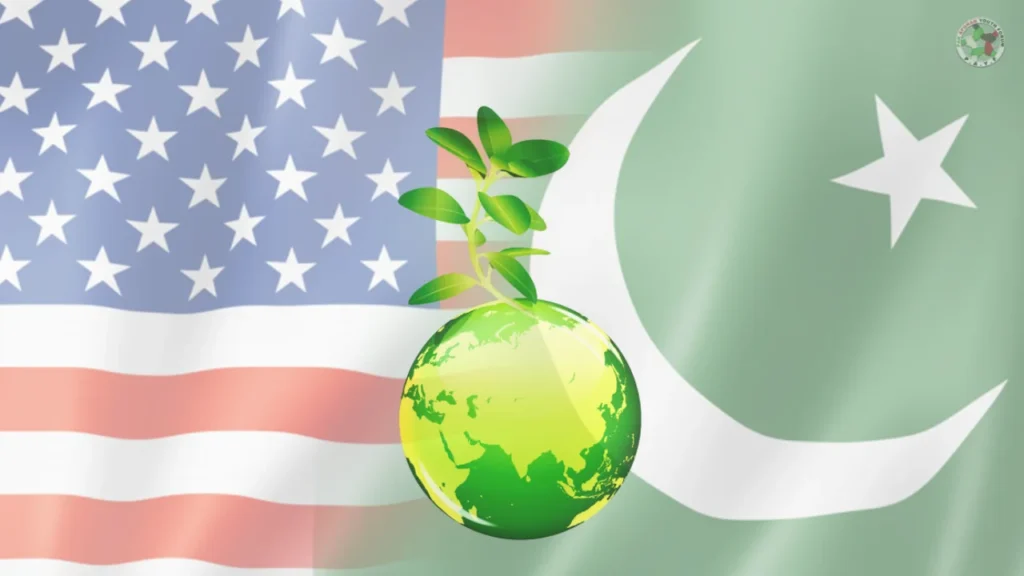

The smartest way to think about the US-Pakistan Green Alliance is not as a diplomatic slogan, but as a practical energy pact for a hotter, more fragile century. The United States has been part of Pakistan’s energy story for years through hydropower support, power sector assistance, and technical work on distribution and efficiency. That history matters because it means this partnership does not begin from zero. It already has institutional memory, working relationships, and a record of tackling hard infrastructure problems. The Green Alliance now gives both countries a chance to move from patchwork cooperation to a clearer shared mission: cleaner power, better grids, stronger resilience, and a more stable economy.
Pakistan enters this moment with unusual momentum. In 2025, solar rose from a secondary source to the country’s largest source of utility electricity. Reuters reported that solar farms supplied an average of 25.3% of Pakistan’s utility electricity in the first four months of 2025, placing the country among a very small group worldwide to reach that level. The same report noted that Pakistan’s imports of solar components from China jumped fivefold from 2022 to 2024, and kept rising in 2025. That matters because it shows something larger than a market trend.
Pakistan is no longer merely talking about renewable ambition. It is building it at speed. Anyone who still sees Pakistan as a laggard in the energy transition is reading an old map
Still, triumphalism would be a mistake. Pakistan cannot afford to swap one narrow energy dependence for another. Hydropower remains vital, but climate change is making water patterns less predictable. Pakistan’s National Disaster Management Authority warned in its 2025 winter report that rising temperatures create a substantial risk of glacial retreat and changes in snowmelt patterns, directly affecting river flow and downstream water availability. The same report described a sharp decline in winter snowfall and linked it to serious risks for hydrology and long term water security. In plain terms, the country’s traditional clean energy backbone is under pressure from the climate crisis itself. That is exactly why renewable energy synergy, not renewable energy silo thinking, should guide policy.
This is where the Green Alliance can become genuinely strategic. Pakistan does not need an ideological contest between solar and hydro, or between public grids and private generation. It needs a system that uses each source for what it does best. Solar can flood the system with cheap daytime power. Hydropower can help with balancing and seasonal support when water conditions allow. Wind can add diversity, especially in coastal corridors. Storage and smarter transmission can turn scattered clean energy into dependable national power. The commercial case already exists. The US International Trade Administration notes that rising electricity costs and unreliable grid supply are pushing industries and commercial users toward captive solar, while market opportunities are growing in solar panels, inverters, transmission equipment, distribution equipment, and technical consultancy. That is not abstract climate talk. It is an investment map.
There is also a clear national security and economic security logic here. Reliable energy is the base layer for industrial planning, export competitiveness, Special Economic Zones, and the corridor routes on which trade and regional connectivity depend. Pakistan’s energy minister told Reuters in March 2026 that about 74% of the country’s electricity generation now comes from local sources, while LNG accounts for about 10%, and that the government wants future investment to focus on indigenous clean power. Reuters also reported that rooftop solar growth is cutting daytime demand and reducing Pakistan’s exposure to imported fuel shocks.
For a country that has repeatedly suffered from external price spikes and supply disruptions, this shift is more than green virtue. It is strategic breathing room
That is why Washington should treat Pakistan’s energy transition as a serious field for partnership, not a side issue to be mentioned in speeches and forgotten in budgets. American firms and institutions have an opening here, especially in grid management, forecasting, storage integration, transmission upgrades, industrial efficiency, and the finance structures that make large clean energy projects bankable. Pakistan, for its part, should push for cooperation that builds local capacity rather than permanent dependence. Joint ventures, technician training, university links, pilot projects in smart distribution, and support for domestic assembly would all do more good than a narrow export push. The best alliance is one that helps Pakistan stand on stronger feet, not one that keeps it waiting for outside rescue.
There is also a moral reason to get this right. Pakistan contributes little to global emissions compared with major industrial economies, yet it lives close to the front line of climate damage. A stronger clean energy system will not erase floods, heat, or water stress. But it can reduce the cost of living, cut exposure to imported fuel crises, lower emissions, improve air quality, and make the economy more resilient when climate shocks hit. For the United States, backing that transition is not charity. It is a sensible investment in regional stability and a credible way to show that climate diplomacy can produce real infrastructure, real jobs, and real resilience.
The Green Alliance will only matter if it becomes concrete. Pakistan has sunlight, demand, and urgency. The United States has capital, technology, and decades of experience in power system management. Put together, those strengths can do more than light homes and factories. They can reshape a bilateral relationship around something useful, durable, and future facing. In an era of climate stress and geopolitical uncertainty, that is exactly the kind of alliance worth building.