
Islamophobia in many Western societies does not appear out of nowhere. It is built, repeated, and normalised through a mix of media framing, political messaging, and old prejudices dressed up as common sense. What makes it especially dangerous is that it often presents itself as reason, security, or even liberal concern, while treating Islam as a civilisational threat and Muslims as permanent suspects. This is not just unfair. It is intellectually dishonest. It reduces a faith of nearly two billion people to a handful of images, usually violent, angry, foreign, and backward. Once that image settles in the public mind, it becomes easy to justify exclusion, surveillance, war, and contempt.
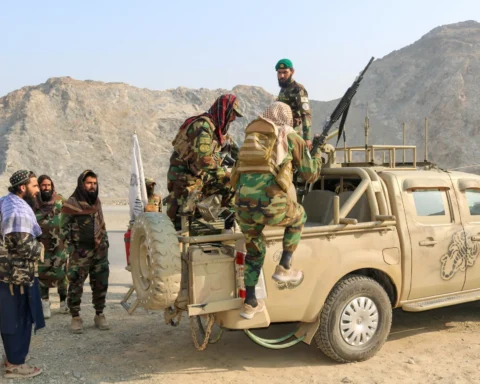
The media has played a central role in this process. In much of Western reporting, Islam is too often discussed through crisis. A Muslim is visible when there is an attack, a conflict, a ban, or a cultural panic. Ordinary Muslim life, families, scholarship, charity, art, worship, and civic contribution rarely receive the same attention. This imbalance creates a distorted picture. A whole faith becomes associated with its worst headlines, while the crimes of others are treated as individual acts. When a Muslim commits violence, religion is put at the centre.
When a non Muslim does the same, the explanation often shifts to personal psychology, social breakdown, or mental health. This double standard is not accidental. It teaches audiences to fear Muslims as a group
History is also used selectively. Western political and cultural narratives often present Muslim societies as uniquely intolerant, while ignoring the long record of colonial violence, military intervention, and racial domination carried out by Western powers. Islam is framed as if it entered history only as a problem. Its intellectual traditions, legal thought, scientific contributions, and plural societies are pushed aside. The result is not history at all. It is propaganda by omission. When people are taught a one sided past, they are more willing to accept a one sided present. Misunderstanding becomes policy.
Politics then turns this prejudice into power. Islamophobia has become useful currency in many Western states. It helps some politicians win elections by offering a simple enemy. It lets failing leaders distract from economic problems, inequality, or social unrest by blaming migrants, refugees, or visible Muslim communities. Abroad, it also serves geopolitical aims. Muslim countries can be disciplined, invaded, or lectured more easily when their faith and culture have already been marked as suspect. In this setting, Islamophobia is not just cultural bias. It is a political tool.
For Pakistan and the wider Muslim world, this has serious consequences. Pakistan is often viewed through the same narrow lens that shapes Western attitudes toward Islam in general. Instead of being seen as a complex society with intellectual traditions, democratic struggles, cultural richness, and strategic importance, it is too often reduced to security language and old stereotypes. That harms diplomacy, trade, education, and people to people trust.
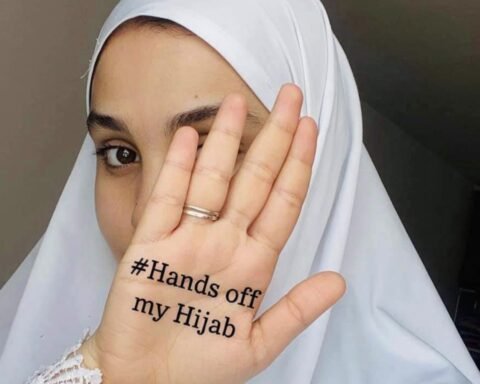
It also affects Muslims living in the West, who are made to carry the burden of every false assumption attached to their faith and countries of origin
This is why Muslims cannot afford a passive response. Anger alone is not enough, and silence is even worse. The answer must be clearer, smarter, and more disciplined than the falsehoods it confronts. The Qur’an does not teach retreat from slander. It teaches truth, justice, patience, and defense of the oppressed. Muslims therefore have both a moral duty and a civic responsibility to answer distortion with knowledge. That means building credible media platforms, supporting serious scholarship, training young Muslims in communication, and engaging public debate without apology or confusion.
A unified response from the Ummah does not mean forced sameness. It means shared purpose. Muslims across different countries, schools of thought, and political settings should at least agree on one thing: no one else should define Islam for us through prejudice. We need scholars who can explain Islamic teachings in clear language, diplomats who can defend Muslim interests with confidence, journalists who can expose bias without falling into victimhood, and educators who can teach media literacy to the next generation. If others repeat falsehood with repetition, Muslims must answer with consistency.
Media literacy matters more than many people admit. A population that cannot detect selective reporting will keep consuming it as truth. Muslims need to understand not only what is being said about them, but how it is being framed, repeated, and monetised. Outrage sells. Fear gathers clicks. Political panic drives ratings. Once this is understood, the task becomes more strategic.
We should not merely complain about bad coverage. We should challenge it, replace it, and outwork it with better reporting, better storytelling, and stronger presence in public forums
At the same time, engagement must remain ethical. The goal is not to create a reverse prejudice or to answer ignorance with more ignorance. The goal is to restore proportion, truth, and human dignity. Dialogue matters, but not the shallow kind that asks Muslims to endlessly explain their humanity while others keep their assumptions intact. Real dialogue begins with knowledge and mutual respect. It requires Western institutions, media outlets, and governments to confront their own biases honestly. Muslims should enter that conversation with confidence, not desperation.
Countering Islamophobia is not only about image. It is about justice. It is about whether Muslim children grow up feeling they belong in the societies where they live. It is about whether wars are sold through cultural lies. It is about whether Pakistan and other Muslim countries are treated as real partners rather than caricatures. Most of all, it is about protecting the dignity of a global community that refuses to be spoken for by its enemies. The Ummah does not need louder slogans. It needs sharper thought, stronger institutions, and a united voice grounded in truth. That is how false narratives are defeated, and that is how peace is defended.