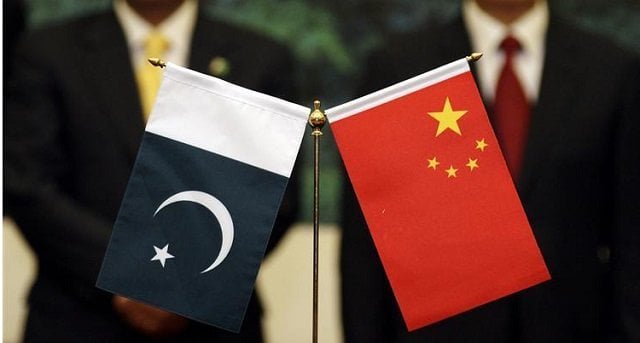

Pakistan’s manufacturing story has always been held back by a simple problem: the country has tried to build factories on a weak base. You cannot run modern production on uncertain power, slow ports, broken logistics, and a workforce that has not been trained for today’s machines. That is why CPEC matters beyond its headlines. It is not only a set of projects, but it is also a chance to rebuild the base that manufacturing needs, then use strategic partnerships with China to move Pakistan up the value ladder.
For years, Pakistan’s economy leaned on low-value exports and imported inputs. That model keeps firms small and makes the country vulnerable to currency swings. If you want a different outcome, you need deeper industry, more local supply, and better productivity. CPEC, valued at more than 62 billion dollars, creates room for that shift because it links investment to physical capacity.
Roads, ports, and energy are not glamorous, but they decide whether a buyer trusts your delivery dates and whether a factory can run at full load. Without that trust, the best industrial policy in the world stays stuck in files
The early phase of CPEC, launched in 2013, focused on connectivity from Gwadar to Xinjiang and the networks around it. It also built energy projects that added more than 8,000 megawatts to the national grid. That number is not just a statistic. It is time recovered. When power stops failing, a factory can run longer, reduce waste, and finally plan maintenance instead of reacting to breakdowns. When firms can plan, they invest. When they invest, they hire, train, and improve quality. This is how an energy project turns into an export gain.
The job numbers tell a similar story. Chinese investment under CPEC has reached around 25.93 billion dollars and created more than 261,000 jobs. Some of those jobs come from construction, which is temporary. The real test is how many jobs become permanent through industrial activity. That is why CPEC 2.0, with its focus on industrial cooperation, innovation, green development, livelihoods, and regional connectivity, is the part Pakistan must get right.
The corridor has already built the platform. Now it needs factories that produce goods people actually buy in global markets
Gwadar sits at the center of this ambition, not as a symbol, but as a test of execution. A deep-sea port can transform trade only if the road links, warehousing, customs systems, and security arrangements work as one system. If Pakistan can make Gwadar efficient, it can reduce shipping time, attract logistics firms, and open new routes to Central Asia and the Middle East. That matters for manufacturing because exporters choose locations that keep transport costs low. Ports also create clusters. When shipping becomes easier, you see packaging, cold storage, trucking, repair services, and small parts suppliers grow around it. Those clusters are often where industrial ecosystems take root.
Still, infrastructure alone does not make a manufacturing hub. The missing piece is industrial clustering with clear targets. That is where Special Economic Zones come in. Zones such as Rashakai, Dhabeji, Allama Iqbal Industrial City, and Bostan are meant to offer tax incentives, customs exemptions, and modern infrastructure. The promise is speed and predictability. If a firm can get power, water, land, permits, and customs clearance without delay, it will consider long-term investment. But zones can fail if they become real estate projects rather than production spaces.
Pakistan must treat them as places where output is the goal and performance is measured in exports, jobs, and local supplier growth
The opportunity is real because global manufacturing is shifting. Pakistan hopes to capture part of the estimated 85 million manufacturing jobs moving out of China as costs rise there. That will not happen by hope or speeches. Buyers care about quality standards, stable policy, and reliable suppliers. China can help Pakistan meet those expectations through technology transfer, training, and supply chain links. Yet Pakistan must do its part by enforcing standards, improving contract enforcement, and reducing red tape. If Pakistani firms cannot meet timelines or quality specs, the market will simply move elsewhere, no matter how many zones exist.
Recent industrial announcements show what this could look like if done well. Haier’s planned 400 million dollar home appliance industrial park, with capacity for 10 million units annually, points to local production replacing imports and building a supplier network for components. The Challenge Group’s planned 150 million dollar textile park, with an expected export potential of 400 million dollars per year, signals that textiles can move beyond basic yarn and cloth toward higher value products. These projects matter because they can pull smaller local firms into their orbit, from plastic parts and metal fittings to packaging and maintenance. That is how large investments create wider industrial depth.
The private sector angle is also changing in useful ways. The 2025 Pak-China business-to-business conference produced around 8.5 billion dollars in joint ventures and memoranda of understanding, including in technology, artificial intelligence, e-commerce, and digital connectivity. This matters because manufacturing today is not only physical. It is also digital. Inventory systems, predictive maintenance, quality control sensors, and traceability are now normal.
If Pakistan can build digital capability into its manufacturing base, it can compete in segments where margins are better, and buyers are willing to pay for reliability
Agriculture is another quiet lever. Better seed technology, efficient irrigation, and contract farming tied to Chinese demand can raise productivity and stabilize supply. Improvements in crops such as red chillies and sesame show how targeted support can open access to a large consumer market. This is not separate from manufacturing. Food processing, textiles, and the light industry depend on a consistent supply and basic standards. When agriculture modernizes, it strengthens both rural incomes and industrial inputs.
None of this is automatic. Pakistan needs policy continuity across political cycles, strong federal and provincial coordination, and credible security arrangements for investors and workers. It also needs to be honest about what makes a manufacturing hub. Low wages are not enough. The real advantage comes from skills, stable energy, fast logistics, and predictable rules. If Pakistan can deliver those basics, partnerships with China through CPEC can do more than build infrastructure. They can help Pakistan build an industrial economy that exports, innovates, and creates long-term jobs that lift households beyond survival and into steady growth.