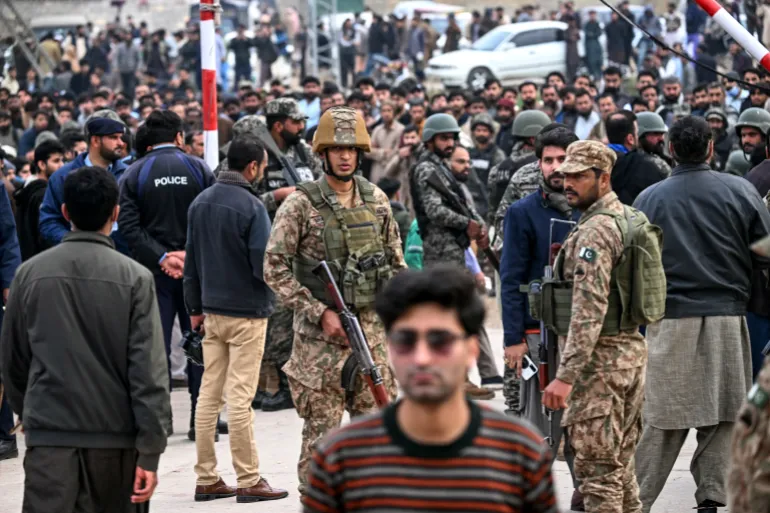

The bombing of the Khadija al Kubra Imambargah was intended to accomplish two things at once. It was intended to murder and humiliate. According to early official tallies provided by major sites, a suicide attacker who also opened fire transformed a place of prayer into a scene of terror, killing at least 31 people and injuring many more than 150. When worshippers are attacked inside a mosque or imambargah, the victims are not the only ones who perish. The goal is to convey the concept that faith and ordinary life can coexist peacefully.
Following an incident, the first obligation is to care for the victims and conduct an honest inquiry. However, the second job is to deny the assailants the desired reply. In Pakistan, sectarian killers want fear to turn into hatred because hatred facilitates recruiting. That is why the response of religious academics and community leaders is important. The National Message of Peace Committee, which is affiliated with the Pakistani government, strongly condemned the suicide assault, describing the perpetrators as enemies of Islam and Pakistan and urging a transparent investigation and harsh punishment for those involved.
Their message was clear: no one should be able to cover up mass murder with religious discourse and expect the people to tolerate it
I believe that stance is one of the few bright spots in an otherwise bleak situation. It reassures mourning families that they are not alone, and it informs the general public that the state is not requiring people to choose between faith and citizenship. When leaders like Hafiz Muhammad Tahir Mahmood Ashrafi and other intellectuals speak about unity and oppose violence against worshippers, they deprive radicals of a vital oxygen supply: the notion that they represent religion.
At the same time, words must be paired with accuracy. According to reports, the Islamic State claimed credit for the attack in Islamabad via messaging channels such as Telegram. That assertion fits into a well-known pattern of targeting Shia worshippers, and it explains why the assailants chose a packed Friday prayer at a religious site. However, asserting an attack is not the same as demonstrating the complete chain of support that permitted it. Planning, facilitation, safe movement, and finance frequently use overlapping networks. If the government wants public trust, it should share the facts it can safely show, and facilitators should be prosecuted as seriously as bombers.
This gets us to the most contentious aspect of the narrative: cross-border liability. Pakistan’s defense minister, Khawaja Asif, openly claimed linkages to Afghanistan and accused India of complicity, but India dismissed the assertion as false, and Afghanistan rejected claims of harboring terrorists. People can argue about motive all day, but it is not evidence. If Pakistan believes foreign players are facilitating attacks, it should produce a compelling case, along with timings, interceptions where possible, financial pathways, and identified handlers. That technique serves two purposes.
It increases the cost for any external sponsor and decreases the opportunity for cynical voices to reject every charge as propaganda
Pakistan’s security forces must also be open about what success looks like in 2026. Operations can kill a huge number of terrorists in a short period of time, as evidenced by recent campaigns in Balochistan, and the state may yet confront spectacular attacks that shock the public. That is not always failure; it is the nature of a long struggle against dispersed networks. However, this means that the state cannot rely solely on body counts, particularly when outside observers are unable to verify the data. Tactical victories should be accompanied by better protection of soft targets, enhanced intelligence sharing between provinces, tougher prosecution, and tighter control over paths that allow attackers to go from planning to execution.
A serious security strategy must also identify the danger set clearly. Groups like ISKP, Al Qaeda remnants, and violent separatist outfits like the Balochistan Liberation Army are not interchangeable, and therefore do not require the same responses. One strategy may be sectarian provocation, another rebel control of land, and yet another international fundraising effort. If you approach them as a single blob, you’ll waste resources and overlook signals.
Now for the part that many people resist expressing outright: information warfare is part of this struggle. Some foreign commentators advance their careers by portraying Pakistan as a constant disaster and praising any narrative that undermines popular trust in the government. Criticism is not treason, and the state has frequently faced criticism for poor governance and corruption. However, there is a distinction between critique and sabotage.
When someone constantly excuses mass slaughter in mosques or portrays all counterterrorism operations as wicked while providing no other option except surrender, they are not assisting victims. They are fueling the same despondency that the perpetrators seek to instill
The greatest way to solve the problem is not silence everyone. The finest answer combines expertise and proof. Investigate quickly, safeguard witnesses, publish what can be disclosed, and allow courts to issue enforceable punishments. When the state accomplishes this, it becomes more difficult for international agenda setters to claim there is no truth, only spin. International condemnation of significant attacks, particularly remarks from the United Nations Security Council, can help, but only Pakistan’s credibility will determine whether citizens believe the state is in charge.
The bombing in Islamabad is more of a test of unity than rhetoric. The terrorists wanted grief to develop into suspicion among sects, and suspicion to turn into immobility. If Pakistan responds with solidarity, evidence-based justice, and consistent pressure on extremist networks, the attack will fail in its ultimate purpose, even if it was successful in taking innocent lives. The country cannot reverse such a loss. It may honor it by refusing to allow assassins to define Islam, citizenship, and what the future can be like.