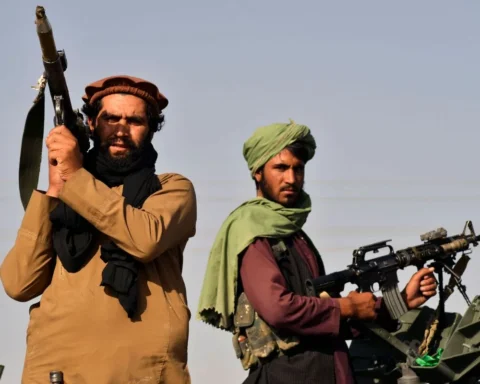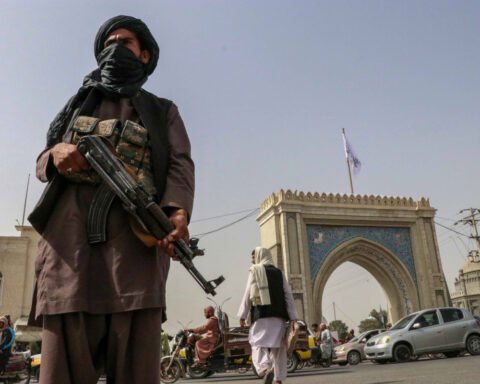
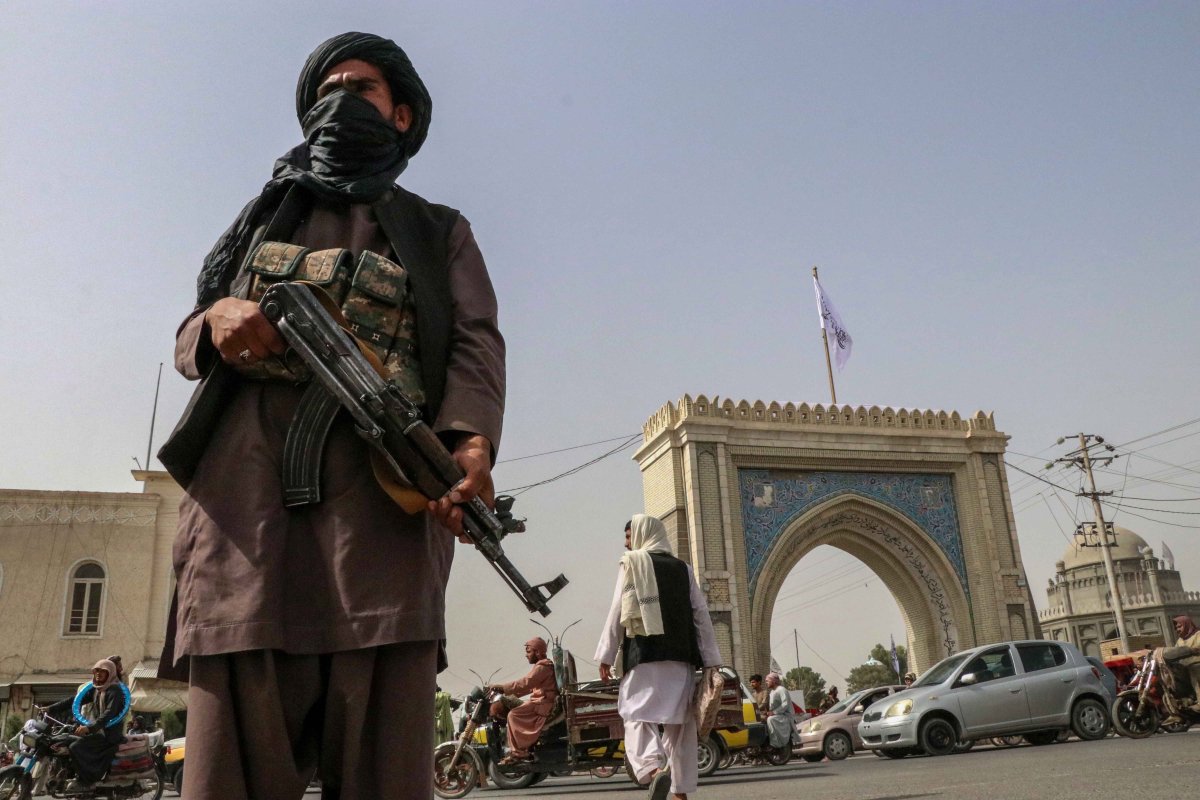

The recommendation by the US Commission on International Religious Freedom to designate Afghanistan as a Country of Particular Concern should be read as a warning, not a slogan. It signals that what is happening under the rule of the Taliban is not a passing overreach or a misunderstanding between cultures. It is a deliberate system of rules that treats religious freedom as a threat to be managed, not a right to be protected. USCIRF’s standard for this label is explicit; it points to violations that are systematic, ongoing, and egregious.
The Taliban insist they are restoring Sharia, but their methods look less like moral guidance and more like discipline. USCIRF has highlighted how the Taliban’s morality framework, including the 2024 law on the propagation of virtue and prevention of vice, is used to police behavior, speech, and association.
When a state decides how people dress, who they may speak with, and what ideas they may express, it is not nurturing faith. It is placing society under permanent inspection, then calling that inspection “piety.”
A core feature of this model is the narrowing of acceptable belief inside Islam itself. The Taliban posture as guardians of orthodoxy, yet they create a hierarchy that divides Muslims into approved and suspect categories, anchored to their preferred legal tradition and enforced through state power. USCIRF’s Afghanistan reporting repeatedly stresses that Taliban restrictions apply not only to minorities but also to Muslims with different interpretations. That is the tell. A movement that claims religious legitimacy but cannot tolerate religious diversity is not defending faith; it is defending control.
The legal order that enforces this hierarchy is designed to intimidate. Corporal punishment and public spectacle are not just penalties; they are messaging. USCIRF’s Afghanistan update describes coercive enforcement as part of governance, with legal protections that would normally constrain the state as weak, unclear, or absent. A court that serves power rather than justice does not protect the innocent. It teaches everyone to keep their head down, even when the law is plainly unjust.
Recent Afghan civil society documentation adds detail to this picture. Rawadari has published material it says it obtained, regarding Taliban issued criminal procedure rules, warning that such measures erode basic safeguards and normalize coercion through courts.
Even without treating any single document as the whole story, the direction is unmistakable: the Taliban are building a legal environment where the state is rarely questioned, and the individual is always exposed
Religious minorities are among the first casualties because the Taliban’s project depends on enforced sameness. USCIRF’s country update describes severe restrictions affecting Shia Muslims, Ahmadiyya Muslims, Hindus, Sikhs, and Christians, and it notes pressure that reaches anyone whose beliefs do not match Taliban preferences. When the state criminalizes non-Islamic practice and punishes associations it labels improper, it does not just violate individual rights. It rewires community life, pushing vulnerable groups toward exile, silence, or coerced conformity.
Women and girls endure the most comprehensive version of this coercion because gender control is central to the Taliban’s political theology. USCIRF has documented decrees restricting women’s movement and public presence, and it has highlighted how girls have been denied education beyond early adolescence. The Taliban portray these rules as religious obligations, but that claim is a convenient shortcut. It dodges the fact that Islamic history contains long traditions of women’s learning and public contribution, and that denying girls an education is a political choice dressed up as a divine command.
The same logic reaches into education and socialization more broadly. USCIRF has noted how religious edicts and morality enforcement shape acceptable speech and conduct, entrenching ideological control over public life. When schooling and preaching become pipelines for obedience rather than inquiry, young people learn to confuse fear with virtue. Over time, that distorts moral language itself.
People learn to speak in approved phrases while privately calculating what might get them punished, and a society that lives like that cannot develop honest religious life or honest civic life
Some critics will say a Country of Particular Concern designation is symbolic. Symbolic does not mean useless. It matters because it removes ambiguity and forces clarity: these violations are not occasional missteps; they are the governing method. It also strengthens the case for coordinated policy tools, from targeted sanctions to protection pathways for those most at risk. And it fits alongside other US actions, including the U.S. Department of State decision in December 2023 to redesignate the Taliban as an entity of particular concern under the International Religious Freedom Act framework. The world is not being asked to debate theology. It is being asked to confront what happens when religion is used as a license for brutality, discrimination, and the systematic denial of basic human dignity.