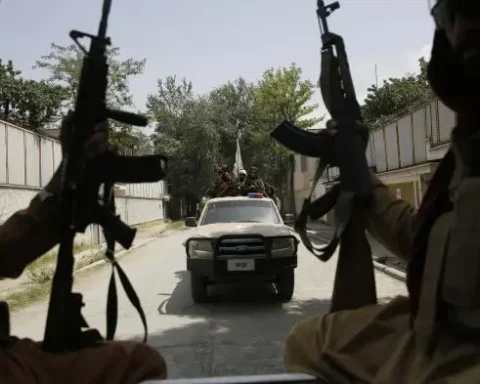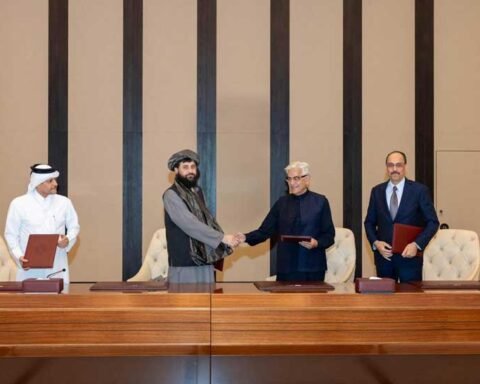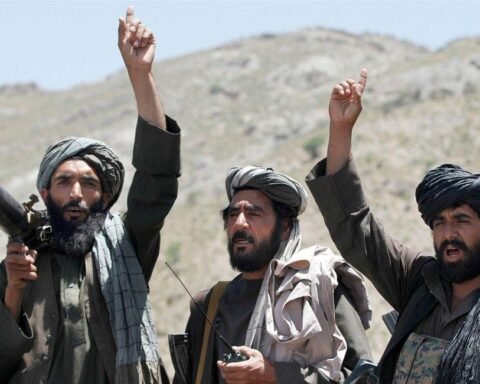

The United States has finally said out loud what much of the world has tried to soften with diplomatic phrasing. On March 9, 2026, Secretary of State Marco Rubio formally designated Afghanistan as a State Sponsor of Wrongful Detention, a move confirmed in both an AP account and Reuters coverage. This matters because labels in foreign policy are never just labels. They tell the world how Washington now interprets Taliban behavior, and in this case, the message is blunt: the detention of Americans in Afghanistan is not an unfortunate misunderstanding; it is part of a coercive political method. That shift deserves attention because it cuts through years of hedging and forces a harder question. If a regime uses human beings as leverage, what exactly is the world being asked to normalize?
This Is Not a Travel Story, It Is a Hostage Story
Too often, debate about Afghanistan slips into a narrow discussion about risk management, as if the issue were simply whether a traveler should be cautious. The official US position says something far more serious. The current Afghanistan Travel Advisory warns Americans to leave immediately, while the International Travel Information page states that the US government cannot provide routine or emergency consular services there. Under the broader Travel Advisory system, Level 4 is the highest warning because of life-threatening risks and the government’s limited ability to help. Add Rubio’s public demand for the immediate release of detained Americans, including Dennis Coyle and Mahmood Habibi, and the picture becomes unmistakable. This is not about adventurous tourism gone wrong. It is about a governing authority that the United States now believes detains foreigners under conditions so arbitrary and dangerous that even basic welfare checks cannot be guaranteed.
The Fantasy of Safe Normalcy
There has been a steady attempt in some corners of the internet to market Taliban ruled Afghanistan as misunderstood, even visitable. That story collapses the moment one reads the State Department page on Afghanistan, the latest Country Reports on Terrorism, or the official biography of Mora Namdar, the assistant secretary for consular affairs whose office deals directly with the safety of Americans abroad. The US advisory does not describe a difficult but manageable destination. It describes surveillance by Taliban authorities, active terrorist threats, kidnapping risk, and a high likelihood of wrongful detention. That means the old diplomatic instinct to separate human rights concerns from security concerns no longer works. In Afghanistan today, repression is the security environment. The same system that watches, intimidates, and imprisons Afghans can do the same to foreigners. A place where rules are opaque, enforcement is arbitrary, and outside help is crippled is not stable. It is unpredictable, and unpredictability is its own form of danger.
Repression at Home Means Danger for Visitors Too
Anyone still tempted to separate detainee cases from the broader reality inside Afghanistan should read the OHCHR statement, the Human Rights Watch World Report 2026, and the UN experts’ warning that Afghanistan is not safe even for forced returnees. These are not fringe advocacy claims. They describe a country where women and girls remain under crushing restrictions, critics face arbitrary detention, punishments violate international norms, and fear is embedded in governance itself. When a regime governs through coercion at home, foreigners do not enter some protected bubble outside that system. They enter the same atmosphere of impunity. That is why US officials are right to reject romanticized talk about reopened markets or curated travel experiences. A state can open a hotel lobby and still run a machinery of intimidation. A few staged images of normal life do not erase the legal vacuum beneath them.
Why the Detention Issue Cannot Be Treated as Separate
The wider rights crisis also explains why detention cases are not isolated bargaining chips but symptoms of a larger political order. The UN Women gender alert, a UN Women factsheet, and an OHCHR report on forced returnees all point to the same truth: Taliban rule is built on control, not consent. In such a system, foreign detainees become useful because they can be converted into attention, bargaining power, and political recognition. That is why Washington’s harder language is justified. It also means any government that keeps pretending engagement can proceed as usual is helping blur the moral line. Diplomacy is necessary, yes. Pretending that diplomacy requires silence about coercion is not.
What the World Should Stop Pretending
The Taliban, as noted in an AP report on the Taliban response, deny that foreigners are held for deals. But denial is cheap, and it sits uneasily beside the Human Rights Watch analysis and the UN Security Council report, both of which describe a deteriorating rights environment and governance far below international norms. The international community should stop acting as if Afghanistan presents a choice between total isolation and quiet accommodation. There is another path: talk when necessary, but refuse normalization without measurable change. Release detainees. End arbitrary arrests. Allow real monitoring. Restore basic rights. Anything less rewards the strategy Washington now appears willing to name plainly.
The Only Credible Message Now
The clearest conclusion is also the least comfortable one. For Americans still in Afghanistan, the warning is to leave now. For the Taliban, the demand is to release detained US citizens immediately and without conditions. For the rest of the world, the obligation is to stop laundering danger through the language of pragmatism. The Bureau of Consular Affairs exists to protect citizens abroad, and its leadership page reflects an apparatus built around crisis response, not public relations. Washington’s latest move should be read as a warning, not a talking point. Afghanistan under Taliban control is not just politically repressive. It is operationally unsafe, legally arbitrary, and morally indefensible. The world should treat it that way until the facts on the ground truly change.