

Talk of a new chapter in Pakistan United States relations often comes wrapped in familiar phrases about reset and reboot. What is different this time is less the rhetoric and more the structure of the world both countries face. Strategic competition is now the backdrop for almost every policy choice Washington makes. Pakistan, after years of external shocks and internal drift, is searching for a way to anchor its economy, upgrade its technology base, and manage a hard security belt that runs from the western border to the Arabian Sea. The overlap of interests is not automatic, but it is real.
For the United States, the central question is simple. Can Pakistan be part of a wider network of states that help keep regions stable, trade routes open, and critical technologies secure, without demanding large troop deployments or open-ended aid? That is why American messaging leans heavily on geo-economics, secure supply chains, and modern infrastructure. It is also why Washington shows more interest in regulatory systems, financial transparency, and digital standards than in symbolic grand bargains.
A country that sits at the intersection of South Asia, the Middle East, and Central Asia, with nuclear weapons and a huge labor force, is too important to ignore. The issue is how to engage, not whether to engage
For Pakistan, the urgency is different but connected. Economic stabilisation is now a matter of survival, not choice. Sovereign debt stress, repeated energy crises, and battered investor confidence have shrunk the space for tactical manoeuvres. Islamabad needs long-term investment, not short-term injections. It needs technology transfer and modern management, not only fresh loans. It also needs credible partners for energy transition and digital finance, because remittances, informal capital flows, and outdated grids can no longer carry the weight of a young and restless population. In every one of these areas, the United States still matters, even at a time when Chinese capital and projects are highly visible on the ground.
The memorandum with SC Financial Technologies on integrating a dollar-pegged stable coin into Pakistan’s payment systems captures both the promise and the risk of this moment. On the one hand, it shows Islamabad is willing to step into the world of regulated digital assets, not simply police crypto from the sidelines. With over thirty eight billion dollars of annual remittances and tens of millions of users already comfortable with virtual assets, using compliant stable coin rails can cut costs, reduce leakages, and improve transparency. On the other hand, such a move ties Pakistan more tightly to the rules and expectations of the United States financial regulation.
This will expose gaps in domestic capacity, cyber security, and regulatory discipline. If mishandled, it could also create new openings for sanctions or reputational damage
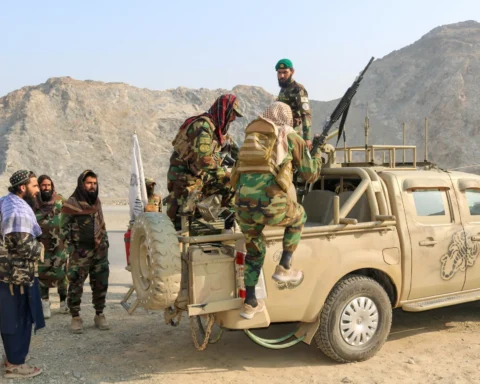
The same duality appears in the security space. Pakistan continues to absorb the brunt of a violent arc that thickened after the change of regime in Kabul in 2021. Thousands of terrorist incidents and a high tempo of intelligence-based operations reflect a grinding, expensive fight. United States support in the form of intelligence sharing, surveillance tools and training is still valuable. Yet strategic convergence here depends on political honesty. Washington cannot treat Pakistan simply as a firewall against chaos from the west, while ignoring its own role in the conditions that produced that chaos. Islamabad, for its part, must accept that global patience for any ambiguity on militant safe havens or selective enforcement has worn thin.
The India factor complicates but does not erase the space for cooperation. United States planners now see India as a key player in their competition with China. Pakistan fears strategic encirclement and points to human rights abuses in Kashmir and growing conventional asymmetry. Those fears are not imaginary. However, a more balanced Pakistan-United States dialogue would not try to wish away the India relationship.
Instead, it would use American access in both capitals to quietly support crisis management, communication channels, and nuclear restraint, while keeping the main public narrative focused on trade, investment, and technology.
Where the convergence could be most durable is in hard economic projects. Pakistan’s mineral wealth, estimated in the range of six to eight trillion dollars, is not a talking point. It is a real asset in a world hungry for copper, lithium, and rare earths. The Reko Diq copper and gold project, with projected returns that run into tens of billions of dollars over several decades, has already attracted interest from global capital and export credit agencies. If United States Ex Im financing becomes part of that story, it can set a template for how American money, Pakistani policy reform, and international legal guarantees can work together. But this will require a modern bilateral investment treaty, consistent tax and regulatory rules, and a serious effort to clean up dispute resolution.
At present, over eighty American companies operate in Pakistan and reportedly generate more than three billion dollars in revenue each year. Yet overall, the United States foreign direct investment remains very modest. This gap is a verdict on Pakistan, not on global investors. It speaks to political instability, contract uncertainty, and weak dispute mechanisms. The Special Investment Facilitation Council is an attempt to address some of these concerns by centralising decisions and cutting through red tape.
But without deeper institutional reform in courts, regulators, and revenue authorities, the Council will look like a temporary workaround rather than a real fix
Strategic convergence will also depend on how Pakistan manages its internal political trajectory. United States policy makers watch issues such as media freedom, judicial independence, and electoral credibility not only for moral reasons but also because they signal long term predictability. A state that cycles through repeated political breakdowns is a risky partner in high value technology and supply chain projects. Islamabad cannot expect Washington to invest in sensitive digital infrastructure or nearshoring plans while domestic politics are driven by street confrontations and institutional deadlock.
The choice in front of both sides is not between romance and rupture. It is between a thin, crisis driven relationship and a thicker, quieter compact built on clear interests. Digital payments linked to stable coins, joint work on counterterrorism, structured involvement in mineral and energy projects, and a more honest discussion about regional risks can all form the base of that compact. To get there, Pakistan will have to tidy its own house and accept tougher standards. The United States will have to see Pakistan not just through the lens of past disappointments or Indian sensitivities, but as a complex country trying to navigate an unforgiving era. If both can manage that, strategic convergence will move from talking point to lived reality.