
Every year on 22 March, World Water Day reminds the world that water is not a privilege to be dispensed by power, but a basic condition of life, dignity, and development. The United Nations now places special emphasis on safe water and sanitation as human rights and as foundations of equality, health, and sustainable growth. That message has a sharp edge in South Asia. In the Indus Basin, water governance is not a technical side issue. It shapes whether fields are planted, taps run, hospitals function, and communities withstand climate shocks.
The Indus Waters Treaty was built to prevent exactly this kind of insecurity. Signed in 1960 by India and Pakistan, with the World Bank as a signatory to the agreement, it created a legal structure for managing one of the world’s most consequential shared river systems. The World Bank has described the treaty as one of the most successful international water arrangements because it endured decades of conflict while still supporting irrigation and hydropower planning. That history matters.
A treaty that survives war is not a convenience. It is a stabilizer, and stabilizers are most valuable when politics become dangerous
That is why India’s April 2025 announcement that the treaty would be held in abeyance should concern anyone who cares about water rights and regional stability. Even before one measures the legal arguments, the political message is troubling. It says that a binding framework governing shared water can be set aside by unilateral will. That is the opposite of what transboundary river governance requires. Water cannot be treated like a switch to be turned on and off according to the diplomatic mood of the moment. Once that logic is accepted, the most vulnerable communities become the first to pay the price.
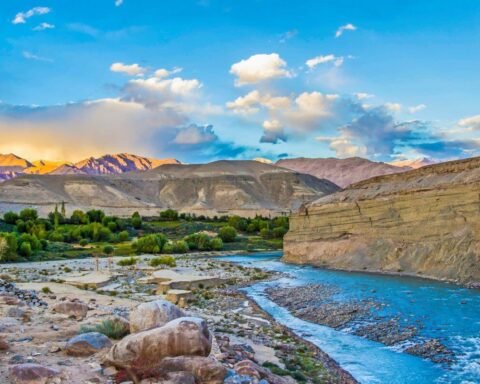
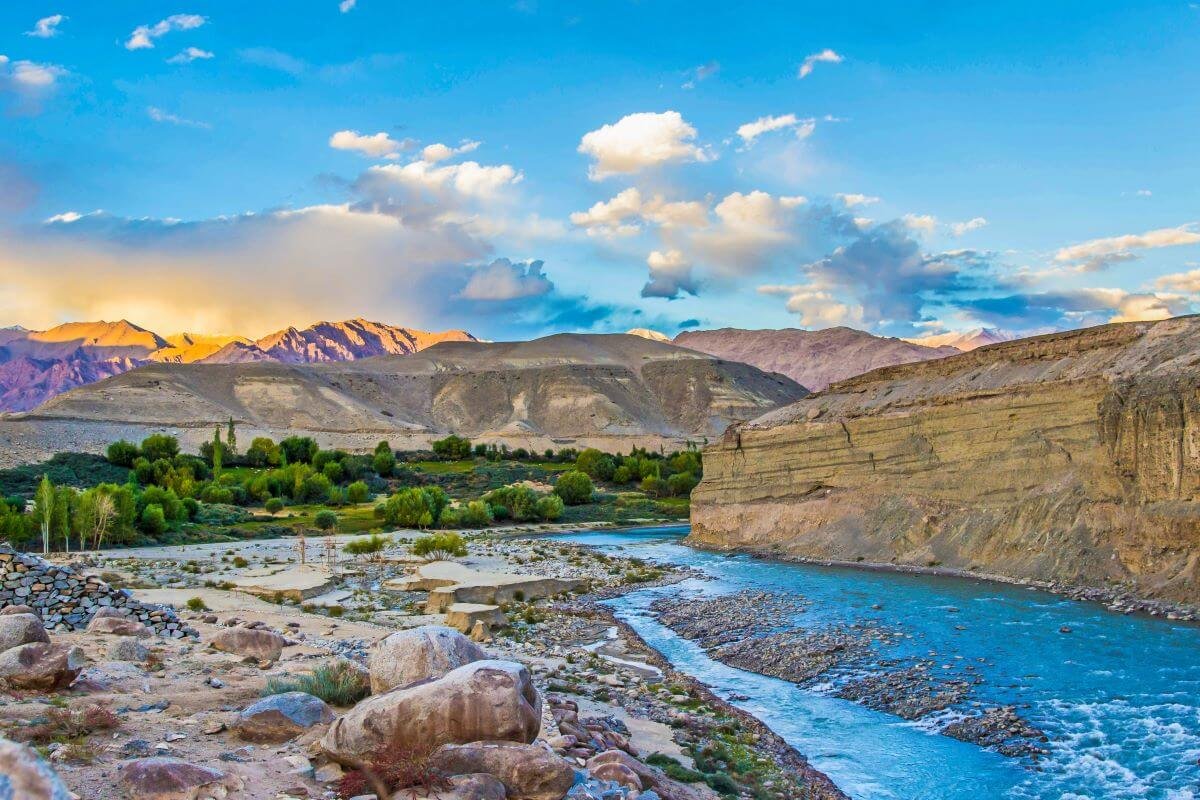
For Pakistan, the stakes are immediate and material. The Indus Basin Irrigation System is among the largest irrigation networks in the world, and official sources note that irrigated land supplies more than 90 percent of the country’s agricultural production. In much of the basin, agriculture is simply not viable without irrigation. That means treaty stability is not a diplomatic luxury. It is what allows canal operations, reservoir management, sowing calendars, and harvest expectations to remain predictable enough for farmers and markets to function. When predictability erodes, production risk rises long before any crisis becomes visible on a map.
The likely consequences reach far beyond the farm. When irrigation reliability weakens, crop yields fall, crop choice narrows, rural incomes become more fragile, and food prices come under pressure. The burden then moves from the field to the household. Families eat less well, nutritional stress deepens, and already strained communities lose another layer of resilience. Pakistan’s food security is inseparable from the stability of Indus flows.
Anyone serious about human security should understand that uncertain water governance is not only a river issue. It is a food issue, an inflation issue, and a livelihood issue all at once
Water insecurity also carries public health costs that are too often ignored in strategic debates. Reliable supplies support drinking water access, sanitation systems, hygiene practices, and the daily functioning of schools and clinics. When water becomes uncertain, disease risk rises, and social stress spreads quickly through low-income and rural communities. This is exactly why World Water Day insists on treating safe water and sanitation as basic rights rather than optional policy goals. A river dispute does not stay at the level of diplomacy for long. It eventually shows up in people’s bodies, homes, and chances in life.
All of this is unfolding in a region already under severe climate pressure. The World Meteorological Organization has warned that Asia is warming nearly twice as fast as the global average and that extreme weather is placing growing pressure on lives, livelihoods, ecosystems, and economies. It has also warned that accelerating glacier melt brings cascading impacts for communities and water systems. In that context, weakening cooperative river governance is especially reckless.
South Asia needs more data sharing, more coordination, and more trust building, not less. Climate volatility makes predictable rules more necessary, not more expendable
The legal issue is just as serious. Pacta sunt servanda is not decorative Latin. It expresses a basic rule of international order, that treaties in force are binding and must be performed in good faith. The broader law of shared waters also emphasizes equitable and reasonable utilization and the duty to prevent significant downstream harm. Those principles exist because rivers ignore political rhetoric. They bind states to restraint, cooperation, and seriousness. When a powerful upstream state acts unilaterally, it does not merely test one treaty. It tests whether the law can still protect weaker parties from pressure disguised as policy.
World Water Day should therefore be more than a ritual of good intentions. It should be a reminder that water justice depends on enforceable commitments, especially in fragile regions. Defending the Indus Waters Treaty is not only about preserving an old agreement. It is about protecting agriculture, public health, energy planning, food security, and the everyday dignity of millions of Pakistanis whose lives depend on timely and predictable water. If the world truly believes that water is a right and not a weapon, then treaty-based water governance must be defended with clarity, consistency, and urgency.