
The 2026 USCIRF report’s recommendation that Pakistan be designated a “Country of Particular Concern” deserves scrutiny, not because religious freedom challenges do not exist, but because the report presents a narrow and incomplete account of a far more complex reality. Any serious discussion of minority rights in Pakistan must be honest about discrimination, abuse, and legal vulnerabilities. But honesty also requires acknowledging progress where it has occurred. By focusing heavily on failures while giving little weight to recent reforms, institutional safeguards, and state initiatives, the report risks turning a complicated national picture into a one-sided narrative. That does little to help minorities, and even less to encourage reform.
A fair assessment should begin with the fact that Pakistan has not stood still. In December 2025, Parliament enacted legislation establishing the National Commission for Minorities Rights, finally implementing a directive first issued by the Supreme Court of Pakistan in 2014. This was not a symbolic gesture. The Commission was created with a practical mandate to monitor violations, examine complaints, and recommend policy reforms for the protection of minority communities. In a country where minority concerns have often struggled to find institutional expression, the creation of a formal body dedicated to those issues matters.
It provides a mechanism for accountability, a channel for grievances, and an official recognition that minority rights are not peripheral to the national agenda
The same is true of recent legal and administrative reforms. Punjab’s stronger child marriage protections in 2026 are a notable step, especially for girls from vulnerable communities who are often exposed to forced conversions, coerced marriages, and social intimidation. While implementation remains the real test of any law, it is difficult to dismiss the significance of strengthening legal protections in a province that carries immense demographic and political weight. Likewise, efforts to introduce safeguards against the misuse of blasphemy laws deserve recognition. These safeguards may not satisfy every critic, and they do not erase longstanding concerns, but they indicate that the state is aware of the risk of abuse and is trying, however imperfectly, to reduce it. That is not a trivial development.
The report also appears to understate the constitutional and political space already available to minorities in Pakistan. Minority representation in legislatures is not an afterthought. It is constitutionally mandated. Reserved seats in Parliament and provincial assemblies exist precisely to ensure that communities such as Christians, Hindus, Sikhs, and others are not excluded from public life. This system is not flawless, and representation alone does not guarantee equality, but it remains an important institutional feature. Countries do not strengthen pluralism only through speeches and declarations.
They do so by building structures that give minorities a seat at the table. Pakistan, despite its many shortcomings, has maintained such structures and expanded them in recent years
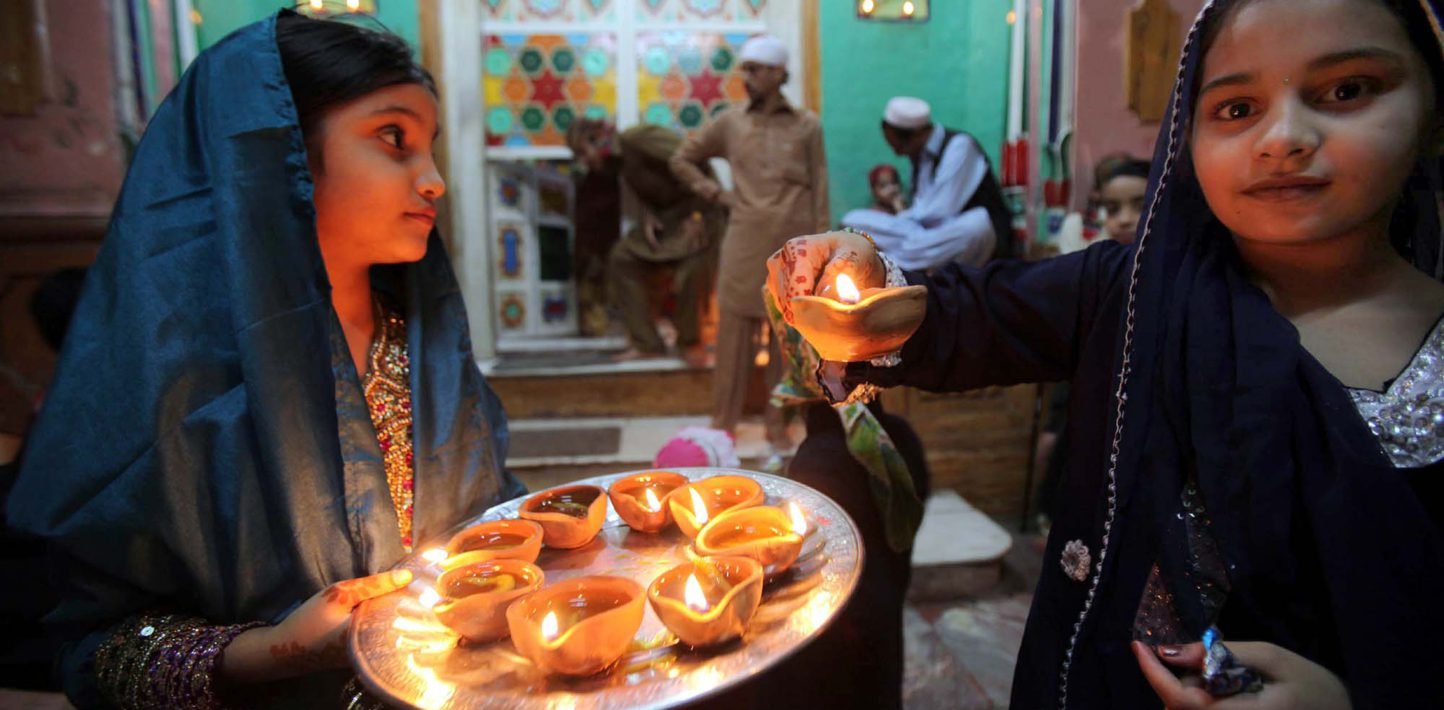
Equally important are the social welfare and inclusion measures that often receive far less international attention than headline controversies. Pakistan continues to support minority communities through scholarships, welfare programmes, and public recognition of religious festivals such as Christmas and Diwali. These measures may seem modest to outside observers, but they carry real symbolic and practical value. They tell minority citizens that their faith traditions are part of the national fabric, not outside it. In societies where exclusion often begins with silence, official recognition matters. It reinforces the idea that national identity can be shared across religious lines, and that interfaith harmony is not just a slogan but a policy objective.
Critics may argue that none of this cancels out the hardships faced by religious minorities, and they would be right. Reform is not the same as resolution. Incidents of intolerance, mob pressure, discriminatory enforcement, and fear continue to cast a shadow over many communities. But that is precisely why selective reporting is so unhelpful. If a country is judged only by its worst episodes and never by its efforts to correct them, the result is not a clearer picture but a distorted one. A serious rights-based assessment should measure both the scale of the challenge and the direction of institutional change.
Pakistan’s direction, while uneven, shows evidence of movement toward stronger protection, legal reform, and state-backed pluralism
There is also a broader problem with external reports that frame countries in absolutes. Labels such as “Country of Particular Concern” carry political weight, diplomatic consequences, and moral judgment. Because of that, they should rest on a comprehensive and balanced record. When such labels are recommended without sufficient attention to reform, they risk becoming blunt instruments rather than tools for constructive engagement. They can discourage domestic reformers, embolden those who claim international criticism is politically motivated, and reduce space for meaningful dialogue. International advocacy is most effective when it is firm, credible, and fair. Fairness does not mean ignoring abuse. It means giving a full account.
Pakistan’s progress should not be romanticized, but it should not be erased either. The establishment of the National Commission for Minorities Rights, stronger child marriage protections, safeguards aimed at preventing misuse of blasphemy laws, constitutionally protected minority representation, and ongoing state support for minority welfare together reflect a real institutional effort. These are not isolated gestures. They point to a reform trajectory that deserves recognition, even as bigger change remains necessary. To ignore these developments is to miss an important part of the story.
Constructive dialogue on religious freedom must be grounded in complexity. Pakistan faces real challenges, and no honest observer should deny them. But it is equally true that the state has taken visible steps to strengthen minority protections and promote interfaith harmony. A report that highlights only one side of that equation does not advance understanding. It narrows it. And when the picture is narrowed too much, policy judgments become less reliable, not more. If international institutions truly want to support religious freedom in Pakistan, they should engage the country as it is, troubled, imperfect, but also reforming, rather than as a static symbol of failure.