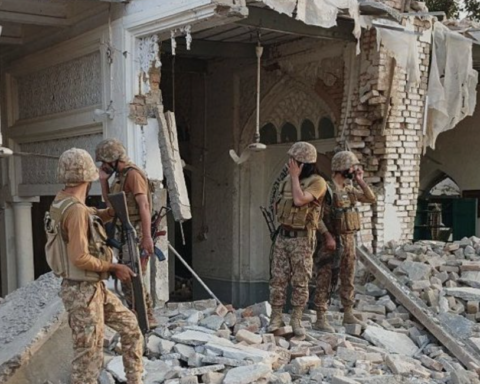

The mortar shelling in Angoor Adda, South Waziristan, is not merely another border incident; it is a moral test for everyone who claims to speak for Pashtun rights. On April 29, 2026, mortar shells fired from across the Pak-Afghan border reportedly struck homes in Angoor Adda, injuring five civilians, including four children aged between three and thirteen and a woman. Reports named the affected homes as those of Karim Khan and Rehmatullah, with the injured shifted to DHQ Hospital Wana. Coming after earlier cross-border firing in South Waziristan, the attack exposed a brutal reality: Pakistani Pashtuns are not only victims of terrorism and instability, but also of selective outrage.
For years, the Pashtun Tahafuz Movement has presented itself as the loudest custodian of Pashtun dignity. That claim now faces a serious credibility crisis. When Pashtun children are injured by shells fired from Afghan territory, silence is not neutrality, and it is a political statement. A movement that mobilizes instantly against the Pakistani state but hesitates when the aggressor is across the western border invites the charge that its advocacy depends less on the victim’s suffering and more on the identity of the accused.
This is the mask of selective advocacy. Genuine human rights politics must begin with the victim, not with the convenience of the narrative. A three-year-old child in Angoor Adda does not become less Pashtun because the shell came from Afghanistan. An eight-year-old does not become less worthy of outrage because condemning the attack would disturb a preferred political script.
If PTM’s language of “Pashtun dignity” disappears whenever Afghan-origin violence is involved, then the movement weakens its own moral foundation
The wider security context makes this silence even more troubling. Pakistan has repeatedly accused Afghan territory of being used by Tehreek-e-Taliban Pakistan militants, while Kabul denies the allegation; international reporting has also noted that the TTP is allied with the Afghan Taliban and has intensified attacks inside Pakistan in recent years. In such an environment, refusing to confront cross-border militancy is not a harmless omission. It creates political cover for forces that have attacked mosques, schools, security posts, tribal elders, and ordinary homes across Khyber Pakhtunkhwa.
PTM’s defenders may argue that the movement’s core grievance is with state policy inside Pakistan. That argument has limits. No rights movement can claim ethnic representation while ignoring violence against the same ethnic community because the perpetrator is politically inconvenient. Representation is not a slogan; it is a responsibility.
If Pakistani Pashtuns are killed, displaced, intimidated, or wounded by Afghan-based militants or border shelling, then any movement claiming to defend Pashtuns must speak with the same force it uses elsewhere
The problem is not criticism of the state. Criticism is legitimate in any democratic society. The problem is asymmetry. When allegations against Pakistan are amplified instantly, while documented suffering on Pakistani soil is downplayed or ignored, the public begins to see a pattern. That pattern feeds the perception that PTM’s politics have drifted from human rights advocacy into selective narrative management. It also strengthens suspicions that diaspora-driven slogans and “Greater Afghanistan” romanticism have begun to overshadow the real security fears of Pashtuns living in Pakistan’s border districts.
This selective posture also plays into disinformation. In modern conflict, perception is a battlefield. Every omission, every delayed condemnation, and every one-sided campaign shapes public understanding. When Afghan officials accuse Pakistan of causing civilian casualties, those claims receive international attention, while Pakistan denies targeting civilian areas and says its actions are aimed at militant infrastructure.
In such a contested information space, Pakistani civil society must be careful not to become an amplifier for only one side’s claims while muting the suffering of its own citizens
Angoor Adda should have produced a clear, principled response: condemn the shelling, demand protection for civilians, reject cross-border militancy, and insist that Pashtun lives are not bargaining chips in regional politics. Anything less looks like moral evasion. The injured children of South Waziristan do not need ideological gymnastics. They need solidarity, medical care, security, and the assurance that their pain will not be erased because it complicates someone’s politics.
The PTM now faces a choice. It can restore credibility by condemning all violence against Pashtuns, whether committed by militants, foreign forces, or state actors. Or it can continue down the path of selective advocacy, where outrage is reserved only for politically useful victims. The Angoor Adda shelling has made one thing painfully clear that a movement cannot speak for Pashtun children wounded by Afghan mortars cannot claim exclusive ownership of the Pashtun cause. Moral authority is earned through consistency. Without it, advocacy becomes theatre, and silence becomes complicity.