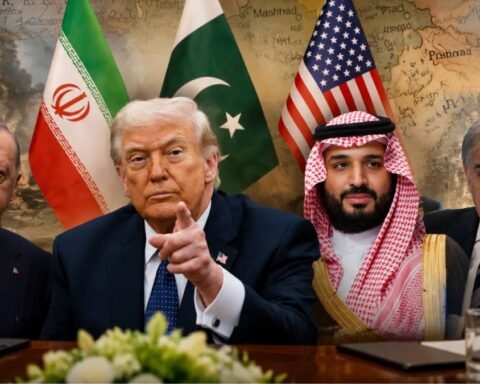

Pakistan’s decision to step forward as a mediator in the US-Israel-Iran conflict deserves to be understood for what it is: not hedging, not evasiveness, and certainly not weakness, but a sober exercise in statecraft. Islamabad is not inserting itself into this crisis to please one camp or annoy another. It is doing so because escalation in its extended neighbourhood carries direct consequences for Pakistan’s own security, economy and social stability. Recent reporting shows Pakistan has already been hit by the conflict through sharply rising fuel prices driven by turmoil in Middle Eastern energy markets, while Islamabad has also publicly positioned itself as a channel for de-escalatory diplomacy with Tehran, Washington and key regional capitals.
Those who ask why Pakistan is not behaving like a bloc-aligned ally are asking the wrong question. Pakistan is not a subcontractor of anyone’s regional agenda. It is a sovereign state with its own threat perceptions, its own geography and its own strategic compulsions. A nuclear-armed country sitting at the junction of South Asia, Central Asia and the Middle East cannot afford the luxury of emotional foreign policy. It must think in terms of second-order and third-order effects: refugee flows, energy shocks, sectarian spillover, proxy violence, maritime disruption and the long shadow of post-war instability. Pakistan has lived through enough regional blowback to know that wars rarely stay confined to the map on which they begin.
The mature position, therefore, is not to cheer escalation from afar, but to ask whether the region is moving toward an end-state that can actually hold
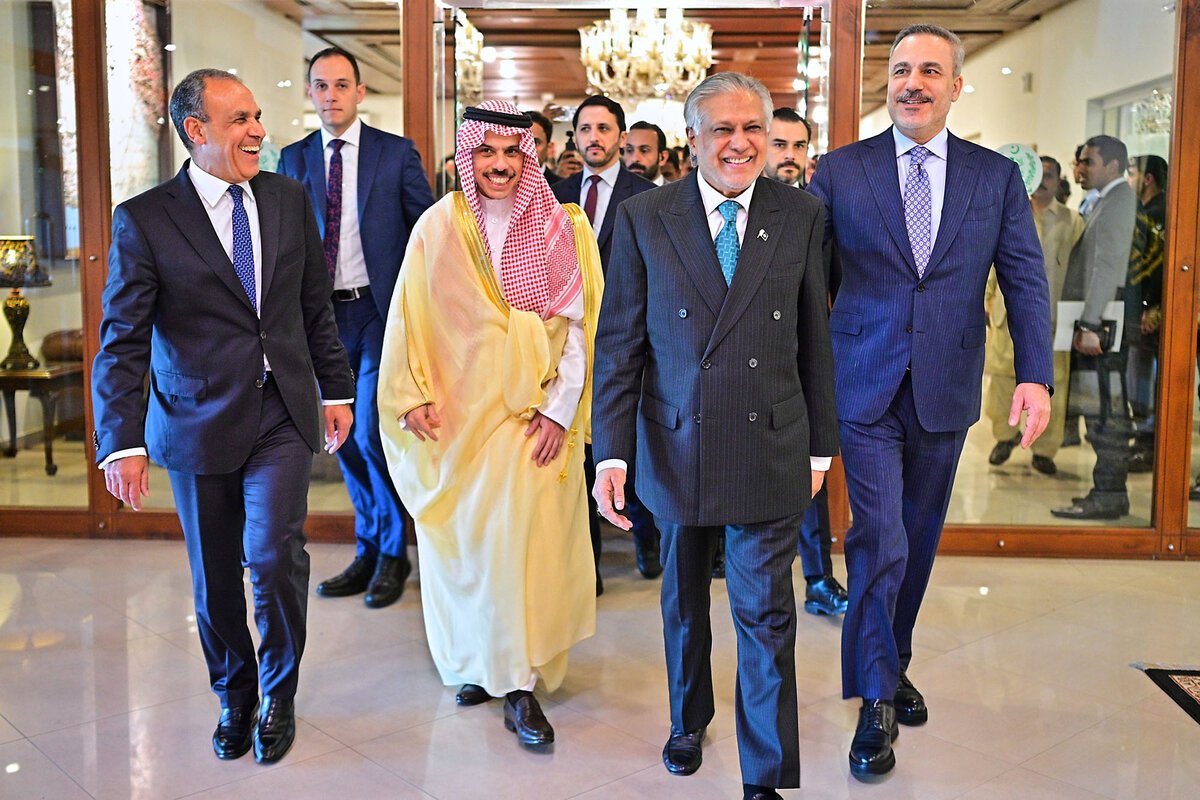
This is why mediation should be seen as strategic maturity, not strategic ambiguity. In moments of extreme polarisation, the states that still retain working channels with multiple actors acquire unusual diplomatic value. Pakistan appears to be trying to use precisely that space. Reuters and AP both reported Pakistan’s effort to facilitate talks as it engaged Iran, Gulf states and the United States, even amid the uncertainty and friction surrounding the process. A country that can talk to all sides during a war is not irrelevant; it is useful. And in a region now haunted by maximalist rhetoric, utility is not a small thing. It may be the last barrier between escalation and strategic ruin.
Some commentary, especially from parts of the Gulf, seems to assume that partnership means automatic alignment. That is a transactional and ultimately unsustainable view of interstate relations. Pakistan values its longstanding relationship with the UAE. That relationship is real, layered and important, built on commerce, labour, remittances, security ties and decades of goodwill. But friendship is not fealty. There is no formal military arrangement that compels Pakistan to join every conflict in which another partner feels threatened.
True strategic partnerships are not tested by obedience; they are tested by whether each side respects the other’s sovereign reading of its national interests
Indeed, reciprocity matters here. During the India-Pakistan crisis of May 2025, the UAE’s official line was to urge restraint and de-escalation, and later to welcome a ceasefire. It did not issue the kind of unambiguous condemnation of Indian military action that many in Pakistan might have preferred. That was the UAE’s sovereign choice, presumably made in line with its own interests. Fair enough. But if Abu Dhabi was entitled to calculate coolly in a South Asian crisis, then Pakistan is equally entitled to calculate coolly in a Middle Eastern one. It cannot be that national interest is a respectable principle for one partner and a moral failing for another.
Beyond that, there is a more serious strategic question that critics of Pakistan’s mediatory role have not answered: what exactly is the war termination strategy? It is easy to demand hardness; it is much harder to define an end-state. If the argument is that more regional actors should line up militarily against Iran, then what follows? Is the objective regime collapse, territorial fragmentation, coercive capitulation, forced demilitarisation or merely punitive degradation? What political order is supposed to emerge afterward, and who will manage it when extra-regional powers inevitably shift attention elsewhere? These are not academic questions. They are the central questions.
History is littered with wars that were tactically impressive and strategically disastrous because nobody thought seriously enough about the morning after
That is where Pakistan’s instinct deserves more credit. Pakistan has fought wars, absorbed insurgency, confronted terrorism and paid dearly for instability generated beyond its borders. It knows that the most dangerous phase of conflict is often not the opening exchange but the unresolved aftermath. The lesson of modern history is clear: a vanquished adversary that is indefinitely humiliated remains a source of future upheaval. Durable peace requires an exit that is politically sellable, strategically stabilising and regionally sustainable. That does not mean excusing Iran’s conduct or ignoring Gulf security concerns. It means recognising that the region must still live with geography when the bombing stops.
There is also the civilisational reality that the United States can pivot away, but the peoples of this region cannot. Arabs, Persians, Turks and Pakistanis will remain neighbours long after outside powers have moved on to other crises. If today’s choices entrench generational hatred, deepen sectarian fractures and normalise total-war thinking, then the entire region will inherit a poisoned peace. Even now, Gulf states are voicing alarm about the security threat from Iranian proxies, while the war itself is widening economic and strategic vulnerability across the region. That is precisely why Pakistan’s argument for de-escalation is not a divergence from regional security; it is a contribution to it.
Pakistan, then, is not choosing sides. It is choosing stability. It is saying that in a region already drenched in enough strategic folly, someone must still argue for dialogue, restraint and a political landing zone. That is not betrayal. That is responsibility. The wiser course for regional partners is not to resent Pakistan for refusing emotional alignment, but to recognise the value of a state that is still trying to prevent a wider catastrophe. In times like these, mediation is not passivity. It is one of the few remaining forms of courage.