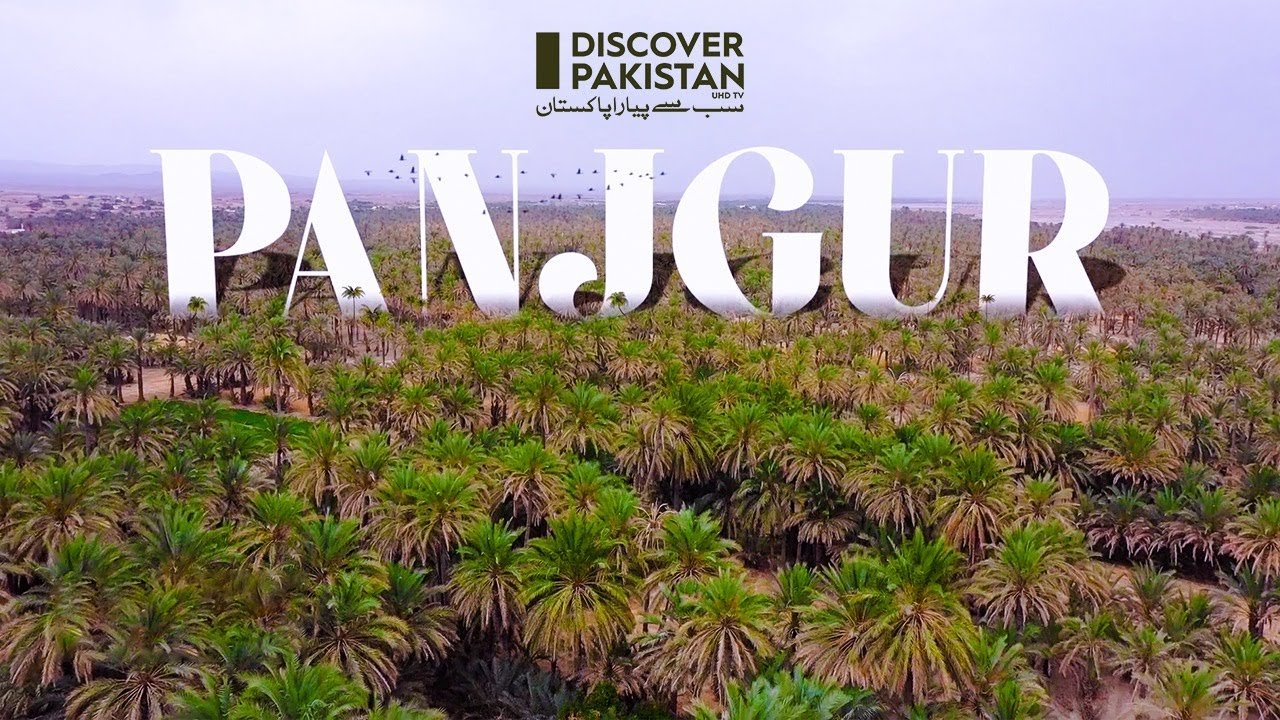

Chief Minister Balochistan Mir Sarfraz Ahmed Bugti’s visit to Panjgur mattered because it did not stay trapped in the usual script of one speech, one photo, and one promise. As reported by The Nation and also covered by Daily Independent, the visit combined three very different acts of governance: the restoration of the shrine of Shaho Qalandar, the inauguration of a women’s skill center, and an open public hearing at Panjgur Rifles headquarters. That combination is politically important. It says the state wants to be seen not only as an authority that governs territory, but as an institution that protects memory, creates opportunity, and listens in public. In a district that has often felt distant from decision-making, that matters.
The stronger argument, however, is not that the visit looked good. It is that it hinted at a better template for governing Balochistan. The Rs18 million restoration project, completed with technical support from the Walled City of Lahore Authority, shows that even in remote districts, the government can deliver specialized work when it treats local heritage seriously. Bugti’s decision to also assign further restoration responsibility for other historic landmarks suggests that Panjgur was not approached as a stopover, but as a district where heritage, civic dignity, and development can be tied together. That is a smarter political language than the old one, which spoke endlessly about security but too rarely about belonging.
Heritage Is Not a Side Issue
Anyone who dismisses the restoration of a shrine as mere symbolism misses how provincial politics actually work. The Balochistan Census 2023 report puts literacy in the province at 42.01 percent for the population aged 10 and above, with female literacy at 32.80 percent, while Mekran Division’s literacy rate stands at 47.69 percent. The wider National Census Report 2023 and the Economic Survey 2024-25 both underline how far Balochistan still sits behind national averages. In that environment, public trust is built less by paperwork and more by visible proof that the state respects local identity. A restored shrine is not just a building repaired; it is a signal that the province is willing to protect what communities already value.
There is also a development lesson in the way the project was handled. The Walled City of Lahore Authority presents heritage conservation as living urban renewal, not museum nostalgia, and that is exactly the frame Panjgur needs. If a neglected shrine can be restored with care, then a district usually described through crisis can begin to be described through culture. The idea is not to imitate Lahore’s conservation model or its tourism economy, but to recognize that heritage can anchor local confidence and reshape how the rest of the province sees Panjgur. Places do not become stable only when roads are built around them; they become stable when their history is treated as worthy of preservation.
Women’s Empowerment Will Be Measured in Outcomes, Not Slogans
The reopening of the women’s center may prove even more consequential than the shrine restoration. The Women Development Department of Balochistan already frames women’s economic participation as a provincial priority, and the new Women Skill Development Center gives that language a local address. According to the official reporting of the visit, classes have already started for 300 students, another 280 are registered, monthly support of Rs1 million has been announced for faculty, Rs500,000 for administration, and the IT lab is to be expanded from 20 seats to 100. That becomes more meaningful in a district whose long-term prospects also depend on institutions like the University of Makran, because skills, higher education, and female mobility have to reinforce one another if Panjgur is to hold on to its talent.
The numbers explain why this cannot be treated as a ceremonial side project. The HIES 2024-25 Social Report places adult literacy in Balochistan at 51 percent, with rural adult literacy at 45 percent, and the same survey shows the province’s net primary enrolment rate at just 43 percent. The HIES 2024-25 presentation shows that 98 percent of households in Balochistan now have access to a mobile or smartphone, and 68 percent have internet access, yet only 43 percent of individuals aged 10 and above used the internet in the last three months. The same official data says 48 percent of households cite high equipment cost and 45 percent cite high service cost as barriers. The Pakistan Bureau of Statistics is effectively telling policymakers that digital aspiration exists, but affordable capability does not. That is exactly why an expanded local IT lab for women is not cosmetic; it is structural.
Delivery Will Decide Whether This Visit Is Remembered
There is another statistic that should force the government to think beyond inauguration day. The Balochistan Gender Parity Report 2024 identifies Panjgur as the district with the highest survival rate to Grade 5 for both boys and girls, at 64.6 percent and 64.7 percent, respectively. That means Panjgur is not a hopeless educational landscape; it is a district with demonstrated potential. But the Employment Trend Report 2025 also shows female unemployment in Balochistan rising to 8.9 percent from 5.3 percent. In plain terms, Panjgur may be doing comparatively better at keeping children in school, yet the province still struggles to convert female learning into female livelihoods. That is why the women’s center must lead to income, freelancing, entrepreneurship, and placement, not just certificates on a wall.
The chief minister’s promise of an olive oil plant also deserves more attention than it received. The PakOlive initiative openly presents olive cultivation as a value chain that should involve youth and women, and official PARC annual reports for 2019-20 and 2020-21 show that olive plants were distributed in Balochistan districts, including Punjgoor/Panjgur, with 50,000 plants reported in 10 districts in one year and 85,000 in 16 districts the next. The official listing of olive extraction units in Pakistan also notes that one unit was shifted to ARS Panjgur. So the idea of an olive-processing economy in Panjgur is not fantasy. It already has policy roots. What it needs now is market linkage, storage, transport, and continuity.
The closing test of the visit lies in the khuli kacheri. Bugti’s wider transport and public-service language already connects with earlier provincial moves such as the Pink Bus Service launch, the broader Green & Pink Bus Project, the addition of new buses and routes, and the cabinet’s approval of further urban transport measures. But Panjgur will judge this visit more simply. Did the college repair happen? Did the buses arrive? Did the olive plant move from announcement to foundation? Were the issues of the University of Makran actually resolved? If the answer becomes yes, then this visit will be remembered as governance with substance. If not, it will be remembered as a well-staged day in a province that has seen too many of those already.