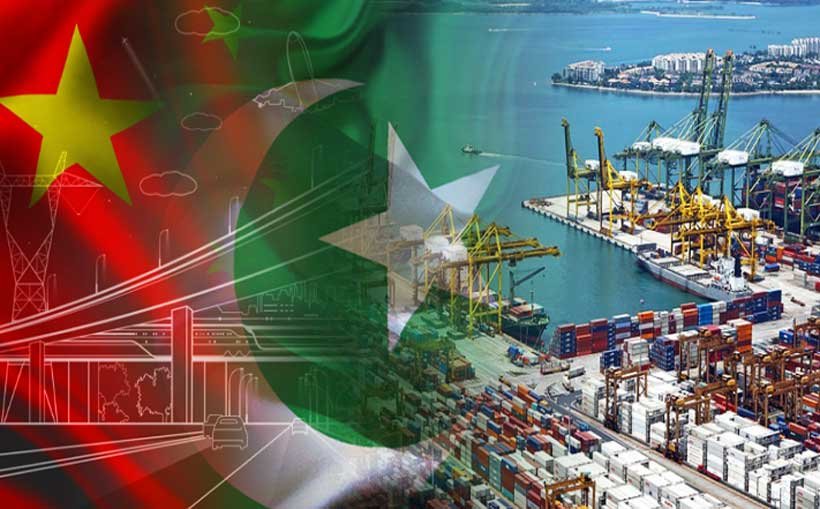

The China-Pakistan Economic Corridor is no longer only a story of roads, ports and power plants. In 2026, CPEC appears to be entering a more mature and ambitious phase, one that reflects Pakistan’s need for industrial revival and China’s preference for high-quality development under the Belt and Road Initiative. This transition, often described as CPEC 2.0, comes at an important diplomatic moment as Pakistan and China mark 75 years of relations and President Asif Ali Zardari’s visit to China gives fresh political momentum to bilateral cooperation.
The most important feature of this new phase is its broader economic vision. The first phase of CPEC helped address Pakistan’s infrastructure and energy gaps. The second phase must now convert that foundation into productivity, exports and jobs. The proposed Growth, Innovation, Green, Livelihood and Regional Connectivity corridors show that both countries understand the need to move beyond construction-led development.
Pakistan does not merely need highways but it needs factories along those highways
The expansion of Special Economic Zones from 7 to 44 is therefore a major development. If implemented properly, these zones can become engines of manufacturing, exports and foreign investment. Projects such as Dhabeji Special Economic Zone, Karachi Industrial Park, Gilgit-Baltistan SEZ and Bin Qasim Industrial Park can help Pakistan attract Chinese and international investors looking for regional production bases. The proposed $3 billion investment linked with Dhabeji and the possibility of more than 100,000 jobs demonstrate the scale of opportunity. However, SEZs will succeed only if they offer reliable utilities, transparent regulations, skilled labour and policy continuity.
Energy remains central to CPEC’s value. The addition of around 9,504 megawatts to Pakistan’s grid has helped reduce one of the country’s most serious constraints on growth. Planned projects worth billions of dollars can further strengthen energy security. Yet the real test now is affordability and sustainability. Pakistan’s industries cannot compete globally if electricity remains expensive. The Green Corridor, including renewable projects such as the 300-megawatt solar initiative in Gilgit-Baltistan, is a welcome shift.
Future CPEC energy cooperation should prioritize clean, low-cost and locally sustainable solutions
Connectivity also remains vital. Gwadar Port continues to carry strategic significance, while upgrades to the Karakoram Highway can deepen trade links with China and the wider region. But Gwadar’s promise will not be realized through symbolism alone. It needs commercial cargo, supporting infrastructure, local development, security and investor confidence. The people of Gwadar and Balochistan must see direct benefits in jobs, services and participation. Without local inclusion, even the most strategic project risks public resentment.
CPEC 2.0’s growing focus on technology, electric vehicles, advanced manufacturing and automation is especially important. Cooperation involving firms such as BYD and SANY points toward a future in which Pakistan can benefit from technology transfer rather than remain only a consumer market.
If Pakistan can develop local assembly, parts manufacturing, technical training and research partnerships, CPEC could support a genuine industrial upgrade
Agriculture and mining are also promising new frontiers. Pakistan’s agricultural sector needs modernization in livestock, dairy, seeds, water efficiency and value-added exports. Cooperation in sheep IVF technology and dairy breeding can improve productivity if linked with farmer training and rural supply chains. Similarly, the Pakistan-China E-Mining Platform could help digitize mineral data, improve exploration and attract investment. Mining, however, must be governed carefully, with environmental safeguards and fair benefit-sharing for local communities.
President Zardari’s visit to China has added diplomatic weight to this transition. His engagements on trade, agriculture, education, health and technology reflect the wider scope of CPEC 2.0. Yet diplomacy must now translate into execution. Pakistan’s recurring challenges, security risks, delayed approvals, weak coordination, financing pressures and local grievances, cannot be ignored. CPEC’s next phase will depend less on announcements and more on delivery.
The past three months suggest that CPEC is entering a decisive period. Its future success will depend on whether Pakistan can use Chinese cooperation to build its own productive capacity. CPEC 2.0 offers a path toward industrialization, innovation, green growth and regional connectivity. If managed inclusively and transparently, it can become a platform for sustainable prosperity. The opportunity is real, but so is the responsibility to implement it well.