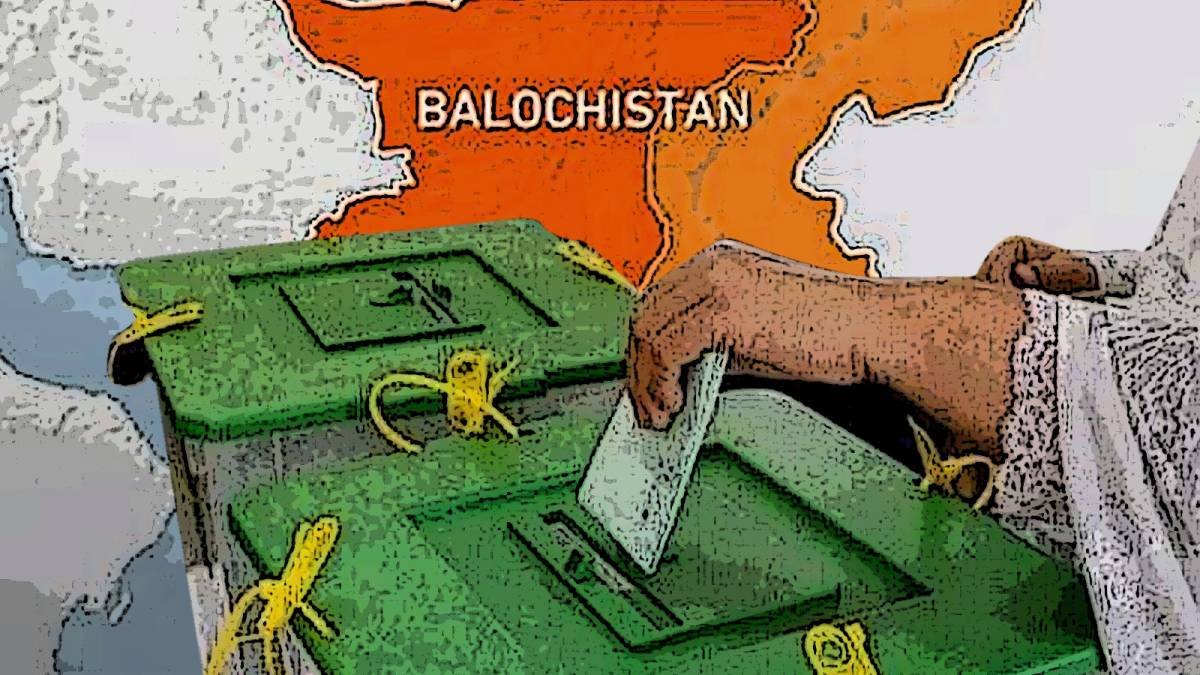

Balochistan’s politics is often discussed through slogans rather than facts. A repeated claim is that the province has no genuine electoral representation and that its democratic space is merely symbolic. This narrative may serve certain political agendas, but it does not withstand scrutiny. The present Balochistan Provincial Assembly has 51 general seats, alongside reserved seats for women and minorities, and its official members’ directory reflects a functioning elected legislature for the 2024–2029 term.
One important reality is that 14 out of 51 general-seat MPAs in the current assembly are first-time entrants. That is not the profile of a closed, frozen, or monopolised political structure. It shows that electoral competition remains active, voters retain choice, and new leadership can enter the democratic process. In any representative system, the arrival of new faces is a sign of political mobility.
It means constituencies are not permanently locked under one set of personalities, families, or ideological factions
Those who claim that Balochistan has no genuine representation usually ignore the diversity of the province’s electoral landscape. The assembly includes members from multiple districts, parties, alliances, and political traditions. No single narrative can honestly claim ownership of the entire province. Balochistan is not politically one-dimensional. It contains tribal, urban, nationalist, religious, development-focused, and mainstream parliamentary currents. To erase this diversity is not analysis; it is propaganda.
Certain Baloch nationalist elements present a one-sided story in which only their political interpretation is treated as authentic, while elected representatives are dismissed as irrelevant or imposed. This argument is convenient, but deeply flawed. If voters participate, candidates contest, parties campaign, and new representatives enter the assembly, then the democratic process cannot simply be written off because its results do not match one faction’s preferred outcome.
Disagreement with electoral results is a political right and denying the existence of representation altogether is a distortion
There is also a deliberate attempt to blur the line between constitutional political activity and violence carried out by terrorist groups in Balochistan. This distinction matters. Peaceful political criticism, protest, campaigning, and constitutional advocacy belong within the democratic space. Violence against citizens, security personnel, public infrastructure, schools, workers, and institutions does not. No political grievance can justify attacks on innocent people. Once violence becomes the method, the matter is no longer ordinary politics; it becomes terrorism.
The State’s position on this question is clear that violence by any group, whether it uses an ethnic, religious, sectarian, or ideological label, is treated under the same legal framework. There cannot be one standard for religiously motivated terrorism and another for ethnically framed militancy. Terrorism remains terrorism regardless of the slogan attached to it.
This principle is essential not only for state authority but also for the protection of ordinary citizens, including the people of Balochistan who suffer first when violence is normalised
At the same time, it is important to separate peaceful Baloch political identity from terrorism. Balochistan’s constitutional political actors, including nationalist parties that work through elections, assemblies, courts, media, and public mobilisation, are part of democratic life. Dialogue with such actors must remain open. Their concerns on development, resources, governance, rights, and representation deserve political engagement. But groups involved in terrorism cannot be treated as ordinary stakeholders while they continue violence.
The propaganda around Balochistan’s representation often depends on selective silence. It speaks loudly about alienation but avoids mentioning electoral participation. It highlights grievances but ignores new entrants in the assembly. It claims exclusion but overlooks the fact that voters have sent representatives from different parties and backgrounds to the legislature. This selective framing is designed to weaken public faith in ballots and strengthen the argument of those who reject democratic politics altogether.
Balochistan’s democracy is not perfect. No serious observer would claim that the province has no governance challenges, development gaps, security pressures, or political grievances. But imperfection is not the same as absence. The correct answer to weak institutions is stronger institutions, not propaganda that delegitimises every elected forum.
The correct path is more participation, more accountability, more service delivery, and more constitutional politics
The reality is that Balochistan’s mandate belongs to its voters, not to armed groups or self-appointed narrators. The presence of 14 first-time MPAs among 51 general-seat representatives is a meaningful sign that the political field remains open to competition and renewal. Those who reject this reality are not defending democracy; they are dismissing the choices made by citizens.
Balochistan’s future must be shaped through ballots, debate, representation, and constitutional engagement. Propaganda may try to deny the province’s democratic voice, but the electoral record tells a different story that voters are participating, new leaders are emerging, and representation exists. The way forward is to strengthen that process, reject terrorism without ambiguity, and protect political space for those who choose peaceful democratic struggle.