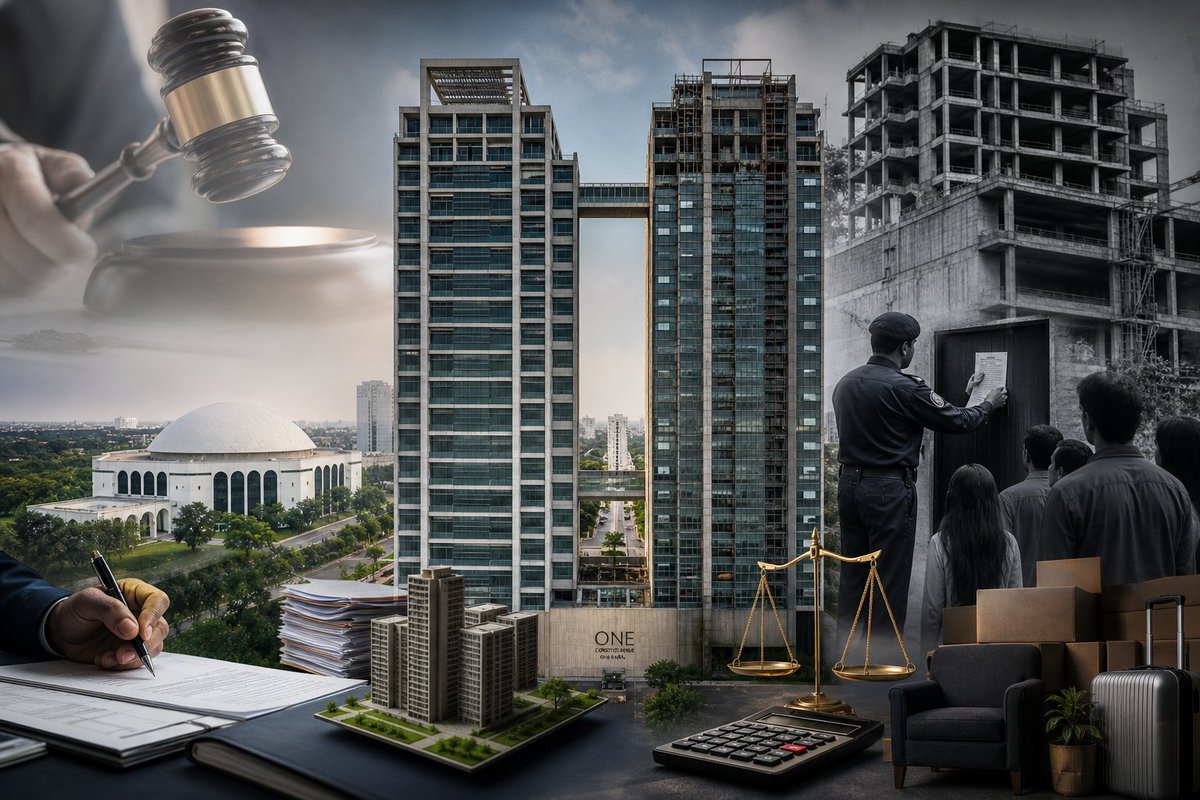

The Grand Hyatt / BNP lease case should not be reduced to political noise. At its core, it is a legal, contractual and public-interest matter. The central question is simple: can a private developer retain control over prime state land after repeated default, delayed payments, expired guarantees and unresolved public dues? In any functioning legal order, the answer must be no. Investment deserves protection, but only when it operates within the four corners of law, contract and accountability.
The facts go back to 2005, when the Capital Development Authority leased around 13.5 acres near the Jinnah Convention Centre for a five-star hotel project. M/s BNP secured the project with the highest bid of about Rs4.88 billion. Yet possession was handed over after only an initial payment, and the matter soon became a long story of defaults, rescheduling and concessions.
Dawn reported in 2016 that the plot was auctioned for Rs4.88 billion and possession was handed over after Rs800 million had been received
That history matters because public land is not a casual commercial commodity. It belongs to the state and, by extension, to citizens. When such land is leased for a specific purpose, especially in the heart of the federal capital, the developer is not merely buying time or location; it is accepting public obligations. The project was meant to deliver a five-star hotel, not a maze of litigation, third-party claims and commercial improvisation.
BNP was given opportunities. Payment schedules were revised. Time was extended. Legal breathing space was provided. The Supreme Court, on January 9, 2019, restored the lease conditionally and directed BNP to pay Rs17.5 billion to CDA in instalments over eight years.
That order was not a blank cheque. It was a conditional revival, and conditions in law are not decorative language
The problem is that the obligations were not fulfilled. According to CDA’s position before the Islamabad High Court, BNP paid only about Rs2.9 billion out of the assessed Rs17.5 billion liability, while the rest remained outstanding. The same proceedings also highlighted that apartments and commercial areas had been sold to third parties, creating legal complications beyond the original hotel project.
The third-party issue is unfortunate, but it cannot become a shield for the original default. Buyers and financial institutions may have separate remedies, and their concerns deserve fair legal treatment. But public authority cannot be paralysed simply because a developer created downstream interests.
If anything, the sale and sub-leasing of apartments and commercial portions made the matter more serious, not less
CDA’s later actions must be seen in that context. Notices were issued in December 2022 regarding payment and bank guarantee requirements. A lease termination notice followed on February 7, 2023, and on March 8, 2023, CDA cancelled the lease. BNP’s proposal to adjust dues against commercial space was rightly rejected. A civic authority cannot treat public receivables like a private barter arrangement. Accepting such a formula would invite every defaulting developer to offer constructed space instead of cash.
That would be a dangerous precedent. Pakistan already suffers from weak enforcement, selective concessions and elite regularisation. If a high-value default on state land is converted into negotiable convenience, the message to the market will be disastrous that bid high, pay low, sell portions, litigate for years, and then bargain. No responsible government or regulator can allow that template to become policy.
The Public Accounts Committee’s concern was therefore understandable. This case is not only about one building. It is about how public land is allocated, how contracts are enforced, and whether state institutions can recover public money without being intimidated by influence, litigation or media pressure.
CDA’s appointment of an administrator and interim committee for day-to-day management also reflects the need to preserve order while the legal consequences unfold
The Islamabad High Court’s April 30, 2026 decision has sharpened the issue. The court upheld CDA’s cancellation of the One Constitution Avenue lease, noting the multi-billion-rupee default and dismissing challenges filed by BNP and occupants. That outcome reinforces a principle that should never have been controversial: public land cannot be held hostage by non-payment.
The government’s position, therefore, should remain firm. Investment is welcome. Construction is welcome. Urban development is welcome. But default is not investment. Misuse of state land is not development. Non-payment of public dues is not entrepreneurship. The Grand Hyatt / BNP lease case is ultimately about rule of law, public money and the sanctity of contracts. If Pakistan wants credible investment, it must first prove that contracts are enforced equally, whether the defaulter is weak or powerful.