
Pakistan’s struggle against extremism is not only a security challenge; it is also an intellectual, moral and social challenge. Violent ideologies do not emerge in a vacuum. They grow where religious understanding is narrowed, where political frustration is manipulated, where poverty and injustice create anger, and where young minds are taught to see the world through division rather than balance. In such an environment, the Qur’anic principle of Wasatiyyah, meaning moderation, balance and ethical restraint, offers Pakistan a powerful counter-strategy. It is not a weak or passive idea. Rather, it is a firm moral position that rejects excess, injustice, sectarian hatred and violence while promoting compassion, reason, tolerance and responsibility.
Extremist groups often present themselves as defenders of religion, but their worldview is built on rigidity, exclusion and anger. They take religious texts out of context, ignore the wider Islamic tradition of mercy and justice, and turn difference into hostility. Wasatiyyah directly challenges this mindset because it reminds Muslims that Islam is a faith of balance. It teaches that devotion must be joined with wisdom, courage with restraint, and conviction with compassion. A society guided by Wasatiyyah does not accept violence in the name of faith, nor does it allow religion to be used as a tool for hatred.
It helps citizens distinguish between authentic Islamic teachings and radical misrepresentations that distort religion for political or ideological purposes
For Pakistan, reclaiming Wasatiyyah is especially important because extremist narratives have often exploited social grievances, sectarian identities and political polarization. Many vulnerable citizens, especially young people, are drawn toward radical ideas when they feel ignored, humiliated or confused about their place in society. Extremist recruiters offer simple answers to complex problems. They divide the world into enemies and believers, purity and betrayal, victory and revenge. Wasatiyyah offers a healthier alternative. It encourages critical thinking, moral clarity and social responsibility. It teaches that disagreement does not justify violence, that religious identity does not require hatred of others, and that justice cannot be achieved through cruelty.
Education must be the first battlefield where this counter-strategy is strengthened. Pakistani curricula should not merely condemn extremism in abstract terms; they should actively teach students the values of balance, pluralism, constitutional responsibility and ethical citizenship. Religious education should explain the Qur’anic foundation of moderation and the Prophetic model of mercy, patience and dialogue. At the same time, civic education should help students understand that being a good Muslim and a responsible citizen are not contradictory identities. When students learn to ask questions, examine arguments and reject manipulation, they become less vulnerable to radical propaganda.
Wasatiyyah in education can build minds that are faithful without being fanatical, confident without being intolerant, and patriotic without being hostile
Religious scholars and mosque leadership also carry a major responsibility. In Pakistan, the pulpit remains a powerful platform for shaping public attitudes. If religious discourse emphasizes sectarian superiority, suspicion and anger, society becomes more divided. But if scholars promote Wasatiyyah as the authentic voice of Islam, they can guide communities toward peace and mutual respect. Sermons, madrassa teaching and public religious discussions should highlight justice, compassion, humility and restraint. Inter-sectarian dialogue should not be treated as a luxury; it is a national necessity. When moderation guides relations among different schools of thought, social cohesion becomes stronger and extremist forces lose their ability to exploit sectarian fault lines.
The media has an equally important role. Television channels, digital platforms and social media influencers shape public emotion every day. Sensationalism, conspiracy thinking and hateful rhetoric create the perfect climate for radicalization. Media institutions should promote narratives that humanize difference, expose extremist manipulation and celebrate examples of peaceful religious leadership. Scholars, journalists and opinion makers must work together to present Wasatiyyah not as a slogan, but as a living social ethic.
Pakistan needs public conversations that reward wisdom rather than outrage, dialogue rather than provocation, and national unity rather than division
Wasatiyyah also strengthens governance because it links faith with civic responsibility. A balanced society respects law, protects minorities, values justice and rejects mob violence. It understands that no individual or group has the right to impose its anger on the state or society. When moderation becomes part of public culture, citizens are more likely to resolve disputes peacefully, respect institutions and participate constructively in democratic life. This does not mean ignoring injustice or silencing criticism. On the contrary, Wasatiyyah demands justice, but it seeks justice through ethical means. It allows reform without chaos, resistance without hatred, and conviction without extremism.
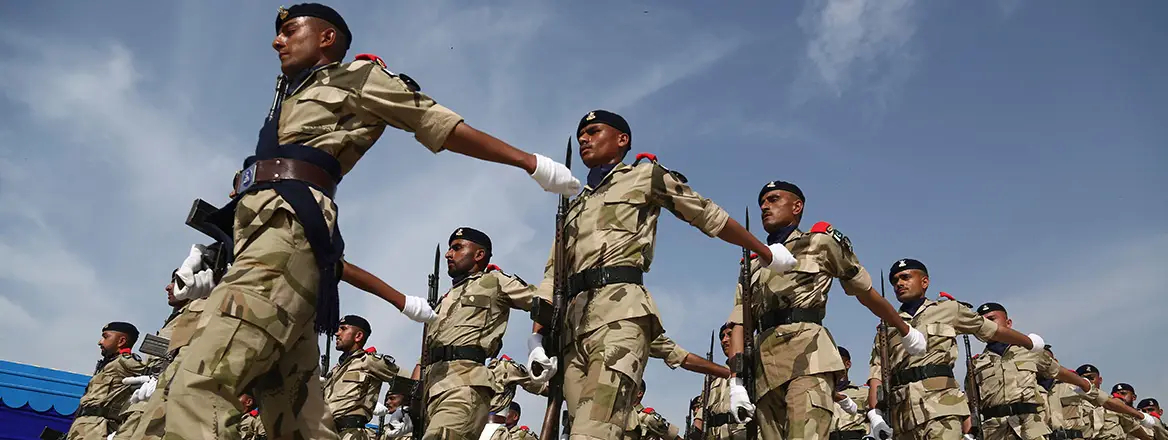
Pakistan cannot defeat extremism through force alone. Security operations may disrupt violent networks, but only a strong moral and intellectual counter-narrative can weaken the roots of radicalization. Wasatiyyah provides that counter-narrative. It speaks in the language of faith, but it also supports constitutional values, national unity and social peace.
It can bring together educators, scholars, parents, media professionals, policymakers and community leaders around a shared purpose: protecting society from hatred and guiding it toward balance
The future of Pakistan depends on the ideas it chooses to nurture. If intolerance, polarization and rigid thinking are allowed to dominate, extremism will continue to find space. But if Wasatiyyah is embedded in education, religious teaching, media narratives and community practice, Pakistan can build resilience against radical ideologies. Moderation is not compromise with evil; it is resistance to excess. It is the path of wisdom, justice and peace. By reclaiming Wasatiyyah, Pakistan can promote an Islamic identity that is inclusive, confident and humane, while cultivating a national culture rooted in harmony, responsibility and shared hope.