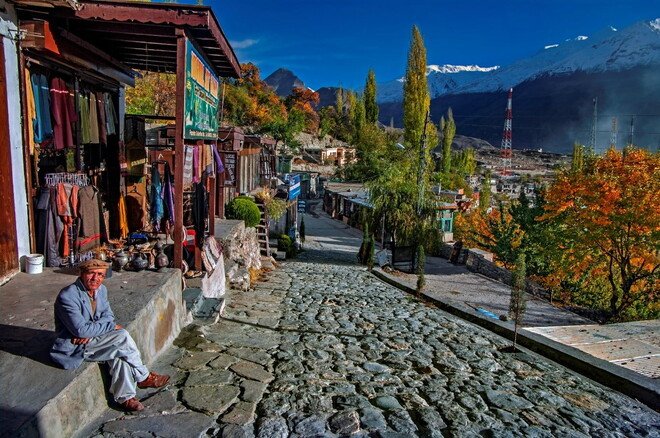

Hunza Valley is known across the world for its breathtaking mountains, peaceful landscapes and extraordinary natural beauty. Yet, beyond its scenic charm, Hunza today stands as one of Pakistan’s most inspiring examples of educational progress. Achieving an estimated literacy rate of around 95 percent is not an ordinary accomplishment, particularly for a remote mountainous region where harsh weather, difficult terrain, scattered settlements and limited resources have long been serious challenges. Hunza’s achievement proves that when state policies, local administration, community participation and parental commitment move in the same direction, even the most distant regions can become centers of knowledge and progress.
The success of Hunza is not the result of chance. It is the outcome of a powerful combination of government support and public awareness. The federal government, local administration and educational institutions played a key role by expanding access to schools, improving basic infrastructure, promoting free and compulsory education, and creating an environment where learning became a priority. These efforts laid the foundation for a strong educational culture. But government action alone is never enough. Schools may be built by the state, but they become meaningful only when communities value them, parents trust them and teachers serve them with dedication.
Hunza’s real strength lies in this partnership between policy and people
One of the most remarkable features of Hunza’s educational model is the active role of the community. In many parts of Pakistan, education is still seen as a government responsibility alone. In Hunza, however, education has become a shared social mission. Parents encourage their children to attend school, teachers work with commitment despite geographical difficulties, and communities treat schools as institutions of collective progress. This public ownership has strengthened the entire system. It has created a culture where sending children to school is not seen as a burden but as a basic duty and a source of pride.
Another defining aspect of Hunza’s success is equal opportunity for boys and girls. In many regions of the country, girls’ education continues to face social, economic and cultural barriers. Hunza has challenged that mindset through practice, not slogans. Families in the valley increasingly understand that educating daughters is just as important as educating sons. Women’s education has contributed to social confidence, economic participation and community development.
Hunza’s experience shows that no society can move forward while half of its population remains deprived of knowledge and opportunity
The 95 percent literacy rate is therefore more than a statistic. It is a reflection of priorities. It tells us what can happen when education is treated as the foundation of development rather than a secondary concern. An educated society makes better decisions, understands health and civic responsibilities, participates more effectively in economic life and resists extremism more strongly. In Hunza, education has not only changed individual lives; it has transformed the character of society. It has produced awareness, discipline, confidence and a forward-looking mindset.
This achievement also carries an important message for the rest of Pakistan. Whether we look at remote districts of Balochistan, rural areas of Sindh, underdeveloped parts of southern Punjab or mountainous regions of Khyber Pakhtunkhwa, Hunza offers a practical lesson. Educational progress is possible when policy is consistent, resources are used honestly, teachers are supported, parents are engaged and girls’ education is protected. Hunza proves that distance from major cities should not become an excuse for educational backwardness.
With the right vision and collective will, even remote communities can become models of learning
The real lesson from Hunza is that development begins with education. Roads, buildings, markets and infrastructure are important, but they cannot create lasting progress without educated citizens. A literate population is the foundation of social stability, economic growth and democratic maturity. Hunza’s people understood this truth, and the state supported that understanding through policy and investment. When public consciousness and state policy come together, real change becomes possible. Hunza is living proof that education can change destiny.
Pakistan must now look at Hunza not merely as a success story but as a model for national education planning. The country needs to learn from the spirit that made this achievement possible: government responsibility, local ownership, parental commitment and gender equality. If these principles are applied seriously across Pakistan, the dream of a more educated and prosperous nation can become reality.
Hunza’s message is clear and powerful: when the state invests in education and the people stand behind that mission, an educational revolution is possible. The valley has shown that knowledge can overcome distance, hardship and limitation. It has shown that with the right policy and public determination, no goal is beyond reach.