
Extremist ideology has long tried to weaken Pakistan by attacking the religious legitimacy of its state institutions. It portrays the armed forces, judiciary, police, civil administration and constitutional order as enemies of Islam, demanding that citizens oppose, distrust or destroy them. This is not Islamic scholarship. It is a calculated distortion designed to paralyze the state from within. Islam does not sanction chaos in the name of faith. It commands justice, order, protection of life, obedience to legitimate authority and collective responsibility for the security of society.
The Quran declares: “Indeed, Allah orders justice, good conduct, and giving to relatives, and He forbids immorality, bad conduct, and oppression” (Al-Nahl 16:90). This verse is not merely a moral slogan; it is a governing principle. Any state institution that protects citizens, maintains lawful order, delivers justice and prevents oppression is serving a purpose recognized by Islam. To attack such institutions under a religious pretext is not piety.
It is rebellion against the very order through which justice and public welfare are preserved
The Prophet ﷺ recognized that human society cannot survive without governance. Ibn Taymiyyah records the principle that people require leadership in both religious and worldly affairs. Without authority, law collapses, the weak are abandoned and violence becomes the language of public life. Pakistan’s institutions, including its elected government, judiciary, armed forces, police and civil administration, represent the lawful structure through which collective life is organized. Protecting these institutions from extremists is not blind political loyalty. It is a religious and civic duty tied to the protection of life, property, dignity and social peace.
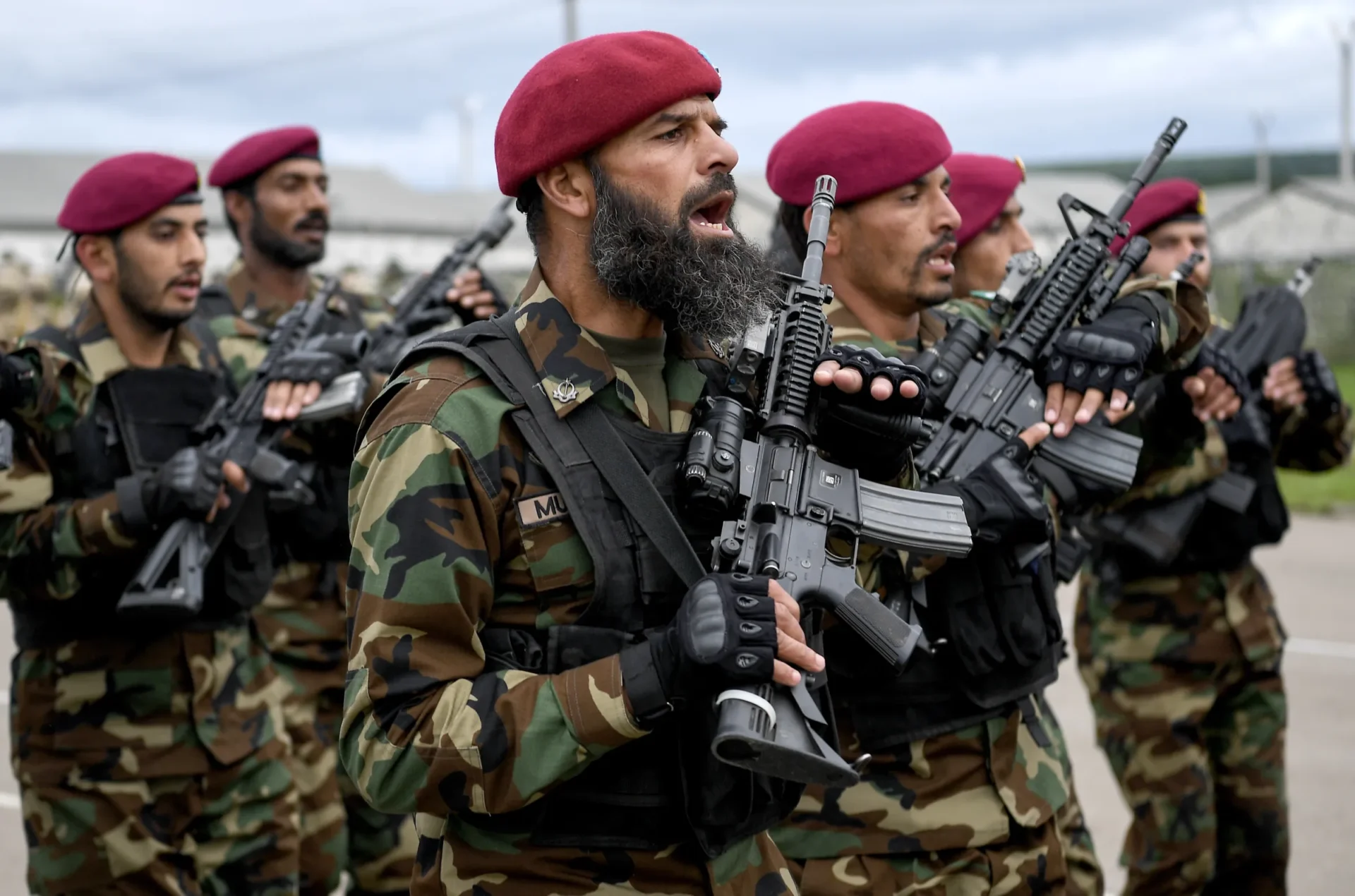
The Quran instructs Muslims: “And cooperate in righteousness and piety, and do not cooperate in sin and transgression” (Al-Ma’idah 5:2). Those who defend civilians from terrorist violence are engaged in righteous cooperation. Pakistan’s soldiers, police officers and security personnel stand between ordinary citizens and those who bomb mosques, schools, markets, courts and public offices. Their service is not separate from Islam’s moral vision; it is part of it. A society that forgets the sacrifice of those who protect it loses both gratitude and moral clarity.
Islam gives profound honor to legitimate sacrifice in the path of protecting people from aggression and disorder. The Prophet ﷺ praised standing guard and defending the community. Those who lose their lives protecting innocent Pakistanis from terrorism are not servants of some alien project; they are defenders of human life, public order and national security. Their families deserve dignity, care and national respect.
A nation that benefits from their sacrifice must not allow extremist propaganda to insult their memory or confuse their mission
One of the most dangerous lies spread by extremists is that loyalty to Pakistan contradicts loyalty to Islam. This false binary has no basis in Islamic history. When the Prophet ﷺ established the Constitution of Medina, he created a civic order in which different communities shared obligations of defense, justice and public welfare. That model proves that loyalty to a just political community and loyalty to Islam are not enemies. In Pakistan’s case, where the state was founded with an Islamic moral imagination and constitutional commitment to Muslim identity, this bond is even stronger.
Classical Muslim scholars understood that political order is not a luxury. Imam al-Ghazali, Ibn Taymiyyah and Shah Waliullah Dehlawi all emphasized the necessity of governance for the preservation of religion and society. Islamic jurisprudence treats the maintenance of collective order as a communal obligation. When extremists deliberately attack state institutions, they are not reforming society; they are spreading fasad fil ard, corruption on earth.
The Quran repeatedly condemns such corruption because it destroys trust, security and the conditions under which religious and social life can flourish
The judiciary is especially important in this discussion. Extremists often target courts because justice stands in the way of terror. The Quran commands: “And when you judge between people, judge with justice” (Al-Nisa 4:58). Courts that protect the innocent, punish criminals and uphold rights operate within a Quranic mandate. Threatening judges, bombing court buildings or intimidating lawyers is not defense of Islam. It is an assault on the Quranic value of justice itself.
Pakistan’s Constitution declares Islam as the state religion and commits the nation to justice, equality, freedom and public welfare. It is a national covenant through which citizens agree to live under law rather than violence. Protecting the Constitution does not mean denying reform or accountability. Institutions must be corrected when they fail, but correction is not destruction. Islam permits sincere counsel, lawful criticism and reform through legitimate means.
It does not permit armed rebellion, terrorism or the demolition of public order
The Prophet ﷺ taught obedience to legitimate authority and warned against disorder that tears society apart. This obedience is not a license for injustice; it is a safeguard against anarchy. Where lawful institutions exist, Muslims are required to strengthen justice through them, not burn them down. Inciting rebellion against Pakistan’s institutions under the banner of religion has no credible scholarly sanction. It is a political weapon disguised as faith.
Every Pakistani has a role in resisting this deception. The scholar must speak truth from the pulpit. The soldier must defend the frontier. The judge must uphold justice. The police officer must protect the street. The civil servant must serve with honesty. The citizen must refuse propaganda that divides the nation from its defenders. The Prophet ﷺ described believers as one body: when one part suffers, the whole body responds. Pakistan’s unity, security and institutional integrity are therefore not merely political concerns. They are a sacred trust. Protecting this country, its people and its lawful institutions is a responsibility for which history will judge us, and for which Allah will hold us accountable.