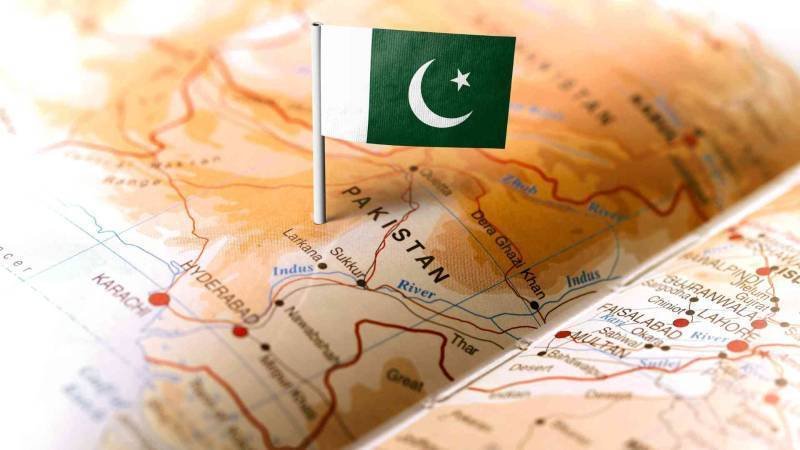

Pakistan’s geography is not merely a matter of maps; it is one of the country’s greatest strategic assets. Situated at the crossroads of South Asia, Central Asia, West Asia, and the Middle East, Pakistan occupies a position that few states can match. It links major civilizations, energy markets, trade routes, and security zones. In an age where connectivity defines economic influence and maritime access shapes national power, Pakistan’s location gives it extraordinary relevance in global trade, energy security, and regional diplomacy.
Pakistan’s strategic geography places it between some of the world’s most important regions and powers. It shares long borders with India, Afghanistan, Iran, and China, while its southern coastline opens into the Arabian Sea. This makes Pakistan a natural bridge between landlocked Central Asia and the wider world. For Afghanistan and the Central Asian republics, access to Pakistan’s warm-water ports offers one of the shortest and most practical routes to international markets.
Compared with longer alternative routes, Pakistan’s transit corridors can reduce distance, cost, and time, making the country a vital gateway for regional trade and energy movement
Its proximity to the Strait of Hormuz further increases its importance. Since a major share of the world’s oil passes through this narrow maritime chokepoint, Pakistan’s position near Gulf energy routes gives it a crucial role in energy security. The country can serve not only as an importer of energy but also as a transit platform for future pipelines, logistics networks, and regional supply chains. This gives Pakistan a strategic advantage that should be converted into economic strength through better infrastructure, policy continuity, and regional partnerships.
Pakistan’s maritime potential is equally significant. With a coastline of about 1,046 kilometres and an Exclusive Economic Zone of nearly 290,000 square kilometres, Pakistan has access to valuable marine resources and major sea lanes. As most global trade moves by sea, Pakistan’s ports are central to its economic future. Karachi Port and Port Qasim already function as the backbone of the country’s maritime economy, handling container traffic, petroleum products, coal, bulk cargo, and industrial imports. These ports have historically managed the bulk of Pakistan’s seaborne trade and remain essential for national commerce.
Yet the real symbol of Pakistan’s future maritime ambition is Gwadar. Located near the entrance of the Strait of Hormuz, Gwadar is more than a port; it is a strategic idea. Developed under the China-Pakistan Economic Corridor, it offers Pakistan the opportunity to become a regional logistics, transshipment, and energy hub. Its deep-sea capacity, free zone, storage facilities, expressway links, and airport development all point toward a broader vision: connecting China, Afghanistan, Central Asia, the Middle East, Africa, and Europe through Pakistan.
CPEC strengthens this vision by linking Gwadar with China’s Xinjiang region through roads, energy infrastructure, and future rail connectivity. For China, it offers an alternative route that reduces dependence on longer and more vulnerable maritime passages. For Pakistan, it provides investment, infrastructure, industrial growth, and strategic depth. For Central Asia and Afghanistan, it opens access to the Arabian Sea.
If managed wisely, CPEC can evolve from a bilateral project into a wider platform for regional economic cooperation
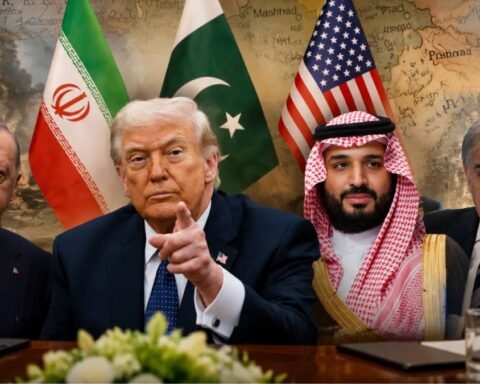
Pakistan’s role, however, should not be viewed only through infrastructure and trade. Geography also gives the country diplomatic weight. Its relations with China, Iran, the Gulf states, Afghanistan, and Western powers place it in a position where it can support dialogue, de-escalation, and regional stability. The 2026 crisis, in which Pakistan helped facilitate ceasefire efforts between the United States, Iran, and Israel, showed that Pakistan can act not only as a corridor of commerce but also as a corridor of diplomacy. This role is especially important in a region where conflict can disrupt energy flows, shipping routes, and global markets.
The challenge for Pakistan is to turn geographic advantage into national prosperity. Strategic location alone is not enough. Many countries sit on important routes but fail to benefit because of weak governance, poor planning, political instability, or insecurity. Pakistan must therefore invest in port efficiency, road and rail modernization, customs reform, maritime security, industrial zones, and investor confidence. Gwadar’s success will depend not only on its location but also on peace in Balochistan, local inclusion, transparent policy, and reliable connectivity with the rest of the country.
Pakistan stands at a historic opportunity. Its borders connect regions, its coastline opens to the world, and its ports can serve emerging markets across Asia and beyond. In a fragmented global order, countries that provide secure routes, reliable logistics, and diplomatic balance will matter more than ever. Pakistan has all the geographic foundations to become such a state. The real test is whether it can transform its strategic location into sustainable economic power, regional cooperation, and long-term stability. If it succeeds, Pakistan will not remain merely a bridge between regions; it will become a central pillar of Asian connectivity.