
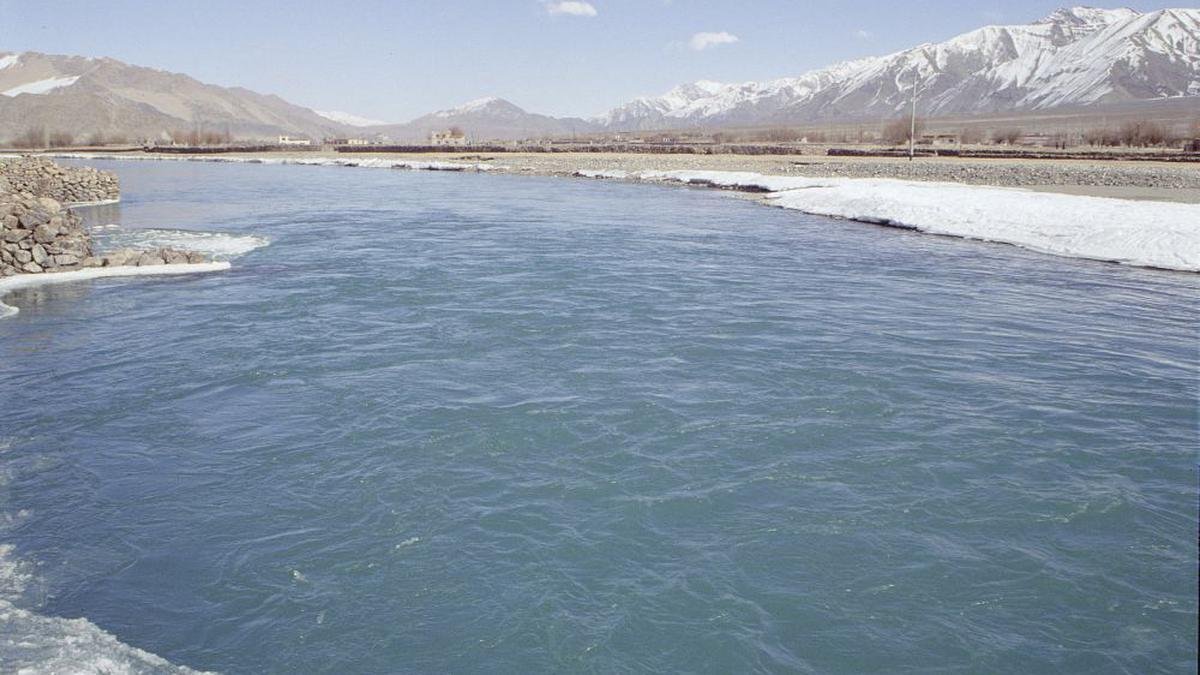

The Indus Waters Treaty was never merely a water-sharing instrument. It was a civilizational restraint placed upon two hostile neighbours who understood, even in their most dangerous moments, that rivers could not be treated as weapons. Signed in 1960 at Karachi, the Treaty fixed rights and obligations over the Indus system and created a cooperative framework for future questions of interpretation and application. Its endurance through the 1965 and 1971 wars and the 1999 Kargil crisis made it one of South Asia’s rare institutional success stories: a mechanism that survived where diplomacy, trade and political dialogue repeatedly collapsed.
That durability is precisely why India’s 2025 decision to place the Treaty “in abeyance” is so alarming. New Delhi announced on April 23, 2025 that the Indus Waters Treaty would be held in abeyance “with immediate effect” until Pakistan “credibly and irrevocably” abjured alleged support for cross-border terrorism. India later asserted that, during this abeyance, it was no longer bound to perform any Treaty obligations. This is not routine diplomatic pressure.
It is an attempt to convert a binding international treaty into a discretionary political instrument
At the heart of the matter lies pacta sunt servanda: agreements must be kept. International law is not built on sentiment but on the expectation that states cannot perform obligations only when convenient. Pakistan’s position has been clear: the Treaty is a binding World Bank-brokered agreement with no provision for unilateral suspension. India’s action therefore strikes at the legal foundation of treaty-based governance. If a state can suspend a water treaty by invoking political grievance, then no downstream state can trust the stability of any upstream commitment.
The institutional damage is equally grave. The Treaty’s genius lay not only in dividing rivers but in creating procedures: the Permanent Indus Commission, Neutral Expert mechanisms and Courts of Arbitration. The World Bank has described these as Treaty mechanisms, with the Neutral Expert and Court of Arbitration operating independently and empowered to determine their own jurisdiction and competence.
India’s refusal to engage with these channels weakens the very architecture that prevented technical disagreements from becoming strategic crises
The real-world consequences fall most heavily on Pakistan. The Indus system feeds the country’s agriculture and hydropower, and Reuters reported that the Treaty guaranteed water access for 80 percent of Pakistan’s farms through three rivers originating in India. For an agrarian society already under climate stress, uncertainty over flows, data-sharing, flood warnings and upstream infrastructure is not an abstract legal problem. It is a direct threat to crops, livelihoods, energy security and human security.
India’s unilateralism also exposes a dangerous ideological turn. Under a Hindutva-inflected politics of coercive nationalism, shared rivers are increasingly framed not as ecological commons but as instruments of punishment. This logic is profoundly destabilizing. Water cannot be governed by slogans of vengeance.
Once hydrology is subordinated to majoritarian political spectacle, cooperation gives way to blackmail, and law gives way to force
Pakistan’s response must therefore remain legal, technical and diplomatic. Its continued engagement with neutral adjudicatory bodies reinforces its legitimacy and demonstrates that adherence to international law is not weakness but strategic discipline. The Court of Arbitration’s June 2025 supplemental award found that India’s announced abeyance did not limit the Court’s competence over the dispute, underscoring that unilateral political declarations cannot erase established dispute-settlement processes.
The Indus Waters Treaty survived wars because both states once understood that some institutions must stand above conflict. India’s 2025 abeyance threatens to collapse that norm. If allowed to stand, it will set a precedent far beyond South Asia: that upstream power may replace treaty obligation, and that political anger may override legal continuity. Pakistan’s task is to defend not only its water rights, but the binding nature of international commitments themselves. In the Indus Basin, the battle is no longer only over rivers. It is over whether law still restrains power.