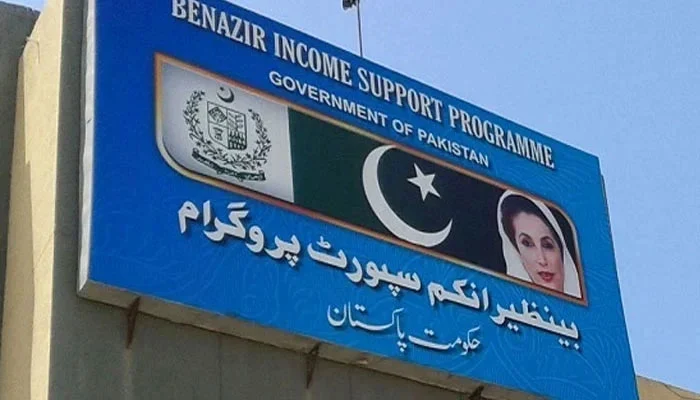

The Benazir Income Support Programme has become the largest social-protection initiative in Pakistan and one of the most politically significant welfare programmes in the country’s history. Since its establishment in 2008, it has expanded from a relatively limited cash-transfer scheme into a nationwide system covering millions of low-income households. According to the Pakistan Economic Survey 2025-26, more than 10 million women were receiving assistance under Benazir Kafaalat, while millions of children and mothers were covered through Benazir Taleemi Wazaif and Benazir Nashonuma. The federal government allocated more than Rs722 billion to BISP for FY2025-26, while the allocation for FY2026-27 increased to approximately Rs845 billion. These figures demonstrate the scale of the programme, but they also raise a fundamental policy question such as has BISP become an effective instrument of poverty reduction, or has it developed into an expensive mechanism that merely manages poverty without addressing its causes?
However, the programme’s limitations are increasingly difficult to ignore. The current Kafaalat payment of Rs14,500 per quarter amounts to less than Rs5,000 per month. For an average poor household, this amount is far below the cost of food, electricity, transport, healthcare, education, and housing. It does not meet basic household needs and cannot provide a sustainable route out of poverty.
At best, it offers temporary relief. At worst, it creates the appearance of social protection while leaving the deeper causes of poverty untouched
The scale of expenditure is another major concern. BISP now receives one of the largest allocations among federal social-sector programmes. Its budget exceeds the funding available for many development, skills, employment, and livelihood initiatives. This creates a serious opportunity cost. Every additional rupee allocated to unconditional cash transfers is a rupee that cannot be spent on job creation, technical education, agricultural productivity, public health, or local economic development. Pakistan is a heavily indebted country with limited fiscal space. A welfare programme of this size must therefore demonstrate not only that money is being distributed, but also that beneficiaries are gradually becoming less dependent on state support.
The central weakness of BISP is that it lacks an effective poverty-graduation strategy. The programme has expanded continuously, but there is little evidence that large numbers of beneficiaries are leaving it because their incomes have improved. This suggests that BISP is functioning primarily as a permanent consumption-support scheme rather than a transitional instrument of economic empowerment.
Cash assistance without skills development, employment placement, microenterprise support, or access to productive assets cannot permanently transform household livelihoods
Governance problems further weaken the programme. Audit reports have highlighted illegal deductions, fraudulent transactions, payment-agent misconduct, weak complaint mechanisms, and inadequate internal controls. Biometric verification has reduced some forms of fraud, but it has also created difficulties for elderly women, manual workers, and beneficiaries in remote areas. There are also concerns about outdated beneficiary records, inclusion of ineligible households, and exclusion of deserving families. Unless the registry is updated regularly and independently audited, the programme will remain vulnerable to leakage, political influence and administrative errors.
Pakistan now faces two broad policy choices. The first option is the gradual closure and replacement of BISP. Supporters of this approach argue that the programme has failed to meet the basic needs of poor households, has not significantly reduced national poverty, and has become an excessive burden on the federal budget. Under this option, BISP would not be terminated immediately. Abrupt closure would expose millions of vulnerable families to severe hardship. Instead, the programme would be phased out over several years and replaced by targeted initiatives focusing on employment, food security, healthcare, education, housing and livelihood creation.
Long-term assistance would be preserved only for widows, elderly persons, persons with disabilities, and households without employable members
The second and more practical option is comprehensive reform and devolution. BISP should be transformed from a largely federal cash-distribution programme into an integrated poverty-reduction system implemented primarily by provincial governments. Poverty conditions vary significantly across Punjab, Sindh, Khyber Pakhtunkhwa, Balochistan, and the newly merged districts. Provincial governments are better positioned to understand local labour markets, agricultural needs, education gaps, and regional living costs. The federal government should retain responsibility for national standards, database management, equalisation grants, monitoring and independent evaluation, while provinces should design and implement locally appropriate interventions.
Pakistan should also learn from international experience. Countries that have achieved better social-protection outcomes generally combine cash transfers with human-capital development and economic participation. Assistance should therefore be linked with school attendance, maternal healthcare, vaccination, vocational training, job placement, and enterprise development. Able-bodied beneficiaries should be placed in structured graduation programmes with clearly defined timelines and support packages. They may receive skills training, interest-free loans, agricultural inputs, livestock, business grants, or wage subsidies.
The objective should be to move families from welfare dependence to economic self-reliance
The programme’s payment system must also be fully digitised. Beneficiaries should receive funds directly through secure bank accounts or verified digital wallets. Payment agents should be strictly monitored, illegal deductions should result in immediate penalties, and real-time complaint systems should be established. Independent audits, public disclosure of expenditure, and parliamentary oversight are essential to restore confidence. Federal and provincial welfare databases should also be integrated to eliminate duplication and ensure that the same household is not receiving overlapping benefits from multiple schemes without justification.
Pakistan does not need a welfare system that merely distributes small amounts of money to an ever-growing population. It needs a social-protection system that protects the genuinely vulnerable, creates opportunities for the able-bodied, and reduces long-term dependence on government support. BISP has built a valuable national platform, but its current structure is insufficient. The choice is not simply between keeping or closing the programme. The real choice is between continuing an expensive system of poverty management and developing a credible pathway towards poverty reduction, employment, and human dignity.