
Pakistan stands at a decisive point where its demographic strength, technological ambitions, and environmental needs are beginning to converge. For decades, the national economic debate has been dominated by fiscal crises, energy shortages, unemployment, and low productivity. Yet beneath these pressures, a different story is taking shape. With more than 60 percent of the population under the age of 30 and over 100 million internet users, Pakistan possesses the human and digital foundations required to build a modern and sustainable economy. The growth of information technology, freelancing, renewable energy, and agricultural innovation shows that the country is creating its own pathway towards a digital and green future.
The clearest evidence of this transformation is the rise of the IT and freelancing sectors. During the first eleven months of fiscal year 2025-26, Pakistan’s technology exports reportedly reached a record US$4.2 billion, marking a 20 percent year-on-year increase. In May 2026 alone, IT exports rose to US$373 million. These figures bring valuable foreign exchange into the country and demonstrate the growing international demand for Pakistani digital talent.
Software developers, designers, digital marketers, data analysts, and artificial intelligence specialists are increasingly serving clients across the world without leaving their home cities
Freelancing has become an even more powerful symbol of digital opportunity. Pakistani freelancers earned an estimated US$1.6 billion during the first eleven months of FY2025-26, while May 2026 earnings reached US$169 million. This expansion demonstrates how digital platforms can connect young people directly to global markets, overcoming many of the limitations of the domestic labour market. Programmes such as DigiSkills.pk have supported this progress by providing practical and market-oriented training to millions of learners. Their impact is particularly important for women, students, and residents of smaller cities who often lack access to conventional employment opportunities.
Pakistan must now move beyond numerical growth. The next phase requires investment in quality education, advanced technical skills, reliable internet connectivity, digital payments, cybersecurity, and research. Tax incentives, Special Technology Zones, and the Digital Nation Pakistan framework can support innovation, but policy consistency will remain essential. Pakistan should gradually move from low-cost outsourcing towards high-value fields such as artificial intelligence, cloud computing, fintech and enterprise software.
The ultimate objective should be to convert digital labour into digital ownership, intellectual property, and globally competitive companies
Renewable energy offers a second major opportunity. Pakistan has long suffered from expensive imported fuels, circular debt, and unreliable electricity supply. The rapid adoption of rooftop solar systems and the expansion of net metering reflect the growing demand for affordable alternatives. Solar, wind, and hydropower can reduce dependence on imported energy, lower production costs, and strengthen national energy security. Government planning instruments, including the Indicative Generation Capacity Expansion Plan 2025-35 and the Alternative and Renewable Energy Policy, provide a framework for expanding cleaner electricity generation.
This transition should not be regarded merely as a climate obligation; it is an economic necessity. A cleaner energy mix can attract investment, reduce pressure on foreign-exchange reserves, create green employment and make Pakistani industries more competitive. However, grid modernization, energy storage, transparent pricing, and predictable regulations will be necessary to protect both consumers and investors.
Smart grids, real-time data systems and intelligent demand-management technologies can connect Pakistan’s digital ambitions with its energy objectives, making the power sector more efficient, reliable and sustainable
Agriculture, the backbone of Pakistan’s economy, represents the third pillar of this transformation. The country cannot achieve inclusive prosperity if technological progress remains confined to major urban centres. The launch of the Agri Stack initiative in 2025 is therefore an important development. By integrating verified farmer identities, digitized land records, weather information, financing, insurance, and subsidy delivery, the initiative can reduce inefficiency, improve transparency, and provide small farmers with greater access to essential services.
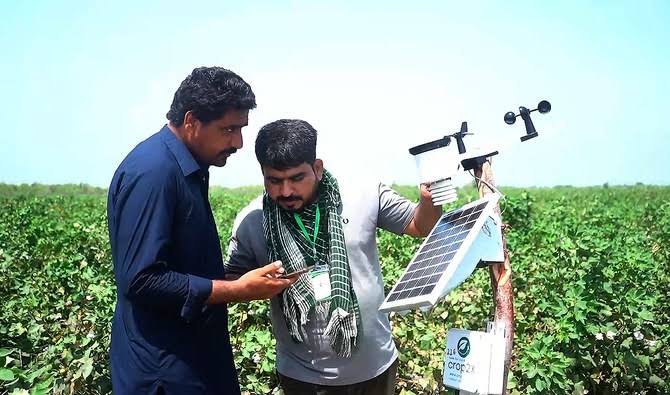
Agri-Tech startups are expanding this potential through satellite monitoring, artificial intelligence, drones, smart irrigation, and precision farming. Companies such as Farmers and Agrilift demonstrate how technology can monitor crop health, reduce waste, optimize water and fertilizer use, and improve agricultural yields. Innovation hubs such as the National Incubation Center Faisalabad can connect researchers, entrepreneurs, investors, and farming communities.
In a country facing water scarcity, climate-related disasters and substantial post-harvest losses, these technologies are not luxuries; they are instruments of survival, productivity and competitiveness
Pakistan’s greatest opportunity lies in connecting these sectors rather than treating them as separate policy areas. Digital platforms can manage decentralized renewable-energy systems, fintech can facilitate climate-smart investments, and satellite data can guide farmers in making timely agricultural decisions. This convergence can generate employment in urban technology centres while raising incomes in rural communities. It can expand women’s economic participation, support young entrepreneurs, strengthen small businesses and reduce regional inequality.
The promise is genuine, but success will depend upon governance, policy continuity, and social inclusion. Pakistan must invest in people as seriously as it invests in physical infrastructure. It must provide affordable digital access, modernize universities, strengthen technical education, protect innovators from regulatory uncertainty, and ensure that rural communities are not excluded from technological progress. A digital and green economy cannot be built through isolated projects, temporary incentives, or political slogans.
It requires a sustained national strategy supported by government institutions, private-sector investment, academia, and international development partners
Pakistan is not merely adapting to the future. From software exports and freelance platforms to solar-powered communities and artificial intelligence-enabled farms, it is beginning to shape a new economic identity. By combining youthful energy, technological innovation and environmental responsibility, the country can build an economy that is more resilient, competitive and inclusive. The momentum is visible, the opportunities are substantial, and the direction is clear that Pakistan’s future lies where digital innovation meets green development.