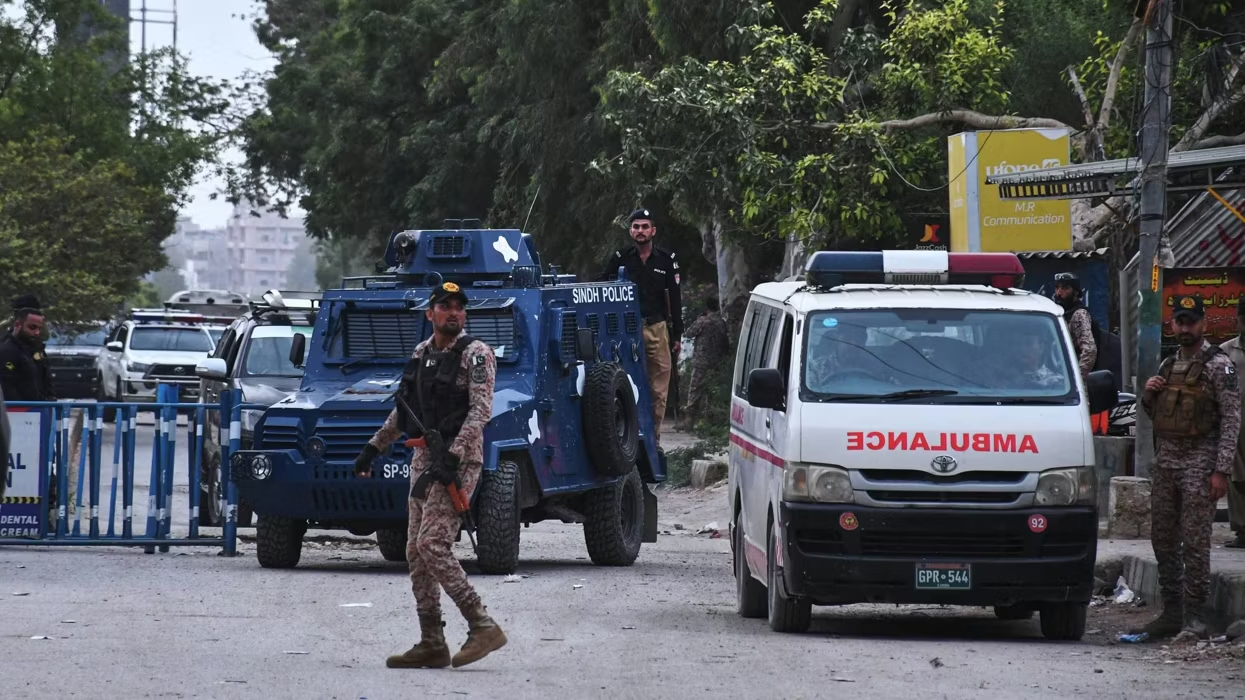

The terrorist assault launched during the night of July 6-7 at Kach Mangi Phase III in Ziarat must be understood for what it truly was: not merely an attack on a police post, but a calculated assault on the people, peace and social fabric of Balochistan. By attacking policemen deployed to protect a vital public facility and surrounding communities, the terrorists sought to turn a district associated with hospitality and tranquillity into a theatre of fear.
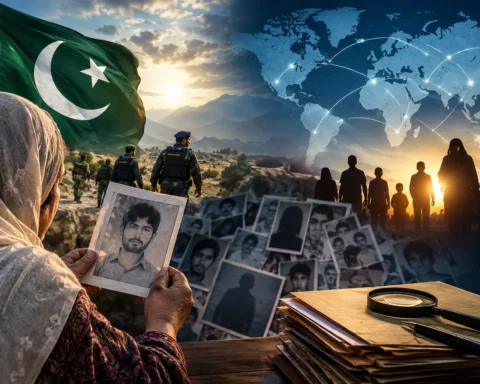
The first victims were local police officers serving their own communities. Nine policemen, including SHO Mangi Muhammad Hussain, SHO Kawas Sohbat Khan and Anti-Terrorist Force official Saifullah, were martyred in the initial assault after resisting heavily armed attackers for several hours. These officers were sons of the soil, familiar with the terrain, the population and Ziarat’s security needs.
Their duty was to protect residents, tourists, travellers and public infrastructure. Their martyrdom therefore represents a direct wound to Balochistan itself
The subsequent developments made the tragedy even more severe. Early reports indicated that some missing personnel had reached safety and that a constable had been rescued. However, the official military briefing on July 8 stated that 18 policemen abducted during the Ziarat attack were later martyred. This grim update illustrates the brutality of the attackers and exposes the fraudulent claim that militant organisations act for Balochistan’s welfare. No movement serving local interests murders local policemen, abducts residents, threatens public projects and traumatises families.
The public reaction is equally significant. Residents blocked the national highway at Ziarat Cross and protested after the attack, demonstrating that local communities reject terrorism and expect stronger protection from the state. Their protest represents a demand for security, accountability and the recovery of abducted personnel. The people of Ziarat understand that militancy destroys tourism, employment, investment and community life. Its victims include hotel workers, transporters, shopkeepers and families whose livelihoods depend upon peace.
The attack also raises serious concerns about the changing operational landscape of terrorism in Balochistan. The province is increasingly confronted by overlapping militant networks with different ideological labels but converging objectives. The banned Tehreek-e-Taliban Pakistan and Baloch separatist terrorist groups may differ in rhetoric, yet their attacks produce the same result: pressure on security forces, disruption of development, intimidation of civilians and erosion of state authority. Reports concerning tactical cooperation, shared facilitation channels and access to cross-border sanctuaries deserve sustained investigation.
Whether cooperation is formal or opportunistic, parallel attacks can stretch Pakistan’s security apparatus across multiple fronts
The Ziarat assault must also be viewed against the broader sequence of violence following the June 27 attack on the Pakistan Rangers headquarters in Karachi. That assault was claimed by Jamaatul Ahrar, a TTP faction, while Pakistani authorities said an arrested attacker had entered Pakistan from Afghanistan. Pakistan subsequently described strikes against militant targets in Afghanistan as an exercise of self-defence. The latest violence reinforces Islamabad’s argument that cross-border sanctuaries cannot remain insulated from responsibility when they generate attacks inside Pakistan. Kabul denies harbouring anti-Pakistan militants, but denial cannot substitute for verifiable action against networks operating from Afghan territory.
Pakistan possesses the sovereign right to defend its citizens, but its response must remain intelligence-led, proportionate and focused on identifiable terrorist infrastructure. Islamabad should simultaneously continue diplomatic engagement, demand transparent counterterrorism mechanisms and present evidence to regional and international partners. Allegations of external sponsorship, including Pakistani claims of Indian support for militant proxies, should be pursued through credible intelligence disclosures and diplomatic forums. Strategic messaging is strongest when supported by verifiable facts rather than rhetoric alone.
At the operational level, the response of the police and supporting forces deserves recognition. Despite their isolation, difficult mountainous terrain and a large attacking force, police personnel resisted for hours. Joint operations involving the police, Frontier Corps, intelligence agencies and other law-enforcement bodies subsequently eliminated several terrorists and continued across the area. Yet bravery cannot become a substitute for preparedness. The provincial government’s decision to investigate security arrangements, command structures, inter-agency coordination and possible operational lapses is therefore necessary.
Remote posts guarding critical infrastructure require better surveillance, fortified communications, rapid-reaction support, night-fighting capability and reliable aerial reconnaissance
The strongest answer to the Ziarat attack will be a combination of justice, institutional reform and public solidarity. The martyrs must be honoured through sustained support for their families and concrete improvements in police protection. Local communities must be treated as partners in counterterrorism because residents often constitute the first line of intelligence against outsiders, facilitators and suspicious movements. Development projects, tourism and public services must continue so that terrorists fail in their objective of isolating Balochistan and undermining public confidence.
Ziarat’s tragedy is a reminder that terrorism is not an abstract contest between militants and the state. It is violence directed against ordinary people, local livelihoods and the fundamental right to live without fear. The policemen who stood their ground were defending Balochistan from those seeking to hold it hostage. Their sacrifice demands a response that is firm against terrorists, accountable in governance and unwavering in its commitment to the people of the province.