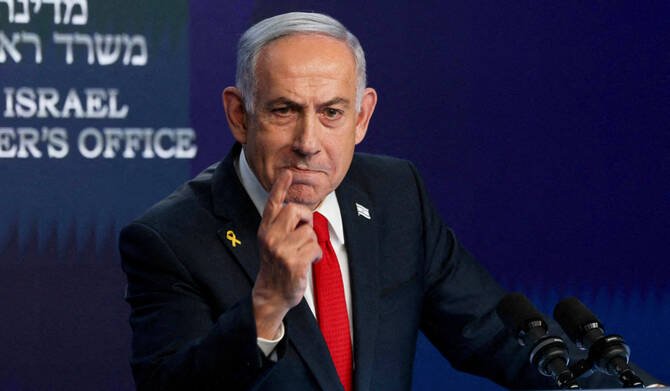

The expression “Greater Israel” is used too loosely, as though it were an Israeli government blueprint. It is more accurately understood as a family of territorial-maximalist ideas rooted in Revisionist Zionism and later advanced by settler movements. Yet the absence of a master plan does not make the danger imaginary. Since 7 October 2023, statements by far-right Israeli ministers, demands for Jewish resettlement in Gaza, accelerated settlement construction in the occupied West Bank, and military expansion into neighbouring Arab territory have given these ideas strategic relevance. The project has not been defeated, but regional diplomacy has prevented its most destabilising possibilities from materialising.
The Hamas attacks of 7 October gave Israel a casus belli against those responsible, but the subsequent campaign exceeded the narrow objective of dismantling Hamas. Israeli ministers attended conferences advocating restored settlements in Gaza, while proposals for Palestinian removal or “voluntary migration” raised fears of permanent demographic engineering. In the West Bank, settlement authorisations, legalised outposts and pro-settler administrative power intensified concerns that de facto annexation was becoming institutional policy.
War was being used not only to answer an attack, but to reshape territory, population and political facts on the ground
The same pattern appeared beyond Palestine. Israel retained military positions in southern Lebanon after withdrawal deadlines and later established a deeper security zone during the 2026 regional war. In Syria, the fall of Bashar al-Assad in December 2024 created a vacuum that Israel exploited through hundreds of airstrikes on military infrastructure and an advance into the demilitarised border zone. Israeli officials described these actions as defensive, but their cumulative effect was to weaken neighbouring states, expand Israeli freedom of action, and leave Damascus and Beirut negotiating under military pressure.
The wars with Iran in June 2025 and again from February 2026 magnified the danger. Israel presented Iran’s nuclear and missile capabilities as existential threats, while Washington pursued its own security objectives. A prolonged conflict nevertheless risked drawing Saudi Arabia, the Gulf states, Türkiye, Lebanon and Syria into a war. Such fragmentation would have benefited any power seeking regional primacy: weakened states, disrupted energy routes, displaced populations and ungoverned spaces would make further territorial encroachment easier to justify as a “temporary security measure.”
The first major obstacle was the refusal of key Muslim states to enter the war on Israel’s preferred terms. Saudi Arabia did not permit its territory or airspace to be used for attacks on Iran and initially prioritised mediation, despite Iranian strikes later hitting Saudi territory. Pakistan, bound to Riyadh by the September 2025 Strategic Mutual Defence Agreement yet maintaining longstanding relations with Tehran, was uniquely placed to prevent a Saudi-Iranian confrontation from becoming irreversible.
Islamabad condemned attacks on Iran, conveyed Saudi security concerns and worked to keep escalation from triggering total war
Pakistan then helped transform restraint into organised diplomacy. Foreign ministers from Pakistan, Saudi Arabia, Türkiye and Egypt met in Riyadh on 19 March 2026 and reconvened in Islamabad on 29 March. Prime Minister Shehbaz Sharif, Field Marshal Asim Munir and Foreign Minister Ishaq Dar subsequently pursued intensive contacts with Washington and Tehran. Pakistan’s proposed 45-day framework was not accepted in its original form, but it helped create a pathway to the 8 April ceasefire, the Islamabad talks of 11–12 April and the Pakistan- and Qatar-supported Islamabad Memorandum of 17 June. That memorandum sought to halt military operations, reopen the Strait of Hormuz, and create space for negotiations.
This diplomacy did not produce peace, but it frustrated the logic of regional collapse. By keeping Saudi Arabia, Türkiye, Qatar, Egypt and Pakistan aligned around de-escalation, it reduced the prospect of a general Muslim-on-Muslim war from which Israel could emerge as the uncontested military centre of the Middle East. The Gaza peace initiative supported by Pakistan and other Muslim countries also established political red lines: no forced Palestinian displacement and no annexation of the West Bank. These commitments remain difficult to enforce, but they denied legitimacy to extreme territorial proposals.
Pakistan’s rejection in May 2026 of Washington’s attempt to link an Iran settlement with an expanded Abraham Accords framework was equally significant. Islamabad separated peace with Iran from recognition of Israel and reaffirmed that normalisation could not replace Palestinian self-determination.
This prevented regional de-escalation from being converted into diplomatic acceptance of occupation, annexation, or permanent Palestinian dispossession
The conclusion must remain cautious. Renewed US-Iran strikes in July 2026 and continued Israeli operations in Gaza and Lebanon show that the diplomatic achievement is fragile. The “Greater Israel” impulse has been checked, not extinguished. It was thwarted where regional states refused fragmentation, maintained communication, and defended sovereignty through collective diplomacy. Its final defeat requires enforceable Palestinian statehood, respect for Lebanese and Syrian territory, an end to settlement expansion and a regional security architecture in which no state can turn permanent occupation into a temporary security necessity.