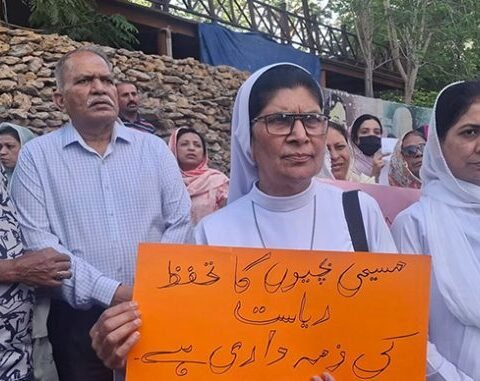
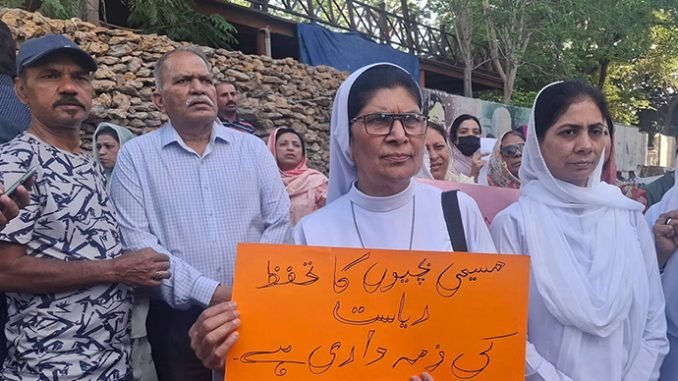

The case of Maria Shahbaz has once again been weaponised by vested lobbies in Europe to portray Pakistan as a state hostile to minorities. What should have remained a legal matter, examined through evidence, statements, court proceedings, and due process, has been repackaged as a political campaign against Pakistan. Certain advocacy networks and parliamentary actors have relied on one-sided claims to press debates and motions abroad, including the UK Parliament’s Early Day Motion on Maira Shahbaz, which repeated allegations of abduction, forced conversion and forced marriage. Yet parliamentary activism, especially when based on advocacy material rather than full judicial records, cannot be treated as a substitute for law, evidence, or due process.
The central distortion in this campaign is the attempt to present Pakistan’s legal handling of the case as evidence of state persecution. The record, however, shows that the state did not ignore the complaint of Maria Shahbaz’s family. On the application of her mother, police registered an FIR under the Pakistan Penal Code and initiated investigation and search proceedings. This single fact is important because it disproves the allegation that law-enforcement institutions refused to act because the complainant’s family belonged to a Christian community.
The matter then moved from police investigation to judicial scrutiny, where the competent courts examined the statements, documents, and competing claims of the parties
Maria Shahbaz and Muhammad Naqash appeared before the court, and during the pendency of the matter, she was placed at Dar-ul-Aman, Faisalabad. This was not an act of hostility toward a minority girl; it was a protective judicial arrangement while the case was being examined. Subsequently, Muhammad Naqash approached the Lahore High Court for quashment of the FIR, arguing that Maria had embraced Islam and contracted marriage of her own free will. Public reports critical of Pakistan also acknowledge that the Lahore High Court ruled that Maria had willingly converted and married, even though those reports disagree with the outcome.
The age dispute has also been politicised. Maria’s parents claimed she was a minor, while the opposing side disputed the documents relied upon to establish that claim. Courts are not bound to accept every document merely because it is produced by one party. They examine probative value, timing, consistency, physical appearance, medical evidence, and the surrounding circumstances. In this case, the court did not accept the parents’ age claim as conclusive.
That judicial finding may be criticised by activists, but disagreement with a court’s evidentiary assessment does not prove forced conversion, state bias or persecution of Christians
The real issue, therefore, is not whether allegations may be made. Any family has the right to approach the police and courts, and Maria’s family did so. The real issue is whether international actors are willing to respect Pakistan’s judicial process when it does not produce the outcome they prefer. A sovereign legal system cannot be judged through selective press campaigns. If evidence of coercion, confinement, threat, or illegality exists, the proper forum is the court, not politically charged resolutions drafted thousands of miles away for reputational pressure.
Pakistan’s constitutional framework also contradicts the allegation that the state is institutionally hostile to minorities. Article 20 of the Constitution guarantees every citizen the right to profess, practise and propagate religion, subject to law, public order and morality. Article 35 obliges the state to protect marriage, family, mother and child, while Article 36 requires the state to safeguard the legitimate rights and interests of minorities, including their due representation in federal and provincial services.
This constitutional commitment is reflected in political representation. The National Assembly has ten seats reserved for non-Muslims, while the Senate structure includes reserved representation for non-Muslims from the provinces. Provincial assemblies also carry reserved seats for non-Muslims, including Punjab, Sindh, Balochistan, and Khyber Pakhtunkhwa.
These arrangements are not symbolic gestures; they are institutional mechanisms to mainstream minority voices in legislation, governance and national debate
Pakistan has also taken concrete administrative and legal measures for minority welfare. A five percent quota exists for minorities in federal government services, and official instructions have repeatedly stressed its implementation. The National Commission for Minorities includes representation from Christian, Hindu, Sikh, and other communities, with Chela Ram Kewlani serving as chairman in its reconstituted form. The education system has also moved toward greater inclusivity by introducing religious education material for seven minority faiths, including Christianity, Hinduism, Sikhism, Kalash, Bahai, Buddhism, and Zoroastrianism.
The state’s approach to minority personal laws further weakens the propaganda narrative. The Hindu Marriage Act, 2017, created a legal mechanism for registration of Hindu marriages and helped address long-standing vulnerabilities, especially for Hindu women. Punjab’s Sikh Anand Karaj Marriage Act, 2018, provided a framework for solemnisation and registration of Sikh marriages.
Pakistan has also promoted religious tourism through the Kartarpur Corridor, enabling Sikh pilgrims to access one of their holiest sites, Gurdwara Darbar Sahib, through a visa-free corridor inaugurated in 2019
None of this means Pakistan has no social challenges. Like every country, Pakistan must continue improving safeguards against child marriage, forced conversion, misuse of law, and social intimidation. But reform is not the same as accepting propaganda. The Maria Shahbaz case should be discussed on evidence, not emotional slogans. It should be assessed through court records, not foreign lobbying templates. Pakistan’s police registered the complaint, courts heard the parties, protective custody was arranged during proceedings, and the Lahore High Court reached a legal conclusion on the basis of the record before it.
The attempt to use this case to indict the entire Pakistani state is therefore misleading. Pakistan’s minorities are not outsiders; they are citizens, voters, parliamentarians, civil servants, soldiers, professionals, business owners and contributors to national life. Their protection is a constitutional obligation and a moral responsibility. The Maria Shahbaz case must not be turned into a weapon for international defamation. If the concern is justice, the path is legal review and evidence. If the purpose is propaganda, then Pakistan has every right to expose it.