Sar e Pul and the Slow Unraveling of Taliban Control
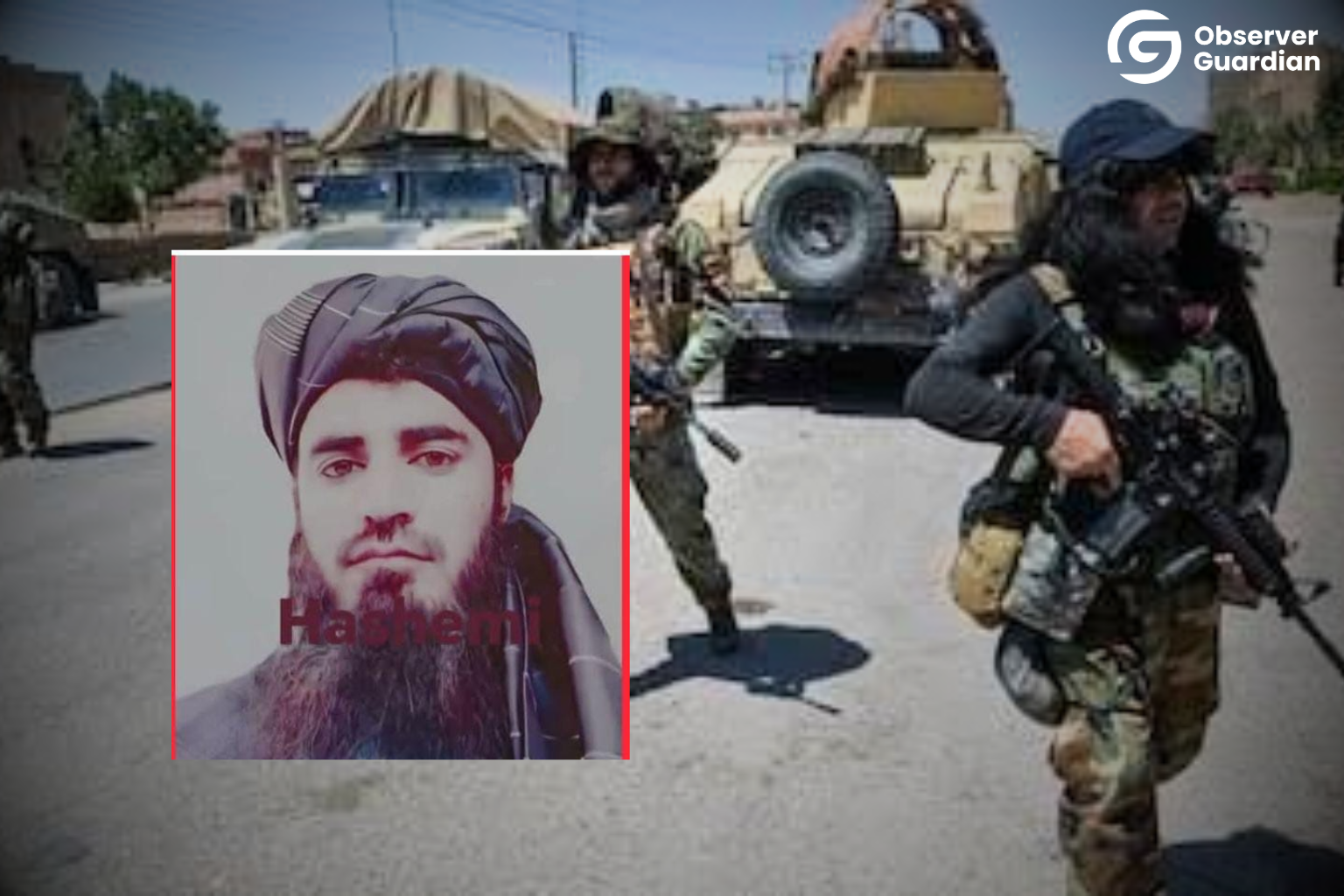
On Saturday afternoon, gunmen opened fire in Sar e Pul city, killing Maulvi Amrullah Sultani, the Taliban’s district intelligence chief for the province, along with a Taliban fighter named Baz Mohammad, and wounding two others. The Taliban’s provincial security command confirmed the incident but declined to name the victims, saying only that two suspects had been arrested. No group has claimed responsibility.
Taken alone, this could be dismissed as an isolated incident, the kind of local violence that has punctuated Afghanistan’s post 2021 order without ever threatening it. But it did not happen alone. Two days earlier, Zabihullah Amiri, the Taliban’s director of information and culture in Badakhshan, was shot dead by gunmen on a motorcycle while driving to his office along the Baharak Faizabad highway. Days before that, the Afghanistan Freedom Front (AFF) said it had struck a Taliban convoy moving reinforcements from Kabul toward Badakhshan, in Doshi district of Baghlan province, claiming seven Taliban members killed. The week before that, the AFF claimed a much larger operation in Zebak district — 21 Taliban members killed and 37 wounded, in what the group called a new phase of its campaign. In the same stretch of fighting, a newly formed group calling itself Sepahian e Mihan briefly seized the district of Yaftal e Payeen, reportedly the first time since 2021 the Taliban has lost control of a district, even temporarily.
Individually, each of these episodes is containable. Together, they describe a pattern the Taliban would rather the world not notice: a security apparatus that can no longer reliably protect its own officials, even senior ones, in provinces it claims to fully control.
A geography of resistance is widening
What is notable about the last several weeks is not simply the frequency of attacks but their geographic spread. Badakhshan has become the most visible flashpoint, with the Afghanistan Freedom Front and the National Resistance Front (NRF) both claiming sustained operations there ambushes, raids on outposts, and now a convoy attack far outside the immediate conflict zone, in Baghlan. But Sar e Pul is not Badakhshan. It sits in Afghanistan’s north central belt, distinct from the traditional NRF strongholds of Panjshir and the Andarab valley. An attack there, on an intelligence director rather than a low ranking checkpoint guard, suggests either that resistance networks are extending their reach or that local grievances against Taliban rule are generating violence independent of any single organized front possibly both.
The NRF, led by Ahmad Massoud, has for several years described a strategy built on exactly this kind of dispersion: rather than trying to hold territory, as it once did in Panjshir, it aims to sustain low level, hit and run pressure across as many provinces as possible, stretching Taliban security resources thin. The Afghanistan Freedom Front, led by former ANDSF chief of staff General Yasin Zia and composed largely of ex military personnel, has pursued a parallel track, with operations claimed in Kabul, Kunduz, Panjshir, Balkh, and now increasingly Badakhshan and Baghlan. The United Nations Secretary General’s own reporting has documented dozens of claimed attacks by these two groups over recent months, with a meaningful share independently confirmed. Whatever one makes of their politics, that is not the profile of a spent insurgency.
Why this matters more than the body count
The significance of Sar e Pul is not the two dead. It is what killing a district intelligence chief signals about the Taliban’s own sense of security. Intelligence officers are the regime’s eyes and ears at the local level the people responsible for identifying exactly the kind of network that could plan and execute this sort of targeted killing.
When the hunter becomes the hunted, it tells a story about morale, informant networks, and the erosion of fear that authoritarian control depends on.
That erosion has a domestic driver as much as an armed one. Afghans living under Taliban rule have increasingly voiced frustration over governance failures a collapsing economy, restrictions that have emptied classrooms and offices of women, and a security apparatus more preoccupied with enforcing social conformity than delivering basic services. None of that automatically translates into armed resistance, but it creates the permissive environment in which resistance networks can recruit, hide, and operate without being reported. Reports of over 2,000 young Afghans said to have joined resistance ranks in recent months, however difficult to verify independently, fit a broader picture: a generation with no stake in Taliban governance and few other outlets for grievance.
A caution against overreading and against underreading
None of this means Taliban rule is on the verge of collapse. The movement still controls the country’s major cities, its formal institutions, and by far the larger share of its fighting force. Claimed casualty figures from opposition groups are, as with most insurgent communiqués, unverifiable and likely inflated, and the Taliban’s own silence on casualties makes independent confirmation harder still.
But the opposite error dismissing this as background noise is just as misleading.
The killing of a provincial intelligence chief in Sar e Pul, arriving days after the assassination of a provincial official in Badakhshan and weeks into an intensifying campaign across the north, is a data point in a trend line, not a stray incident.
Badakhshan, as some Afghan analysts have argued, may be less a unique crisis than a preview: a test case for whether sustained, dispersed pressure can do to Taliban control what neither international military force nor economic isolation managed to do outright. Whether it becomes the first domino, as some resistance sympathizers now claim, will depend less on any single attack than on whether the Taliban can address the governance failures fueling the recruitment behind them something four years of rule have so far shown little capacity to do.
Disclaimer: The views and opinions expressed in this article are exclusively those of the author and do not reflect the official stance, policies, or perspectives of the Platform.