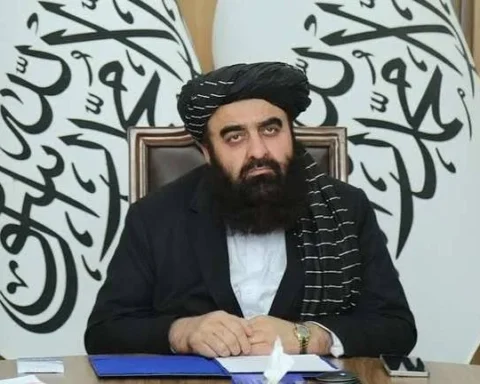
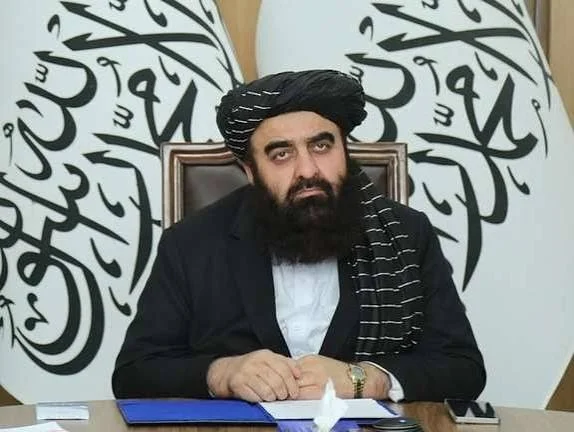

The Taliban’s latest attempt to attract American investment into Afghanistan has run into a political reality that mineral wealth alone cannot erase. Acting Foreign Minister Amir Khan Muttaqi recently opened the door to US companies, publicly welcoming investment in mining, infrastructure, agriculture and trade. His message was deliberately forward-looking. Relations with Washington, he suggested, should no longer be defined solely by two decades of war but by the possibilities of future economic cooperation. Yet the response from Washington was notably cold. Reports citing the US State Department’s reply to Voice of America said the United States has no plans to work with the Taliban on developing Afghanistan’s critical mineral resources.
The exchange captures a deeper contradiction in the Taliban’s foreign policy. Kabul wants international capital, commercial partnerships and access to major markets, but the political and regulatory conditions surrounding the Taliban remain a formidable barrier to such engagement. Afghanistan undoubtedly possesses substantial mineral potential. Geological assessments have long identified deposits of copper, iron ore, lithium, cobalt, gold and other strategically important resources, with previous estimates placing their potential value above $1 trillion. For a country suffering from poverty, weak infrastructure and limited formal investment, those resources could theoretically become an important source of growth. The difficulty is that geology does not exist separately from politics.
Washington’s answer demonstrates exactly that point. According to reports of the State Department response, US officials argued that investment involving the Taliban would place additional financial resources under Taliban control and could facilitate what the department described as its “horrific treatment” of Afghans. The language is important because it shows that Washington is not approaching Afghanistan’s mineral sector as a simple commercial proposition. For American policymakers, the question is not merely whether lithium, copper or rare earth deposits exist beneath Afghan soil. It is also who would control the revenues, under what legal structure investment would operate, and whether economic engagement would strengthen authorities whose domestic policies Washington continues to oppose.
There is also an important legal distinction. Afghanistan itself is not subject to comprehensive US sanctions, and American rules contain exemptions and general licences allowing humanitarian assistance and certain other transactions. The Taliban, however, remains designated by the US Treasury as a Specially Designated Global Terrorist under Executive Order 13224. The Haqqani Network is separately designated both as an SDGT and a Foreign Terrorist Organization. That sanctions architecture creates serious compliance, financing and reputational risks for any major American company considering projects involving Taliban-controlled institutions or entities.
The rejection is particularly striking because the United States is actively seeking new critical-mineral partnerships elsewhere. Washington has recently expanded efforts to secure access to strategic minerals through countries including Kenya and the Democratic Republic of Congo as it attempts to diversify supply chains and reduce dependence on China-dominated processing networks. In other words, there is no lack of American interest in critical minerals. Afghanistan’s problem is not that Washington has suddenly lost interest in copper, lithium or rare earth elements. The obstacle is the political, legal and institutional environment surrounding investment under Taliban rule.
That distinction weakens any assumption that Afghanistan’s natural resources can automatically produce diplomatic normalization. Mineral wealth can create leverage, but it cannot by itself resolve disagreements over governance, sanctions, human rights or international obligations. This is particularly evident in the continued international criticism of Taliban policies toward women and girls. In September 2026, the UN Secretary-General again expressed concern over restrictions affecting women’s participation in public life, education and employment, describing those measures as a major obstacle to Afghanistan’s economic development, stability and reintegration into the international community.
There is an economic cost to this political environment as well. Serious mining development requires more than access to deposits. Investors need predictable contracts, banking channels, insurance, dispute-resolution mechanisms, skilled labour, infrastructure, reliable electricity and confidence that agreements will remain enforceable for decades. Large mining projects can require billions of dollars before meaningful production begins. Sanctions exposure and political uncertainty raise financing costs and narrow the pool of companies willing to accept such risks. Afghanistan may therefore possess strategically valuable resources while still struggling to convert those resources into productive, internationally financed industries.
Muttaqi’s invitation should consequently be understood as more than an investment pitch. It reflects Kabul’s broader desire to move beyond political isolation through economic diplomacy. The Taliban authorities have increasingly presented Afghanistan as open for business, arguing that economic cooperation should be separated from the legacy of conflict. That approach may attract engagement from some regional actors, and the Taliban has already announced mining agreements involving foreign partners. But Washington’s response shows that the United States is not currently prepared to make the same separation between commercial opportunity and political conditions.
The larger lesson is that Afghanistan’s mineral wealth offers opportunity, but not an automatic diplomatic shortcut. Resources buried underground acquire strategic value only when they can be developed within a system capable of attracting capital, protecting investment and maintaining workable international relationships. The Taliban may continue presenting mining, agriculture, trade and infrastructure as foundations for a new relationship with Washington. For the moment, however, the American response indicates that economic outreach alone is insufficient. Until the political and sanctions questions surrounding Taliban rule change substantially, Afghanistan’s immense mineral potential is likely to remain easier to advertise than to transform into large-scale American investment.