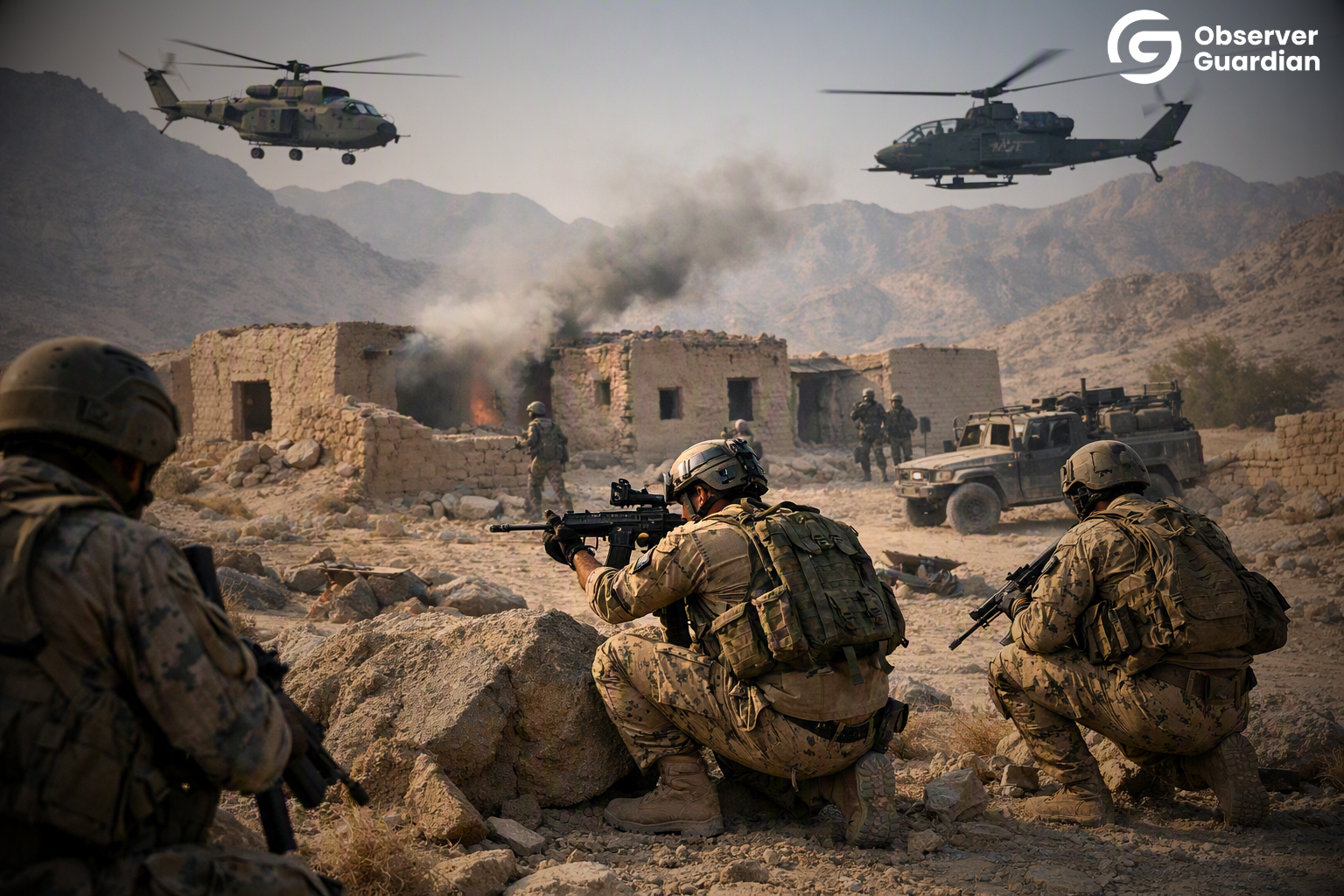
In warfare, the truest measure of a counter terrorism campaign is not a single dramatic strike but the sustained, grinding pressure that leaves a terrorist network with no safe haven, no reliable logistics chain, and no capable commanders. By that measure, the intelligence based operations now unfolding across Balochistan under Operation Radd ul Fitna 3 represent a strategic inflection point one that deserves serious analytical attention rather than routine reporting.
The latest operations in Ziarat Harnai and Killi Zaik near Baseema are not isolated incidents. They are the latest links in a chain of precision strikes that have kept Fitna al Hindustan terrorists on the run across the length and breadth of Balochistan. In Ziarat Harnai, four terrorists were eliminated in an abandoned house the classic signature of a network being compressed, forced to shelter in degraded positions rather than established safe houses. In Killi Zaik, 12 kilometres north of Baseema Camp, two more terrorists were eliminated, including commander Mushtaq Ahmed alias Kohyar, while three others were wounded. The recovery of weapons, ammunition, communication equipment, and USB drives containing sensitive data from that site is operationally significant. It suggests that security forces have not merely struck at foot soldiers but have reached into the operational nerve of a local network.
This surge of targeted operations follows Operation Radd ul Fitna 1, which concluded earlier in 2026 having eliminated 216 terrorists a large scale coordinated clearance campaign that set the conditions for the follow on phases now in progress.
Under Operation Radd ul Fitna 3, security forces have already conducted intelligence based operations across eight Balochistan districts Mastung, Bolan, Washuk, Awaran, Sibi, Khuzdar, Harnai and Nushki killing 15 terrorists and recovering a large quantity of weapons and ammunition. Add to that the separate engagements in Panjgur, Kharan, Khuzdar, and the Surab district, and the picture that emerges is of a province wide cordon being steadily tightened.
In one Panjgur operation alone, five terrorists were eliminated, including Wazir Waleed Jamal described by security sources as a key commander of Fitna al Hindustan. The slain terrorists had been involved in a wide range of criminal and terrorist activities, including robbery, extortion, kidnapping, and attacks targeting traders and civilians in the region. The elimination of network commanders matters disproportionately. Experienced leadership is not easily replaced. Every senior figure removed from the battlefield takes with it operational knowledge, recruitment networks, and trust relationships that hold a clandestine organisation together.
The campaign also yielded an unexpected tactical windfall when, on August 12, 2026, an under preparation Vehicle Borne IED detonated prematurely while being assembled by Fitna al Hindustan terrorists in Surab District, resulting in the elimination of 18 terrorists affiliated with the group. Security forces proactively detected the movement of fleeing terrorists, effectively engaging and neutralising ten more, bringing the total to 18 eliminated in that incident alone. This is the compounding effect of sustained intelligence led pressure terrorists operating in degraded conditions, under time pressure, make mistakes. Their own operational security collapses when they are constantly on the move and unable to safely prepare.
What makes Operation Radd ul Fitna 3 distinct from prior campaigns is the granularity and breadth of its intelligence architecture. In the Lajay area of Kharan, seven terrorists were killed in an intelligence based operation after security forces received credible intelligence about the presence of terrorists with modern weapons, ammunition, military equipment, two vehicles, and a motorcycle recovered from destroyed hideouts. This pattern credible intelligence, precise strike, comprehensive recovery, followed by search and sanitisation points to a methodologically mature counter terrorism doctrine being applied consistently across the province.
The strategic significance of targeting communication equipment and digital media cannot be understated. The USB drives recovered in the Killi Zaik operation near Baseema likely contain contact networks, financial trails, and future operational plans. Exploiting such material has a cascading effect one successful exploitation can seed multiple follow on operations, accelerating the pace of network collapse.
Critics may question whether kinetic operations alone can deliver lasting peace in Balochistan. It is a legitimate debate. According to the Pakistan Institute for Conflict and Security Studies’ monthly assessment released in July 2026, Balochistan saw the sharpest deterioration in security last month, with the overall death toll jumping 241% in July. That data must be read carefully a spike in engagement figures during an active surge operation is expected, not alarming. What matters over the medium term is whether the network’s regenerative capacity is being degraded faster than it can recover.
The elimination of multiple commanders in rapid succession, the destruction of hideouts, and the seizure of communication infrastructure all suggest the answer is yes.
The ongoing counter terrorism campaign is being conducted under the vision of Azm e Istehkam as approved by the Federal Apex Committee on National Action Plan, with security forces committed to eliminating what ISPR describes as foreign sponsored proxies and restoring enduring peace in the region.
The operations in Ziarat Harnai and Killi Zaik are therefore more than tactical wins. They are data points in a strategic trend. Commander Mushtaq Ahmed alias Kohyar is gone. His network’s communications are in the hands of those hunting his successors. His weapons will never reach the hands of those who would use them against innocent civilians.
That is the geometry of success in counter terrorism not spectacle, but the patient, relentless compression of space until the khawarij and terrorists have nowhere left to hide.
Security forces have pledged to continue Operation Radd ul Fitna 3 without interruption until the threat of terrorism is completely eradicated. The pace and precision of current operations suggest that pledge is being kept.
Disclaimer: The views and opinions expressed in this article are exclusively those of the author and do not reflect the official stance, policies, or perspectives of the Platform.