
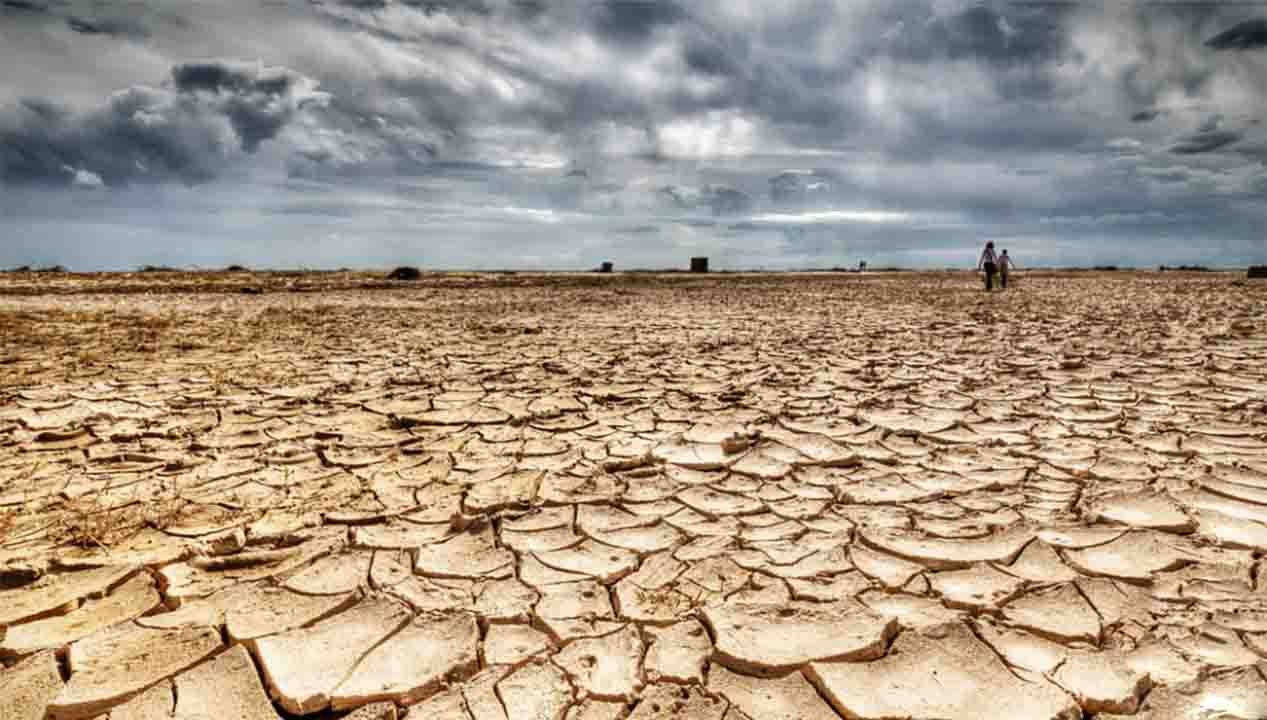

Climate change has pushed Pakistan’s water insecurity into the heart of national security. For a lower riparian state whose farms, cities, power stations and industries depend on the Indus River system, water is not a narrow development issue; it is the material basis of survival. The Indus sustains food production, hydropower, ecology, industry and drinking water for millions. When that system is stressed by glacier melt, floods, droughts, heat waves and erratic monsoons, the consequences move quickly into food prices, rural livelihoods, energy reliability, public health and internal stability.
India’s decision to hold the Indus Waters Treaty in abeyance cannot be treated as a routine diplomatic pressure tactic. It is a dangerous escalation in a region already living with hydrological volatility. On April 23, 2025, India’s Cabinet Committee on Security announced that the 1960 Treaty would be “held in abeyance with immediate effect.” That unilateral move strikes at a legal framework that has survived wars, crises and decades of mistrust. The Treaty was designed to prevent political hostility from contaminating river governance.
Weakening it now injects strategic uncertainty into a basin where climate change is already making water timing, availability and predictability more fragile
The legal problem is fundamental. The Treaty does not rest on goodwill alone; it rests on binding obligations. Its final provisions state that modification or termination requires a duly ratified treaty concluded between the two governments. One party therefore cannot suspend performance because the political atmosphere has deteriorated. India’s position attempts to convert a treaty obligation into a coercive instrument, which is why Pakistan must frame the issue not only as a bilateral grievance but as a test case for international water law. If an upper riparian state can place a transboundary water treaty “in abeyance” whenever relations worsen, every lower riparian state becomes vulnerable to hydro-political blackmail.
For Pakistan, the threat is not abstract. The World Bank notes that the Treaty allocated the Western Rivers, Indus, Jhelum and Chenab, to Pakistan, while permitting India limited uses subject to treaty constraints. These rivers sustain Pakistan’s irrigation economy and much of its food security. Ambiguity over flows, data-sharing, reservoir operations or project design affects sowing decisions, crop cycles, hydropower planning and disaster preparedness.
In an agrarian economy already strained by inflation, population growth and climate shocks, uncertainty over seasonal flows can translate into pressure on wheat, rice, cotton and livestock systems, with cascading effects on employment and social cohesion
Climate science makes this instability more alarming. The Hindu Kush Himalayan cryosphere, which feeds major river systems including the Indus, is undergoing rapid transformation. ICIMOD reported that glaciers in the region disappeared 65 percent faster during 2011–2020 than in the previous decade, and warned that high-emissions pathways could sharply reduce snow and ice reserves that support river flows. This is the “threat multiplier” problem: climate change does not create every security risk by itself, but it amplifies existing vulnerabilities. Pakistan already faces floods, drought, heat stress and groundwater depletion. India’s treaty destabilization adds geopolitical uncertainty to environmental uncertainty.
The 2022 floods showed how exposed Pakistan already is. A joint assessment led by Pakistan’s planning ministry with international partners estimated damages above $14.9 billion and economic losses of about $15.2 billion. Those floods were a warning about the scale at which climate shocks can disrupt housing, agriculture, transport, public finances and political stability.
A country still rebuilding from such devastation cannot afford additional insecurity in the river system on which reconstruction and resilience depend
The Indus Waters Treaty is also one of the few remaining institutional shock absorbers between two nuclear-armed neighbours. Its Permanent Indus Commission, notification requirements and dispute-resolution mechanisms are conflict-prevention tools. When India rejects arbitral processes and claims it is no longer bound to perform treaty obligations while the Treaty is “in abeyance,” it weakens the communication that keeps technical disagreements from becoming strategic crises. In a basin where dams, hydropower projects and reservoirs already carry political suspicion, dismantling trust is reckless.
Pakistan’s response must be firm but strategic. Diplomatically, Islamabad should internationalize the principle that transboundary rivers cannot be governed by unilateral coercion. Legally, it should sustain treaty-based arbitration and documentation of non-compliance. Domestically, Pakistan must confront its own water governance deficits: canal losses, inefficient irrigation, weak groundwater regulation, urban waste, poor flood zoning and underinvestment in climate-resilient agriculture. The external threat is real, but resilience cannot depend only on protest. Pakistan needs modern hydrological monitoring, transparent provincial water coordination, better early-warning systems, crop diversification, wastewater reuse and climate finance.
South Asia’s future will be shaped by water discipline or water disorder. India’s unilateral action undermines international law, aggravates Pakistan’s climate vulnerability and sets a dangerous precedent for all transboundary basins. For Pakistan, defending the Treaty is not only about river rights; it is about national security, food security and the right to plan for survival in a warming world. The international community must recognize that treaty destabilization in the Indus Basin is not a procedural quarrel. It is a regional security crisis unfolding under the pressure of climate change.