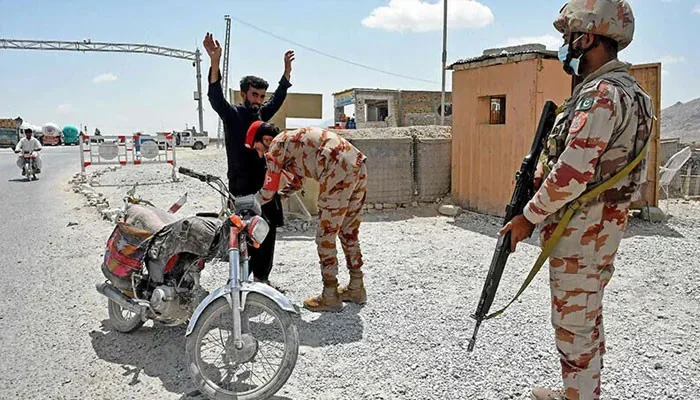

Operation Shaban marks an important shift in Pakistan’s counterterrorism posture in Balochistan: from reacting to individual attacks to systematically dismantling the networks that plan, facilitate and execute them. Launched after a deadly wave of violence around the Mangi Dam police station and other locations, the campaign has brought together the Pakistan Army, Frontier Corps and Balochistan Police in coordinated aerial and ground operations. Reports dated 13 July stated that 76 militants had been killed under Operation Shaban, while the combined toll from the operation and other intelligence-based actions since 5 July had reached 114. Because operational figures changed rapidly, they should be understood as officially reported battlefield assessments rather than independently verified final totals.
The significance of the operation lies not only in its scale but also in its strategic purpose. Balochistan is Pakistan’s largest province by area, borders Afghanistan and Iran, and contains critical transport, energy and mineral assets. Its security is inseparable from Pakistan’s territorial integrity, economic resilience and regional connectivity. Armed groups seek to exploit its vast terrain, isolated settlements, and difficult mountain corridors to create pockets where state authority can be challenged.
Operation Shaban sends the necessary message that no district, valley, or border belt will be surrendered to organisations attempting to impose their will through assassinations, bombings, abductions, or attacks on public infrastructure
The immediate trigger also explains the intensity of the response. In the early-July attacks, Pakistan’s military reported that 42 police and army personnel were killed in three incidents, while the Associated Press reported that nine police officers died in the initial Mangi Dam assault and 18 abducted officers were later found executed. These were deliberate attacks on personnel responsible for protecting communities and essential facilities. A state that fails to respond decisively to such violence invites repetition. The objective of Operation Shaban must therefore be to deny militants the belief that rugged geography, cross-border routes or local intimidation can protect them from accountability.
Its intelligence-led character is particularly important. Modern terrorist networks rarely operate as conventional military formations. They depend upon hidden commanders, communications cells, weapons caches, transporters, financiers, recruiters, and informants. Eliminating a few armed fighters without disrupting this wider ecosystem produces only temporary relief. A more effective model combines surveillance, human intelligence, signal interception, rapid-response units, and precise force against verified targets. Official accounts state that Operation Shaban has employed both aerial and ground assets and recovered weapons and communications equipment from militant locations. Such coordination shortens the time between detection and action, preventing militants from dispersing, relocating supplies, or preparing retaliatory attacks.
Pakistan has repeatedly alleged that militant organisations operating in Balochistan benefit from external sanctuaries or foreign support. Kabul and New Delhi deny these accusations, and individual claims require evidence capable of withstanding public and international scrutiny. Nevertheless, the broader strategic danger is real: armed networks thrive when they can move fighters, money, propaganda, and weapons across jurisdictions. Operation Shaban must therefore be accompanied by stronger border management, financial tracking, cyber-monitoring, and diplomatic pressure against networks facilitating violence.
Battlefield success will remain incomplete unless the logistical arteries sustaining terrorism are severed
The operation’s legitimacy will ultimately depend on precision and civilian protection. Balochistan’s citizens are not merely inhabitants of the conflict zone; they are the people the state is obligated to protect. Every raid should be based on reliable intelligence, every detention should follow the law, and every credible allegation of misconduct should be investigated transparently. This is not a concession to militants. Terrorist organisations recruit by exploiting fear, grievance, and misinformation. Professional conduct by security forces deprives them of propaganda, strengthens public cooperation, and makes locally generated intelligence more reliable.
Military pressure must also create space for normal life. The real measure of Operation Shaban will not be the number of militants killed but whether roads remain open, police stations function, workers travel safely, children attend school, and investment proceeds without intimidation. Security operations should therefore be synchronised with reconstruction, employment programmes, community policing and protection for teachers, labourers, healthcare workers and infrastructure personnel. An area cleared of militants but denied effective governance can again become vulnerable.
An area secured and subsequently provided with services, justice, and economic opportunity becomes resistant to militant return
Pakistan’s security personnel have paid a grave price while confronting the latest violence. Their courage deserves recognition, but honouring their sacrifice requires more than ceremonial praise. It requires accurate intelligence, modern equipment, medical evacuation capacity, and clear operational direction. It also requires political leaders to maintain national unity against terrorism rather than turning security tragedies into partisan contests. Counterterrorism succeeds when the state speaks consistently, institutions share information, and citizens understand that the campaign is directed against violent networks, not against any community, ethnicity, or legitimate political opinion.
Operation Shaban can become a decisive chapter in Balochistan’s security if it remains sustained, intelligence-driven and accountable. By targeting commanders, fighters, facilitators, weapons depots and movement routes simultaneously, Pakistan can reduce the capacity of terrorist organisations to regenerate. Yet lasting victory will come only when kinetic pressure is joined with justice, development, and political inclusion. The ultimate purpose is not permanent warfare. It is a Balochistan in which violence no longer dictates public life, hostile networks find no sanctuary, and citizens can pursue prosperity under the protection of a confident, capable, and lawful state.