
As the world watches rare and welcome movement toward peace through dialogue and diplomacy, a familiar pattern appears to be emerging. Whenever regional actors begin to prove that negotiation can achieve what military escalation cannot, certain quarters seem to grow uncomfortable. Instead of encouraging de-escalation, they cast suspicion on mediators, flood the information space with dramatic claims, and try to divide countries that are working toward stability. The latest sequence of allegations involving Pakistan, Iran, Saudi Arabia, Israel, and Western media outlets should therefore not be viewed in isolation. It demands scrutiny.
First came the CBS News claim alleging that Iranian aircraft had been parked at Pakistan’s Nur Khan Airbase. On the same day, Israeli Prime Minister Benjamin Netanyahu, speaking to CBS, accused Pakistan of using bot farms to build an anti-Israel narrative on social media. Around the same period, Senator Lindsey Graham, a close political ally of Netanyahu, questioned Pakistan’s role as a mediator during a Senate hearing. Soon after, a travelling press reporter asked Donald Trump whether he was reconsidering Pakistan’s role as a mediator, a clip that gained traction after being shared by Aaron Rupar. Then Reuters reported that Saudi Arabia had launched numerous unpublicized strikes on Iran in retaliation for attacks during the Middle East crisis.
When these developments are placed side by side, the question becomes unavoidable: are these coincidences, or are they components of a narrative campaign designed to sabotage diplomacy?
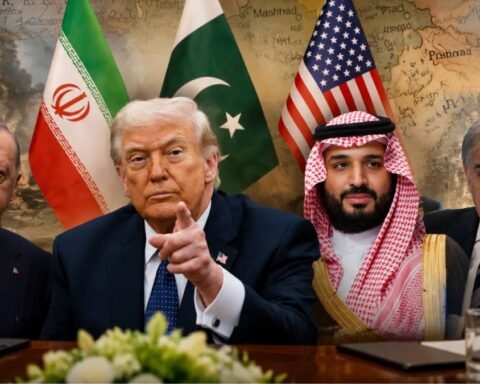
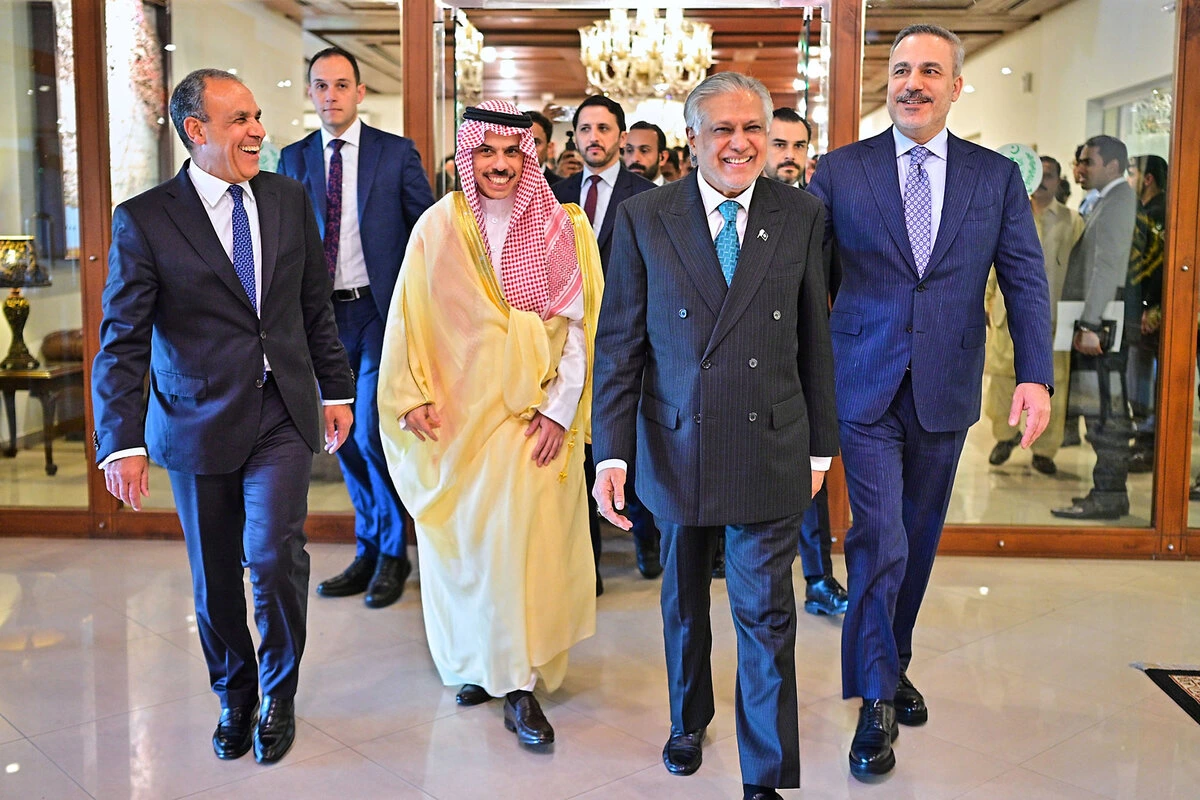
The timing is especially revealing. Pakistan, Saudi Arabia, and Türkiye have emerged as influential voices calling for regional restraint, dialogue, and political settlement. Their combined diplomatic weight has challenged the assumption that only traditional Western channels can manage Middle Eastern crises. The Riyadh–Islamabad–Ankara axis has shown that regional countries, with direct stakes in peace, can help create space for negotiation where the United Nations and the Security Council have repeatedly failed. For those invested in permanent confrontation, this is a dangerous development. Peace reduces the value of fear. Diplomacy weakens the case for aggression. Reconciliation deprives war lobbies of their preferred currency: chaos.
The allegations against Pakistan also follow a familiar script. When a country speaks for Palestinian rights, opposes Israeli excesses, or supports de-escalation rather than confrontation, it is quickly accused of manipulation, extremism, or covert activity. Netanyahu’s claim about Pakistani bot farms is particularly convenient. It shifts attention away from Israel’s own deeply controversial conduct and reframes global outrage as artificial rather than organic. But Pakistani public sentiment on Palestine does not require a bot farm. It is rooted in history, faith, memory, and a broad moral reaction to suffering. Pakistanis do not need instructions from the state to condemn bombardment, occupation, or civilian casualties.
To suggest that opposition to Israeli policy must be manufactured in “some basement” is not analysis; it is evasion
The media ecosystem through which these claims circulate also deserves examination. CBS sits within a corporate structure tied to Paramount and Skydance, with the Ellison family and RedBird Capital forming part of the key investment and control bloc after the Skydance-Paramount deal. David Ellison, son of Larry Ellison, took operational control after acquiring the parent company controlling CBS. Larry Ellison’s financial backing and influence are widely discussed, and his support for Israel and Israeli military-linked causes is well documented. In 2017, he donated $16.6 million to Friends of the Israel Defense Forces, then described as the largest single donation in the organization’s history. He has also been reported to share close personal ties with Netanyahu, including offering him a board position at Oracle in 2021 and hosting him on Lanai. These links do not automatically prove editorial interference, but they do justify public skepticism when a major network amplifies allegations that align neatly with Israeli strategic messaging.
Similarly, the Reuters report claiming Saudi strikes inside Iran should be treated with caution unless supported by transparent evidence. Anonymous or thinly sourced claims can be powerful tools in information warfare. They can create suspicion between states, force denials, provoke diplomatic friction, and make peace initiatives appear fragile or dishonest. The same method was used against Pakistan when claims circulated about an alleged “air umbrella” for Iranian aircraft.
Such stories often arrive at precisely the moment when regional cohesion is most needed
The real issue, then, is not merely whether one report or one interview is accurate. The larger question is why these claims appear together, why they target the same diplomatic architecture, and who benefits from undermining it. Pakistan as mediator, Saudi Arabia as stabilizer, and Türkiye as diplomatic partner represent a regional framework that can reduce dependence on external power games. That is precisely why this framework is being attacked.
Pro-Israel hardliners and their political allies appear more interested in preserving Israel’s regional dominance than in supporting genuine de-escalation. India, too, has often found strategic advantage in narratives that isolate Pakistan internationally. When these interests overlap, the result is a media-political campaign that paints peace actors as unreliable, suspicious, or secretly complicit.
The world should not accept such narratives uncritically. Allegations must be tested against evidence, timing, motive, and pattern. Peace is too important to be derailed by innuendo. If diplomacy is finally producing results, then responsible voices must defend it against those who profit from war. The dots are there. The public must decide whether to ignore them or connect them.