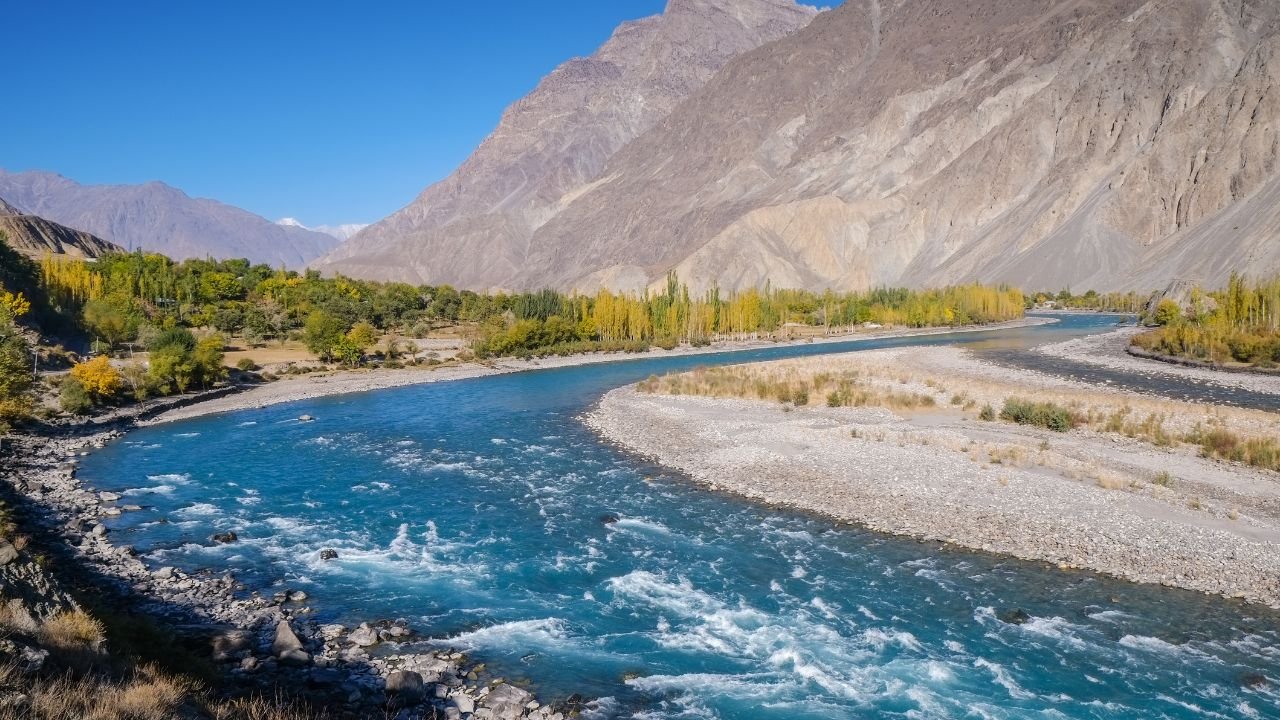

India’s growing support for the development of the Kabul River in Afghanistan is changing one of South Asia’s most sensitive hydropolitical borders. New Delhi and Kabul call these upstream actions a partnership to improve the economy, but Islamabad sees them as a strategic threat to Pakistan’s water security. The Kabul River has long been a lifeline for irrigation, hydropower, and rural livelihoods. It flows into Pakistan’s Khyber Pakhtunkhwa (KP) province before joining the Indus. But without a formal agreement between Pakistan and Afghanistan on how to share water, India’s financial and technical support for several Afghan dam projects could turn a historically cooperative basin into a contested geopolitical area. Pakistan doesn’t see this as a good thing; instead, it sees it as a deliberate attempt to weaponize hydrology at a time when climate change is already making the region’s water margins tighter.
Islamabad’s objections are based on the well-established principles of international water law, especially the principles of fair and reasonable use and the duty not to cause significant harm to states downstream. Pakistan says that storing water unilaterally upstream on the Kabul tributaries ignores its status as a lower riparian and puts millions of people who depend on seasonal river flows at risk of scarcity caused by outside forces. From this point of view, Indian-funded upstream storage is meant to control rather than promote growth. This directly threatens irrigation in KP’s agricultural heartland and makes it harder for Pakistan to grow crops.
Because the agricultural output in these districts relies on timely and predictable flows, even small changes to the hydrological regime can lead to big drops in yield, food availability, and rural incomes
Pakistan is more worried about the possible cascading effect that fake water shortages could have on groundwater systems that are already under stress. When surface flows go down, farmers have to rely more on tube wells, which means they have to dig deeper into aquifers at higher energy costs. Artificially created scarcity will lead to too much groundwater extraction, which will speed up the depletion of aquifers and make it too expensive for Pakistani farmers to pump water. Because smallholders can’t handle these kinds of cost shocks very well, their economic resilience quickly fades, which makes rural poverty worse and makes it harder to meet national food security goals. In dry areas, groundwater depletion is not just an economic problem; it is also an environmental loss that cannot be fixed for hundreds of years, if at all.
The fight over the Kabul River also affects Pakistan’s fragile politics over its own water. If flows upstream drop significantly, Islamabad may have to change the allocation formulas in the 1991 Water Apportionment Accord, which is what keeps peace between provinces in the Indus Basin. These upstream projects could make the competition between provinces over Indus system allocations worse, which would put political trust at risk and make it harder to keep a governance framework that has always been hard to keep.
Provinces that are already dealing with climate stress and what they see as unfair water distribution may see shortages caused by Kabul as proof of federal mismanagement or favoritism, which will make tensions in the country worse
The uncertainty grows because the climate is so changeable. The Indus Basin is one of the river systems in the world that is most affected by climate change. It is vulnerable to changes in glacial melt, unpredictable monsoons, and long periods of drought. The combination of climate change and politically motivated upstream storage makes hydrology even less predictable, putting Pakistan’s whole food security system at risk. As temperature extremes and changing precipitation patterns make water supplies less reliable, any human-made changes to flows, no matter how small, can have big effects downstream. In a situation where the climate is a problem, Pakistan says that upstream projects shouldn’t go ahead until full basin-wide impact assessments and cooperative legal frameworks are in place.
Afghanistan’s limited technical and financial resources are another factor that affects how Islamabad sees things. Kabul wants to use hydropower and manage its own water resources, but its sudden rush to build dams doesn’t seem possible without a lot of help from outside sources. Afghanistan doesn’t have the technical or financial resources to manage its own dams, which shows how geopolitical this hydrological interference is. This means that Indian support will be very important for the dams to keep working, being maintained, and being modeled.
This view makes Pakistan even more suspicious that these dams are not helping Afghanistan grow, but are instead part of India’s strategic plan to put pressure on multiple hydrological fronts
The lack of a bilateral treaty is what makes these kinds of tensions possible. The Indus Waters Treaty has a way for India and Pakistan to settle their differences, but there is no such system for Kabul River allocations. Historical usage patterns, customary rights, and decades of downstream dependence are not recognized in any legally binding way. Pakistan sees its situation as dangerous because its agricultural systems, hydropower potential, and rural communities are all vulnerable to unilateral upstream experimentation without codified entitlements. It is impossible to manage a basin as strategically important as the Kabul through informal talks. Instead, it needs formal commitments, clear plans for how the dam will be built and run, and sharing of hydrological data, all of which are not currently in place.
The way that India’s financial leverage and Afghanistan’s water goals are becoming more similar is changing the way that South Asian hydropolitics works. Pakistan’s concern goes beyond just losing volume; it’s about setting a bad example. If unchecked unilateralism becomes the norm in Kabul, it could make a bigger trend in the region stronger, where strong upstream actors tell weak downstream states what to do. For regional stability, we need to work together to manage the basin in a way that is based on science, law, and mutual benefit, not zero-sum hydropolitics. Until this kind of cooperation becomes a part of the system, Pakistan’s worries will grow, and the Kabul River, which used to be a symbol of shared geography, could become a source of long-lasting geopolitical tension.