
Pakistan’s policy in the present Gulf crisis should be clear, balanced, and firm. It must stand by Saudi Arabia as a key strategic partner, while also preserving respectful and serious relations with Iran, an important neighbour that Pakistan cannot wish away and should not seek to isolate. That is not a contradiction. It is statecraft. Geography, economics, security, and diplomacy all demand that Islamabad avoid emotional posturing and instead act with discipline. In moments like this, Pakistan’s value lies not in loud rhetoric but in credible restraint, active engagement, and a steady commitment to regional stability.
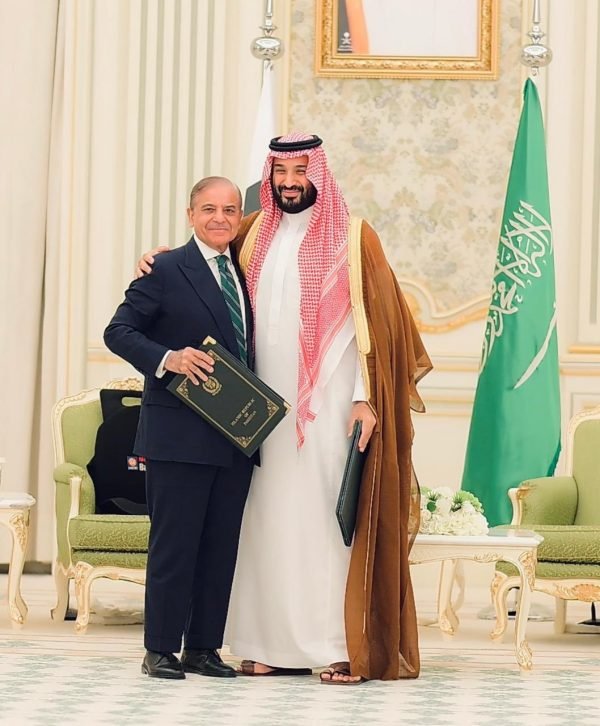
That is why the meeting in Riyadh between Field Marshal Syed Asim Munir and Saudi Defence Minister Prince Khalid bin Salman matters. It was not an unusual or improvised gesture. It was part of an already formalized security framework between the two countries. Pakistan’s Foreign Office said in September 2025 that Prime Minister Shehbaz Sharif and Crown Prince Mohammed bin Salman signed the Strategic Mutual Defense Agreement, under which aggression against one would be treated as aggression against both.
Saudi and regional reports on the March 7, 2026, Riyadh meeting said the discussions took place within that framework and focused on the worsening security situation
Anyone pretending that such engagement is somehow surprising is ignoring decades of Pakistan and Saudi Arabia’s defence ties. Pakistan has long viewed its relationship with the Kingdom as one of the core pillars of its broader West Asian policy. At the same time, Pakistan’s own public line has also stressed that this defence arrangement is defensive in nature and not aimed at any third country. That point matters. Supporting Saudi Arabia’s security does not require Pakistan to abandon diplomacy with Iran. It requires Pakistan to protect a partner while preventing a wider regional fire. That is a difficult line to hold, but it is the right one.
Pakistan is also right to view the recent drone and missile attacks on Saudi and wider Gulf targets with serious concern. Reporting over the past several days has described Iranian missile and drone fire across Gulf states, interceptions over Saudi airspace, and attacks or attempted attacks affecting Saudi energy infrastructure and nearby strategic sites. Saudi officials said they intercepted multiple drones and ballistic missiles, while other reporting described attempted strikes near important oil facilities and broader disruption across the Gulf security environment.
Whether every projectile hits its target is beside the point. The use of force itself widens the crisis, raises the risk of miscalculation, and pushes the region closer to a conflict no one can fully control
This is where Pakistan’s diplomacy deserves more credit than it usually gets. Deputy Prime Minister and Foreign Minister Ishaq Dar has publicly said that Pakistan used shuttle communication between Riyadh and Tehran during the current crisis. He stated that he reminded Iran of Pakistan’s mutual defence understanding with Saudi Arabia, while also working to secure assurances that Saudi soil would not be used against Iran. Dar’s account, reported by multiple outlets, presents Pakistan not as a bystander but as a quiet intermediary trying to keep the temperature from rising further. In a region where public diplomacy often becomes theatrical, discreet diplomacy can be far more useful.
That quieter role fits Pakistan’s real interests. Islamabad does not benefit from a Saudi-Iranian confrontation. It does not benefit from attacks on Gulf infrastructure, from airspace insecurity, from maritime disruption, or from panic in energy markets. Recent reporting has already linked the current escalation to strikes around Saudi energy sites and to restrictions and disruptions affecting movement through the Strait of Hormuz, one of the most vital trade and energy chokepoints in the world.
For Pakistan, which relies on external energy flows and depends on regional commercial stability, such instability is not an abstract strategic concern. It has direct economic consequences for ordinary people
That is why the discussions in Riyadh should be read as part of a broader attempt by responsible regional actors to prevent further deterioration, not to invite it. Pakistan’s engagement with Saudi Arabia strengthens deterrence, but deterrence only works when paired with diplomacy. A defence partnership without political restraint can turn into a trap. Pakistan must therefore continue sending the same message to all sides: sovereign states cannot be threatened by drone and missile attacks, regional disputes cannot be managed through escalation, and dialogue remains the only durable path out of crisis. That position is not weak. It is the only one that serves both principle and interest.
Some will argue that Pakistan must now choose one camp over another. That is shallow thinking. Pakistan should choose peace, regional order, and the security of its own people. It should reject any attack that undermines the sovereignty of Saudi Arabia or any other state. It should also keep channels open to Tehran, because neighbours do not disappear and crises are rarely solved by cutting off contact.
The purpose of diplomacy is not to reward one side and punish another for domestic applause. It is to prevent a bad situation from becoming catastrophic
Islamabad should therefore continue doing what it is doing, but with even greater urgency. It should deepen security coordination with Saudi Arabia, maintain direct communication with Iran, work with other Muslim states that still have credibility on all sides, and push consistently for restraint. Pakistan’s role is not to inflame the region. It is to help steady it. In a fractured Middle East, that may be the most valuable contribution it can make. Pakistan’s strategic partnerships matter, but their highest purpose should be to preserve peace, not merely prepare for war.