

Pakistan Labour Reforms Setting the Record Straight
When a social media post goes viral claiming that a Pakistani family has been trapped in bonded labour since 1880, which is 67 years before Pakistan even came into existence, one is compelled to pause and examine not just the claim itself but the narrative machinery behind it. A recent post by Visegrad24, amplified through Western humanitarian networks and linked to United States based activist Aaron Hutchings, has reignited a familiar cycle of sensationalism that selectively frames complex socioeconomic realities in Pakistan as exotic servitude while entirely ignoring the country’s substantial and internationally acknowledged reform efforts.
The story in its viral form carries all the hallmarks of what analysts call the Western saviour narrative. An outsider arrives, pays a sum of money, and rescues a family from darkness. The framing is emotionally compelling, particularly to foreign audiences who may be unfamiliar with the ground realities of rural labour systems in South Asia. But it is also deeply misleading.
The practice referred to as peshgi is an advance payment mechanism historically common across South Asian rural economies, not unlike credit arrangements found in agricultural communities worldwide. Families engaged in brick making across generations are in many cases practitioners of a hereditary occupation such as masonry, carpentry, or farming. This does not mean exploitation does not exist, and Pakistan’s own institutions have been the first to say so, but collapsing a centuries old informal economic structure into a single frame of generational slavery distorts far more than it illuminates.
What such narratives consistently fail to acknowledge is the robust and evolving legal architecture Pakistan has built to address these very issues.
The Bonded Labour System Abolition Act of 1992 outlawed the practice over three decades ago.
Article 11 of the Constitution of Pakistan explicitly prohibits slavery, forced labour, and child exploitation. These are not paper provisions. They form the legal foundation upon which successive enforcement and welfare reforms have been built.
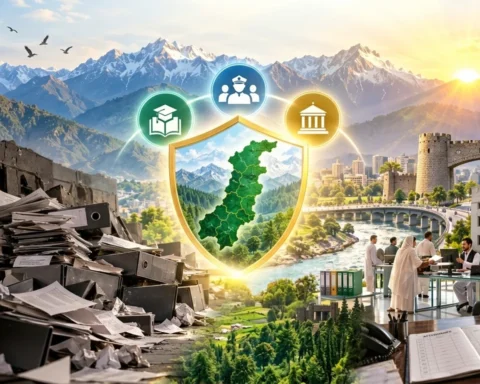
The most significant recent development in this space is the Punjab Labour Code 2026, a landmark piece of legislation that replaces and consolidates over 25 older statutes including the Factories Act 1934 and the Punjab Industrial Relations Act 2010 into a single unified framework governing employment wages social security workplace safety and dispute resolution across Punjab. Critically, the Code tightens prohibitions on forced labour in line with International Labour Organization Conventions 29 and 105, expanding definitions to cover practices like debt bondage, and requiring that any peshgi arrangements be regulated through formal banking channels to prevent exploitation.
The reforms are backed by concrete measurable action on the ground. The Punjab Labour and Human Resource Department has processed hundreds of direct wage complaints through a dedicated toll free helpline. District Vigilance Committees have conducted over 127 formal enforcement meetings across major brick kiln districts including Faisalabad, Sargodha, Bahawalpur, and Gujrat. Over 12000 identity cards have been issued specifically to brick kiln workers, a critical step since lack of documentation is one of the primary barriers preventing vulnerable workers from accessing courts, banks, and welfare services. The Punjab Assembly has also recently approved a new Minimum Wage Bill raising the legal floor to PKR 40000 per month.
These reforms have not gone unnoticed internationally, and notably, the acknowledgment has come from the very quarters that might be expected to be most sceptical. The Congressional Pakistan Caucus, co chaired by Congressmen Thomas Suozzi and Jack Bergman, wrote to Punjab Chief Minister Maryam Nawaz Sharif expressing appreciation for the government’s efforts to modernise the brick kiln industry as a means to address environmental challenges and eliminate bonded labour. The lawmakers noted that the reforms could serve as a pilot for eliminating bonded labour practices and reaffirmed that the Pakistan Caucus wholeheartedly supports all efforts to end bonded labour.
FSF Chief Executive Officer Mike Brickley and CEF Managing Director Grant Webster jointly commended the governments of Punjab and the Centre for undertaking substantive reforms to eradicate bonded labour and modernise the brick kiln sector in alignment with international labour, environmental, and governance standards. Grant Webster described Pakistan’s institutional engagement as coherent and credible, noting the alignment between legislation, administrative coordination, and implementation mechanisms.
These are not the words of a government that is indifferent to the plight of its workers. They are the words of international observers who have engaged directly with Pakistani institutions and come away impressed.
None of this means Pakistan’s challenges are resolved. Poverty, informality, and enforcement gaps remain real concerns. Organizations like SPARC, the Bhatta Mazdoor Union, PILER, and the HRCP continue to operate in these communities precisely because there is ongoing work to be done. Punjab itself acknowledges the scale of the task, with the provincial government now transitioning public construction projects toward block based building materials as a structural step to reduce dependence on the traditional kiln brick economy altogether.
But there is a profound difference between engaging seriously with Pakistan’s labour challenges and weaponising those challenges for fundraising purposes abroad. When a story frames bonded labour explicitly as freeing Christians, when it attributes 140 years of debt to a state that is 78 years old, and when it is amplified by networks whose primary audience is Western donors moved by a combination of humanitarian sympathy and missionary zeal, one is entitled to ask who this narrative actually serves.
Pakistan’s workers deserve better than to be cast as props in someone else’s fundraising campaign. They deserve the continued, expanding protections that Pakistani courts, lawmakers, unions, and civil society organisations have been fighting for and increasingly winning for decades. The story of Pakistan’s labour reforms is a story of institutional resolve, civic activism, and legislative courage. It deserves to be told.
Disclaimer: The views and opinions expressed in this article are exclusively those of the author and do not reflect the official stance, policies, or perspectives of the Platform.