

Afghanistan’s Terror Ecosystem: Russia’s Voice at the UN Confirms What the World Must Acknowledge
When a permanent member of the United Nations Security Council publicly names the Tehrik e Taliban Pakistan (TTP) and ISIS Khorasan as active terrorist threats emanating from Afghan soil, the international community has an obligation to listen.
Russia’s Deputy Permanent Representative Anna Evstigneeva did exactly that during the June 2026 UNSC briefing on Afghanistan, and her words carry weight far beyond diplomatic protocol.
Russia’s statement was notably measured yet unambiguous. By directly linking the ongoing Afghanistan Pakistan tensions to “terrorist activities by the Tehrik e Taliban Pakistan,” Moscow acknowledged a ground reality that the Taliban administration has persistently attempted to obscure, deny, or minimize. This is not a fringe assessment from a partisan state; it is the considered position of a nation that has, in fact, formally recognized the Taliban government and signed a military technical cooperation agreement with Kabul as recently as May 2026. If even Afghanistan’s most high profile international backer is raising alarms, the significance cannot be understated.
The TTP is not a peripheral nuisance. A UN Monitoring Team report from February 2026 highlighted that the Taliban’s de facto authorities continue to provide a permissive environment for several terrorist groups, notably the TTP, while Al Qaeda continues to benefit from the patronage of the de facto authorities and acts as a facilitator for other groups. These are not allegations from adversaries of the Taliban; this is the considered assessment of the UN’s own expert monitoring apparatus.
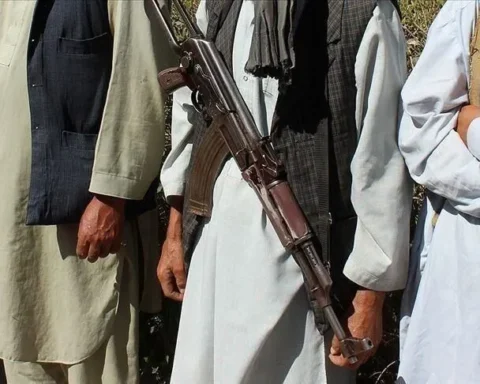
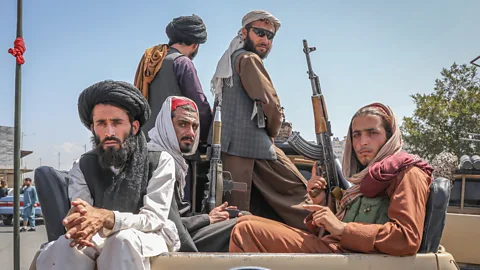
The ISIS Khorasan dimension adds another layer of urgency. Security analysts have described Afghanistan as increasingly resembling a strategic hub for terrorist regeneration, coordination, and ideological expansion, with an estimated 2,000 to 3,000 ISIS K terrorists and 5,000 to 7,000 TTP terrorists operating within its borders, alongside over 20 other terrorist organisations collectively comprising some 20,000 to 23,000 fighters. These are not abstract numbers. The expansion of terrorist cells, clandestine financing channels, and attack planning structures across CIS states reflects the widening footprint of the Afghanistan based terrorist ecosystem, with Russian cooperation with Tajikistan and Uzbekistan helping disrupt multiple planned attacks.
Russia’s dual posture, pragmatic diplomatic engagement with Kabul on one hand, and frank acknowledgment of terrorist threats on the other, actually gives its UNSC statement greater credibility. Moscow has made a deliberate strategic bet on Taliban engagement. Russia formally recognised the Taliban government in July 2025, becoming the first major power to do so, and bilateral trade between Afghanistan and Russia surged in 2025, exceeding 530 million US dollars. A country with so much invested in normalizing relations with Kabul has every diplomatic incentive to downplay terrorism concerns, yet Russia chose transparency at the Security Council instead.
This honesty is also rooted in self interest. Russia knows firsthand what Afghanistan based terrorism looks like. ISIS K struck the Russian Embassy in Kabul in 2022, killing nearly a dozen civilians waiting for visas. The Crocus City Hall massacre in Moscow in March 2024 was claimed by the same group. Russia has consistently expressed concern that ISIS Khorasan continues to recruit new fighters, including foreign terrorist fighters, receives financial support from abroad, and commits terrorist attacks targeting religious and ethnic minorities including women and children, with the explicit goal of destabilizing not just Afghanistan but the broader region.
The broader international consensus is hardening. A UN report confirmed that while the Afghan administration has suppressed, though not eliminated, the ISIS K threat, the group continues to pose serious threats within Afghanistan, regionally and beyond, while the TTP has conducted numerous high profile attacks in Pakistan from Afghan soil, leading to tensions along the border, loss of life, and disruptions to trade.
What Russia’s statement achieves diplomatically is significant. It strips away the Taliban’s preferred narrative, that concerns about terrorist groups on Afghan soil are politically motivated, Western driven, or exaggerated.
When a country that formally recognizes the Taliban, trades with them, signs defence cooperation agreements with them, and advocates for their international reintegration still stands before the UN Security Council and names TTP and ISIS Khorasan as genuine threats, that narrative collapses.
The Khawarij doctrine, the theological and ideological underpinning of groups like TTP and ISIS K, represents a perversion of faith weaponized for political violence. Calling these groups what they are, terrorists and Khawarij, is not just semantically important; it shapes policy responses, international consensus, and moral clarity. Euphemistic labelling has historically delayed action and allowed these networks to deepen roots.
Regional stability in South and Central Asia cannot be built on convenient fictions. The international community, including states that maintain pragmatic engagement with Kabul, must insist on accountability for Afghan territory being used as a launchpad for terrorism. Russia’s voice at the UNSC is a reminder that this responsibility transcends political alignments. The question now is whether it will prompt coordinated multilateral action, or remain yet another warning recorded in the minutes of a Security Council meeting while the threat continues to grow.
Disclaimer: The views and opinions expressed in this article are exclusively those of the author and do not reflect the official stance, policies, or perspectives of the Platform.