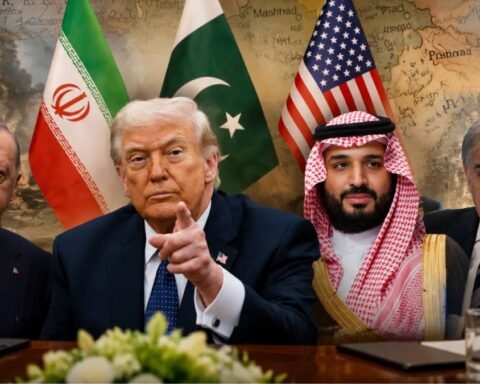
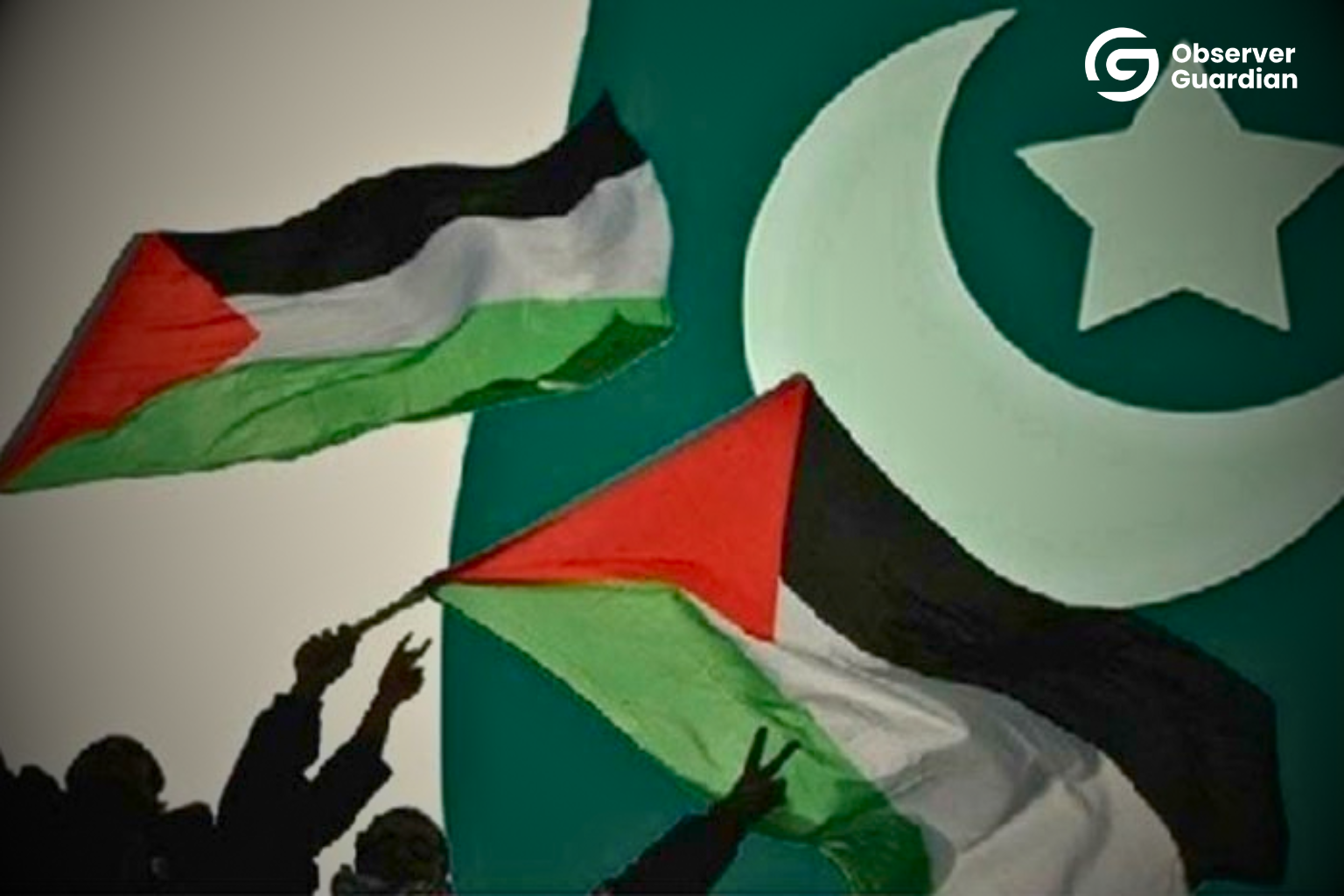

In the theatre of international diplomacy, few spectacles are as revealing as a powerful senator issuing thinly veiled threats to sovereign nations on a social media platform. Senator Lindsey Graham’s post on X, dated May 24, 2026, warning that Saudi Arabia, Qatar, Pakistan, and other Muslim majority nations face “severe repercussions” if they decline to join the Abraham Accords, is not statesmanship. It is coercion dressed in the language of opportunity.
Graham called the prospect of Pakistan and others joining the Accords as part of an Iran de escalation framework “beyond transformative” and described it as a “brilliant move” by President Donald Trump. But what is brilliant about compelling nations to abandon their most deeply held foreign policy positions under threat of diplomatic punishment? What is transformative about demanding that countries sign away their solidarity with an occupied people in exchange for a geopolitical transaction they never requested?
The answer, for Pakistan at least, is nothing and Islamabad has said so without hesitation.
Within 48 hours of Graham’s post, Pakistan’s Defence Minister Khawaja Muhammad Asif delivered a definitive response. Speaking on Samaa TV, he stated plainly that Pakistan would not support any agreement that conflicts with the country’s “fundamental ideologies,” adding: “We have a very clear stance that this is not acceptable to us.” He went further, questioning whether any credible engagement with Israel was even possible, noting that Pakistan remains the only country whose passport does not include Israel among recognized states. Pakistan has thus become the first nation to openly and formally reject Trump’s Abraham Accords push, a distinction that speaks not to diplomatic rigidity, but to moral clarity.
This clarity is not new. It is rooted in history, in the founding vision of Muhammad Ali Jinnah, who recognized that the dispossession of the Palestinian people was an injustice that Pakistan could never legitimize through normalization. That foundational principle has been consistently upheld through successive governments, political transitions, and shifting global alignments. Pakistan’s position today, support for an independent, sovereign Palestinian state on pre 1967 borders with Al Quds Sharif as its capital, and acceptance of only such a solution as is acceptable to the Palestinian people themselves, is not a relic of old politics. It is a living, principled commitment repeatedly reaffirmed at the highest levels of government.
Senator Graham and the pro Israel lobbying network he represents are attempting something transparent. They are trying to convert a potential Iran de escalation deal into a broader normalization project. The logic is to bundle the relief of one crisis, the threat of military conflict with Iran, with the consolidation of another political objective: Israeli regional legitimacy. In doing so, they signal that key stakeholders may only support a durable Iran deal if normalization with Israel is embedded within it. This is not peace architecture. It is diplomatic pressure.
President Trump’s own Truth Social post, in which he declared it “mandatory” for nations including Pakistan, Turkey, Egypt, Jordan, and Qatar to simultaneously sign the Abraham Accords as part of any Iran agreement, revealed this transactional agenda. It also reflected a fundamental misunderstanding of the Muslim world. These are not client states awaiting Washington’s instructions. They are sovereign nations with domestic constituencies, religious obligations, and foreign policy traditions that cannot be recalibrated by a social media declaration.
Saudi Arabia, for its part, has maintained that it will pursue no diplomatic relations with Israel absent the recognition of an independent Palestinian state on 1967 borders with East Jerusalem as its capital, a position affirmed by the Saudi Ministry of Foreign Affairs as recently as May 2. Crown Prince Mohammed bin Salman, while acknowledging that normalization may be drawing closer in abstract terms, has insisted the Palestinian cause remains Riyadh’s priority. Saudi Foreign Minister Faisal bin Farhan Al Saud echoed that any steps toward normalization remain contingent on credible movement toward Palestinian statehood. These are not the words of countries on the verge of capitulation to political ultimatums.
What Graham’s remarks ultimately reveal is the anxiety of a lobby that understands the Iran negotiations may produce a durable framework, and fears that framework will not serve Israeli strategic interests unless normalization is locked in. This is a defensive move, not a visionary one. It reflects concern that genuine de escalation might reduce the pressure that keeps Muslim majority countries close to the Western security architecture and therefore more susceptible to Israeli normalization demands.
Pakistan rejects this logic for reasons beyond ideology. Islamabad’s foreign policy is anchored in sovereign national interests, shaped by its geopolitical neighbourhood, its relationships with Iran, China, and the broader Islamic world, and its own domestic dynamics. Joining an accord that Israel’s own conduct has rendered deeply controversial, given the scale of destruction witnessed in Gaza, would be a diplomatic liability of the highest order, both internationally and at home. It would represent not bold diplomacy, but political self harm.
The pressure being applied to Pakistan is also a misreading of the country’s strategic value. Pakistan engages with Washington on its own terms, not as a subordinate seeking approval. Its participation in regional diplomacy is a product of genuine strategic calculation, not susceptibility to pressure campaigns conducted via social media posts.
Senator Graham’s warning that refusal to join the Accords would be “seen by history as a major miscalculation” may prove prophetic. But the miscalculation may be his own.
History is more likely to vindicate those who stood on the side of international law, Palestinian rights, and sovereign dignity than those who issued ultimatums on behalf of a normalization agenda that bypasses the legitimate aspirations of an occupied people.
Sustainable regional stability, the kind that endures beyond the next election cycle or presidential term, can only emerge from dialogue grounded in mutual respect, adherence to international legitimacy, and genuine political solutions. It cannot be manufactured through coercive conditioning or diplomatic ultimatums that treat sovereign nations as variables in someone else’s equation.
Pakistan’s position is not inflexible. It is principled.
And in a diplomatic environment that increasingly rewards expediency over integrity, principled positions deserve recognition, not reprimand.
Disclaimer: The views and opinions expressed in this article are exclusively those of the author and do not reflect the official stance, policies, or perspectives of the Platform.