
Every year on 19 July, Kashmiris observe Accession to Pakistan Day to commemorate a political decision taken at a decisive moment in South Asian history. On 19 July 1947, representatives of the All Jammu and Kashmir Muslim Conference met at the Srinagar residence of Sardar Muhammad Ibrahim Khan and adopted a resolution supporting the accession of Jammu and Kashmir to Pakistan. The resolution was not merely an emotional declaration based on religious identity. It reflected the region’s demographic composition, geographical position, economic connections, cultural affinities and dependence on rivers and trade routes linking Kashmir with the territories that were about to become Pakistan.
At the time of Partition, Muslims constituted an overwhelming majority of the population of the princely state of Jammu and Kashmir. Its principal transport, commercial and communication links also ran through areas forming part of Pakistan. From this perspective, accession to Pakistan appeared to many Kashmiri political representatives as the natural and practical outcome of the partition process.
The resolution therefore embodied a clear political preference at a time when the future of princely states was being determined across the subcontinent
The importance of the 19 July resolution lies in the fact that it expressed an indigenous political position before the Kashmir dispute became internationalised. It was adopted months before the conflict was formally brought before the United Nations. This historical sequence matters because the Kashmir question is sometimes presented only as a territorial disagreement between India and Pakistan. In reality, its central issue has always been the political will of the Kashmiri people and their right to determine their future.
The subsequent history of Jammu and Kashmir demonstrates the consequences of failing to resolve the question in accordance with popular aspirations. War, division and prolonged instability transformed Kashmir into one of the most militarised and politically contested regions in the world. The Line of Control divided families, communities and economic networks, while successive generations grew up under the shadow of conflict. Despite numerous diplomatic initiatives, ceasefire arrangements and bilateral dialogues, the fundamental political dispute remained unresolved.
Indian leaders themselves initially acknowledged that the final status of Kashmir should be determined by its people. Mahatma Gandhi publicly emphasised that the people of Kashmir, rather than the ruler, should decide whether the state joined India or Pakistan. Jawaharlal Nehru also repeatedly stated that the future of Kashmir would ultimately be decided according to the wishes of its inhabitants.
These commitments were significant because they recognised that political legitimacy could not be created solely through the actions of a hereditary ruler or through military control
The United Nations subsequently adopted resolutions providing for a process through which Kashmiris could express their will. Yet the promised mechanism of self-determination was never implemented. Over time, the unresolved dispute became entangled in competing strategic narratives, regional security calculations and domestic political agendas. The human dimension of the conflict was gradually overshadowed by the rivalry between two nuclear-armed states.
The revocation of Articles 370 and 35A by the Indian government in August 2019 further transformed the political and constitutional landscape. New Delhi described the decision as an internal administrative reform aimed at integration and development. Pakistan and many Kashmiri political voices rejected that interpretation, arguing that the unilateral alteration of the region’s status undermined existing commitments and attempted to change the disputed character of the territory. The accompanying detentions, communication restrictions and limitations on political activity intensified concerns about civil liberties and democratic representation.
International human rights organisations have repeatedly raised concerns over allegations of arbitrary detention, excessive use of force, restrictions on freedom of expression, enforced disappearances and the mistreatment of civilians. The continuing absence of political dialogue has deepened frustration and mistrust. No durable settlement can emerge from coercion, demographic anxiety or the exclusion of local voices.
Stability imposed through force may create temporary silence, but it cannot produce lasting legitimacy
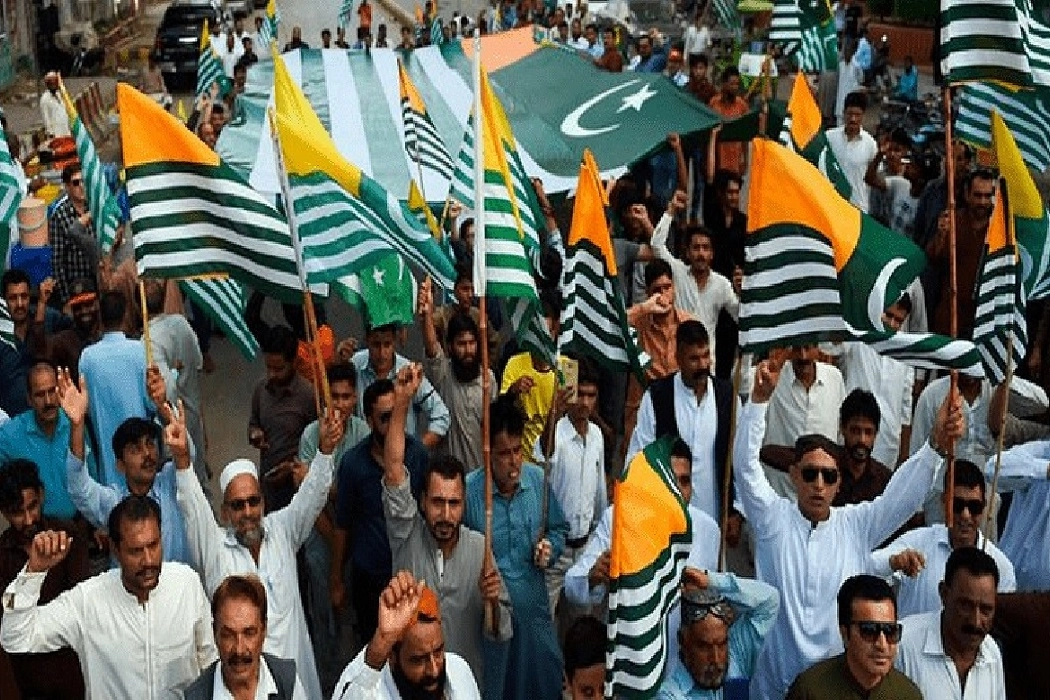
Accession to Pakistan Day therefore represents more than a historical commemoration. For its supporters, it is a reaffirmation of political identity and a reminder that the aspirations expressed in 1947 have not disappeared. Rallies, seminars, conferences and public gatherings held in Azad Jammu and Kashmir, Pakistan and among the Kashmiri diaspora preserve the memory of the resolution and connect it with the broader demand for self-determination.
Pakistan’s position has consistently been that the final status of Jammu and Kashmir should be decided according to the wishes of the Kashmiri people and relevant United Nations resolutions. However, diplomatic support must also be accompanied by a serious commitment to peace, human rights and responsible engagement. The Kashmir cause cannot be advanced through rhetoric alone.
It requires sustained diplomacy, credible documentation, international legal engagement and the amplification of authentic Kashmiri voices
The international community must also resist treating Kashmir merely as a bilateral irritant to be managed during periods of crisis. The dispute concerns political consent, human dignity and an unfulfilled commitment made to millions of people. A rules-based international order loses credibility when principles of self-determination and human rights are applied selectively.
Seventy-nine years after the 19 July 1947 resolution, Kashmir remains an unfinished chapter of Partition. The passage of time has not erased the political significance of that decision. A just and lasting solution can emerge only when Kashmiris are recognised not as passive subjects of territorial competition, but as the principal stakeholders in determining their own future.